


- U.S.-Israel Strikes Cripple Iran’s missile program: 90% Structure destroyed as U.S.-Israel strikes flatten key production and launch facilities
- Over 29 missile launch bases and multiple manufacturing hubs rendered inoperable
- Gulf allies quietly back U.S. strategy while avoiding direct military escalation
- Pakistan-led diplomacy gains momentum as Muslim nations push for U.S.-Iran talks
In a war increasingly defined by precision airpower and strategic restraint, sustained U.S. and Israeli strikes over the past month have reduced significant portions of Iran’s missile-making infrastructure to rubble, delivering what analysts describe as the most serious blow to Tehran’s military-industrial backbone in decades.
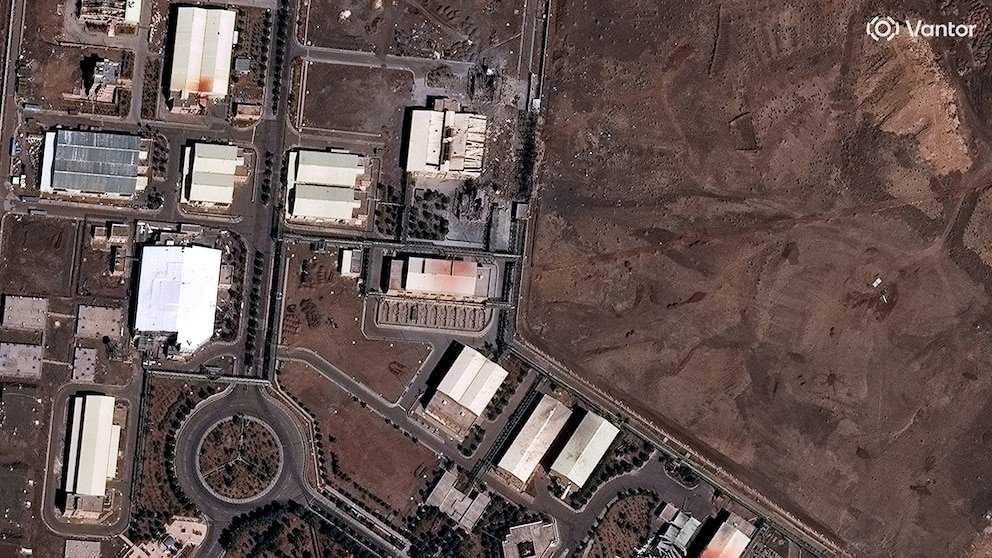
According to a comprehensive assessment based on satellite imagery and expert analysis, at least four of Iran’s most critical ballistic missile production hubs—central to fueling, assembling, and deploying its arsenal—have been heavily damaged. Alongside these, no fewer than 29 missile launch facilities have been struck, disrupting operational readiness and slowing Tehran’s ability to retaliate at scale.
Iran War Humanitarian Crisis Deepens as Global Food and Medicine Supply Chains Collapse
The targeted facilities formed the core of Iran’s deterrence doctrine. Sites responsible for producing solid and liquid propellants—the essential components that power short- and medium-range ballistic missiles—have been severely degraded. Experts say the destruction of these propulsion systems effectively halts immediate missile production, a setback that could take months, if not years, to reverse.
Senior U.S. defense officials have framed the campaign as a decisive success. In recent briefings, Washington indicated that the strikes were specifically designed to dismantle the “production lines” feeding Iran’s missile and drone programs. Israeli leadership echoed that assessment, describing the offensive as a systematic effort to eliminate not just weapons stockpiles but the industrial capacity behind them.
Satellite images show damage to Iranian targets from US-Israeli air strikes
The impact is already visible on the battlefield. Iranian missile launches across the region have dropped sharply—by as much as 90 percent, according to military estimates—signaling a significant disruption in Tehran’s ability to project force.
Yet the campaign’s implications extend beyond immediate military degradation. For U.S. allies in the Gulf, the strikes represent a long-sought objective: limiting Iran’s ability to arm and finance proxy networks that have shaped conflicts from Yemen to Iraq and beyond.
Trump And Hegseth’s War Doctrine: The Bold Shift Redefining U.S. Military Leadership
Diplomatic sources confirm that Gulf states had quietly pressed Washington to ensure that any military action would go beyond symbolic retaliation and instead target Iran’s long-term capabilities—particularly its missile infrastructure and financial pipelines supporting regional militias.
At the same time, these same Gulf countries have exercised notable restraint. Despite repeated missile threats and sporadic attacks, regional powers have largely refrained from direct military retaliation.
A senior Gulf diplomat, speaking earlier this month, underscored that decision. The United Arab Emirates’ ambassador to Pakistan told The Islamabad Telegraph that while the UAE possesses the military capability to respond forcefully, it has deliberately chosen not to escalate. The rationale, he said, lies in preserving the broader “spirit of Muslim brotherhood” and avoiding a wider regional conflagration.
This calculated restraint has complemented the military campaign, preventing the conflict from spiraling into a full-scale regional war—even as Iran’s operational capacity has been steadily eroded.
However, analysts caution that the gains may be significant but not absolute. Iran continues to fire missiles, albeit at a reduced rate, and retains mobile launch platforms that are harder to detect and destroy. Moreover, the country has historically demonstrated an ability to rebuild after previous attacks, often leveraging external supply chains to restore damaged capabilities.
Still, the scale of the current damage appears to have shifted the strategic balance—at least temporarily.
Parallel to these battlefield developments, diplomatic efforts led by Pakistan are beginning to show tentative progress. In Islamabad, a recent meeting involving foreign ministers from key Muslim nations marked a rare moment of convergence amid the crisis.
According to officials familiar with the talks, participants agreed to intensify efforts toward facilitating direct negotiations between the United States and Iran—an outcome that has remained elusive despite escalating hostilities.
While no formal breakthrough has been announced, the willingness of regional actors to engage diplomatically signals a growing recognition that military gains alone may not secure lasting stability.
For now, the war’s trajectory reflects a complex interplay of force and restraint. U.S. and Israeli strikes have come close to achieving their primary objective—crippling Iran’s missile production and limiting its ability to sustain proxy warfare. Meanwhile, Gulf states have chosen caution over confrontation, and Pakistan’s diplomatic initiative is quietly carving out space for dialogue.
Whether these parallel tracks—military pressure and diplomatic outreach—can converge into a sustainable resolution remains uncertain. But for the first time since the conflict began, there are signs that the balance may be shifting, not just on the battlefield, but at the negotiating table as well.