


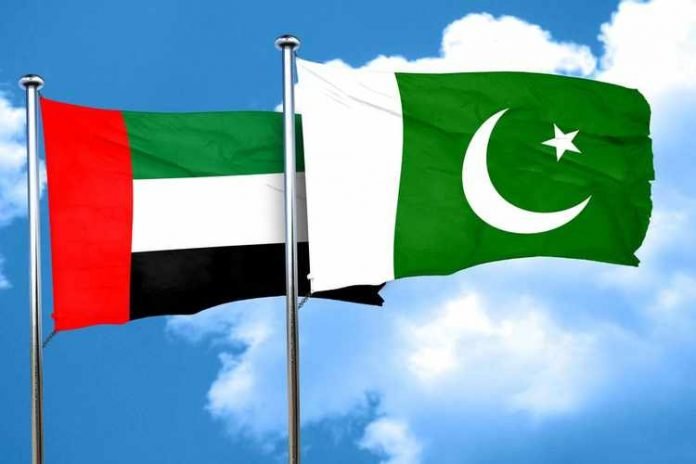
- UAE Pakistan Relations deepen with uninterrupted crude oil supply during crisis
- Pakistan-flagged tanker Shalamar delivers 440,000 barrels of UAE crude
- Strategic energy cooperation ensures Pakistan’s economic stability
- Bilateral trust grows despite regional tensions and media speculation
In a powerful demonstration of enduring strategic trust, a Pakistan-flagged oil tanker carrying critical crude supplies from the United Arab Emirates has successfully navigated the volatile waters of the Strait of Hormuz and is now en route to Pakistan. At a time when geopolitical tensions and maritime disruptions are reshaping global energy flows, the development underscores a resilient and expanding partnership between Islamabad and Abu Dhabi—one that continues to defy speculative narratives of diplomatic strain.
Shipping data from leading intelligence platforms Kpler and LSEG confirms that the Aframax tanker Shalamar, operated by the Pakistan National Shipping Corporation, exited the Gulf this week carrying approximately 440,000 barrels of Abu Dhabi’s premium Das Blend crude.
The vessel had earlier loaded its cargo at a terminal operated by Abu Dhabi National Oil Company, one of the world’s most reliable energy suppliers. The tanker is expected to dock at the Port of Karachi on April 19, delivering a much-needed injection into Pakistan’s strained energy supply chain.
The voyage is particularly significant given the heightened security environment in the Gulf. The Strait of Hormuz—through which nearly 20 percent of the world’s oil passes daily—has witnessed slowed maritime traffic following the imposition of a U.S. naval blockade targeting vessels suspected of breaching sanctions linked to Iran.
According to the U.S. Central Command, at least 14 vessels have altered course in compliance with the expanded enforcement measures. Yet, despite these risks, the Shalamar’s uninterrupted transit highlights not only operational confidence but also the diplomatic coordination underpinning Pakistan-UAE cooperation.
Pakistani-flagged tanker exits Gulf via Hormuz with UAE crude, data shows
This shipment comes at a crucial moment for Pakistan, a country of over 240 million people grappling with persistent energy deficits and rising import costs. With domestic refining capacity under pressure and foreign exchange reserves stretched, consistent crude inflows are essential to sustaining economic stability. The UAE’s continued support—particularly through steady oil exports—demonstrates a commitment that goes beyond transactional ties.
Contrary to recurring media speculation suggesting cracks in bilateral relations, the facts on the ground tell a different story. Over the past decade, the UAE has emerged as one of Pakistan’s most dependable economic partners, with bilateral trade exceeding $10 billion annually. The Gulf state is also home to over 1.5 million Pakistani expatriates, whose remittances form a vital pillar of Pakistan’s economy.
US Iran Islamabad Talks Advance as Trump Accepts Key Condition to Halt Israel-Lebanon Escalation
Energy cooperation remains a cornerstone of this relationship. The UAE has historically extended favorable oil supply terms to Pakistan, including deferred payment facilities during periods of acute financial stress. Analysts note that such arrangements have helped Islamabad manage its balance-of-payments challenges without resorting to more stringent external borrowing.
The Shalamar was one of two Pakistani tankers that entered the Strait of Hormuz earlier this week to load crude and refined products. Pakistan’s petroleum ministry confirmed that the vessel’s cargo was sourced directly from an ADNOC terminal, reinforcing the institutional depth of the energy partnership.
Heroes in the Sky: UAE Air Defense Protects Ports and Lives Amid Escalating Attacks
Beyond economics, the symbolism of this shipment is hard to ignore. At a time when global supply chains are increasingly weaponized and maritime routes contested, the seamless coordination between Pakistan and the UAE sends a strong signal of mutual trust and strategic alignment. It also reflects a broader convergence of interests, from regional stability to energy security.
Experts argue that the relationship is entering a new phase—one defined not just by historical ties but by forward-looking collaboration. Recent high-level exchanges, investment commitments in Pakistan’s infrastructure and renewable energy sectors, and joint ventures in logistics and ports all point to a deepening engagement.
As the Shalamar approaches Karachi, it carries more than just crude oil. It embodies a partnership that has withstood regional upheavals, economic crises, and shifting geopolitical winds. For Pakistan, the arrival of this cargo is a timely relief. For the UAE, it is another reaffirmation of its role as a steadfast ally.
In an era of uncertainty, the Pakistan-UAE axis appears not only intact but ascending—anchored in trust, reinforced by action, and poised to play a pivotal role in shaping the region’s energy and economic future.