


- Ukraine peace plan: Trump’s 28-point plan heavily favours Moscow, forcing Europe into its toughest strategic test of the war.
- EU leaders must jointly release Russian frozen assets to meaningfully strengthen Ukraine’s bargaining power.
- Long-range missiles remain Europe’s most impactful military option to shift battlefield leverage.
- The MAGA doctrine signals long-term U.S. disengagement from Europe, requiring immediate European strategic autonomy.
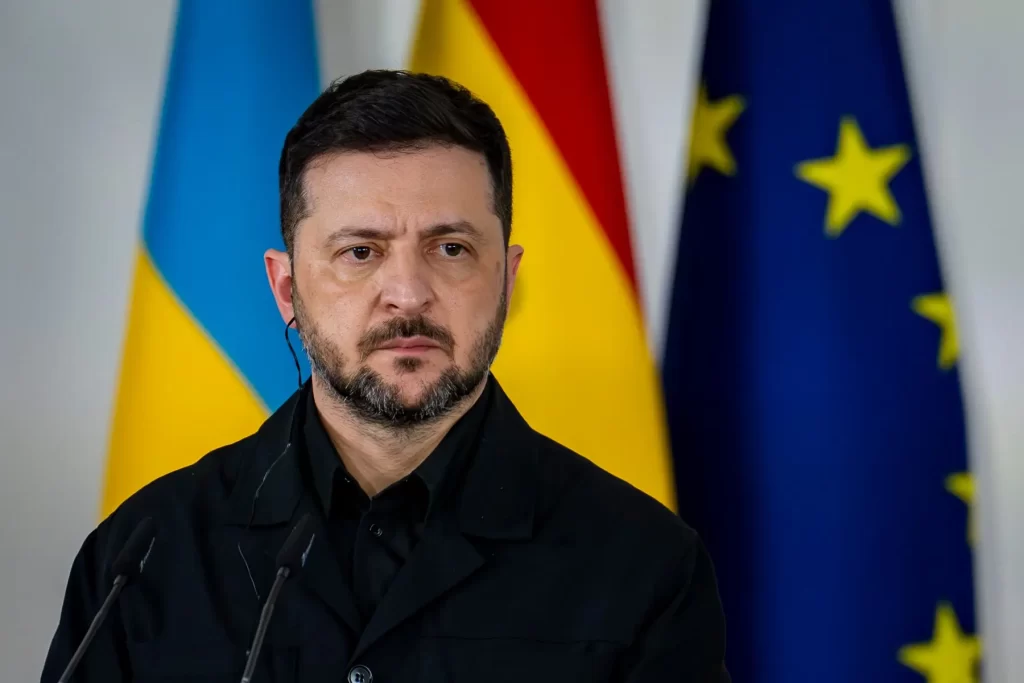
President Volodymyr Zelenskyy’s stark admission that Ukraine “faces a very difficult choice” has landed heavily across European capitals. Yet the truth is sharper: Europe now confronts an equally existential decision. The White House’s controversial 28-point “peace plan”—drafted by Trump confidant Steve Witkoff and Russian sovereign wealth chief Kirill Dmitriev—has forced European leaders into the most consequential test of the Ukraine war.
Their promise to support Kyiv “for as long as it takes,” invoked by Keir Starmer, Rishi Sunak, Ursula von der Leyen, and others, must now be proven or discarded.
Ukraine War: Trump’s Covert Diplomacy Pushes Russia and Ukraine Toward a Draft Peace Deal
At the core of this moment is a simple but defining question: Will Europe finally act decisively, or will it cede the future of its security architecture to an American administration openly dismissive of Europe’s strategic views?
A Peace Plan Tilted Toward Moscow
The 28-point plan caught Europe off guard not only because of its timing but because of its unmistakable tilt toward Moscow’s demands. Four provisions are particularly alarming for Ukraine and Europe alike.
First, the demand that Kyiv surrender the Donbas “fortress towns”—cities defended at immeasurable human cost—undermines Ukraine’s defensive buffer against Russian advances toward Kyiv.
Read More: https://www.chathamhouse.org/2025/11/trumps-28-point-peace-plan-marks-europes-last-chance-stand-ukraine
Second, capping the Ukrainian army and banning NATO forces from ever being stationed in Ukraine effectively formalizes the country’s strategic vulnerability.
Third, redirecting frozen Russian assets into U.S.–Russia “investment ventures,” with Washington pocketing profits, is not only a diplomatic humiliation but a direct challenge to international legal norms.
Fourth, a full amnesty for both sides erases the moral and legal foundations on which Ukraine seeks justice—and undermines the legal rationale for seizing Russian assets in the first place.
ALSO READ: Trump Pushes for Ukraine Peace Deal Despite Resistance from Europe and Kyiv
The plan does include limited gains for Kyiv, including the return of abducted Ukrainian children—a point insiders attribute to Melania Trump’s interventions—and early entry to the European Union. Yet these minor promises cannot mask the wider strategic imbalance. Ukraine’s sovereignty, European stability, and decades of security doctrine are at stake.
Europe’s Slowness, Trump’s Indifference
European leaders are scrambling to propose amendments that soften the plan’s harshest terms. Their reluctance to simply reject the plan reflects another harsh reality: Trump’s administration has signalled repeatedly that Europe’s views carry little weight in Washington. The MAGA worldview frames Europeans as security dependents, and the Republican Party’s muted reaction to the plan implies this posture will outlive Trump’s presidency.
Zelenskyy now has days—at most—to decide whether Europe’s belated lobbying can improve the deal or whether Ukraine must prepare to hold the line with diminished U.S. backing. Exhausted, under-equipped, but still determined, Ukraine may be forced to choose between accepting an unjust peace or fighting on with an uncertain future.
What Europe Must Do
Europe’s choices are narrowing rapidly, but two decisive actions remain within reach.
First, Europe must jointly release frozen Russian assets to Ukraine.**
Belgium’s concerns regarding legal liability are legitimate—over €200 billion of Russian assets are held under its jurisdiction—but the solution is collective action. If the EU believes Ukraine’s victory matters to Europe’s long-term security, member states must share the legal and financial risks.
Second, Europe should supply Ukraine with long-range missiles capable of striking Russian energy facilities, command nodes, and airfields launching drones and missiles.**
These capabilities were needed months ago. Still, deployed now, they could shift battlefield realities and strengthen Ukraine’s negotiating leverage.
The uncomfortable truth is this: Ukraine could have won this war had Western support been timely, consistent, and strategic. Instead, assistance under both Biden and Trump arrived in episodic, fragmented drips—enough to prevent Ukraine’s collapse, never enough to secure victory. That miscalculation now haunts Europe.
Trump’s America, Europe’s Burden
The past week has shattered any remaining illusions about the nature of Trump’s foreign policy. It is narrowly transactional, commercially driven, and indifferent to the principles of sovereignty, rule of law, and collective security. This is not a temporary deviation; it is the emerging doctrine of the MAGA-era Republican Party.
European leaders must therefore abandon the assumption that Washington will safeguard Europe’s long-term security. The United States is signalling its desire to step back from European defence commitments until American voters choose a different course.
A Final Chance
Ursula von der Leyen’s recent declarations—that the EU must be “central” to peace and that Ukraine must have the sovereign right to determine its future—reflect Europe as it wishes to be, not Europe as it is. Rhetoric is no longer enough.
The decisions taken in the coming days will determine not only Ukraine’s future but Europe’s role in global security for decades. Releasing Russian assets, equipping Ukraine decisively, and resisting a peace plan that rewards aggression are the last meaningful tests of Europe’s resolve.
Europe has talked for two years about principles, values, and unity. Now it faces the moment when talk must become action. Ukraine is running out of time—and so is Europe.