


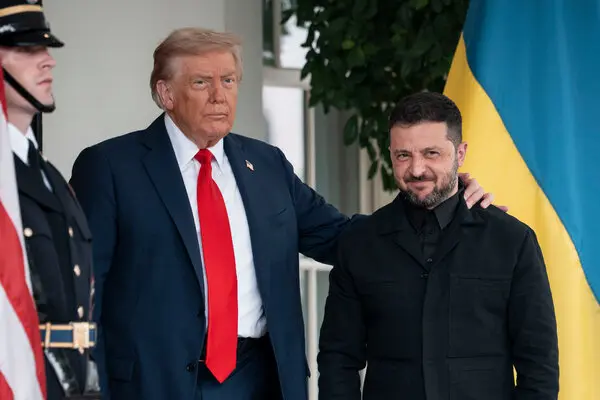
- U.S. Secretary of State Marco Rubio states the Donetsk territorial dispute is the central, “very difficult” issue blocking a peace deal.
- U.S. officials reveal Russia has gained an upper hand in negotiations, leaving Ukraine on the defensive amid a split Western front.
- A dire humanitarian crisis inside Ukraine, with 135,000 houses without heat, is creating internal pressure to end the war.
- Reports indicate U.S. security guarantees for Ukraine may be conditional on accepting a deal that cedes the Donbas region to Russia.
In the wake of inconclusive high-stakes negotiations, U.S. Secretary of State Marco Rubio publicly acknowledged that U.S.-brokered peace talks between Ukraine and Russia have hit a critical and formidable obstacle: the territorial dispute over the Donetsk region. The admission underscores a rapidly shifting diplomatic landscape that appears to be tilting in Moscow’s favor as Ukraine faces mounting military and domestic pressures.
The first round of talks, held in Abu Dhabi this past weekend, concluded without an agreement. While both warring nations have expressed openness to further dialogue, with another round tentatively scheduled for February 1, U.S. officials privy to the discussions paint a grim picture for Kyiv.
Russia-Ukraine talks: Moscow Maintains Dominance as Kyiv Faces Hard Reality
“There are still gaps, but at least we’ve narrowed it down to one central issue, which is probably going to be very difficult,” Secretary Rubio stated during a Senate Foreign Relations Committee hearing on Tuesday. That central issue remains the status of the Donbas, particularly the Donetsk oblast, which Russian President Vladimir Putin has repeatedly vowed to seize entirely by force if Ukraine does not agree to its cessation.
According to U.S. officials with direct knowledge of the talks and the Trump administration’s strategy who spoke to The Islamabad Telegraph, Russia has gained a distinct upper hand in the negotiations, forcing Ukraine onto the defensive.
Russia strikes civilian train in Ukraine, killing five, in an attack Zelensky calls ‘terrorism’
This shift is attributed to a confluence of factors, including a strategic split between the United States and the European Union over Greenland and the full concentration of President Trump’s foreign policy attention on Iran. These developments, the officials noted, have left Ukraine in a “very critical” position.
Compounding the diplomatic isolation is a reported change in public sentiment within Ukraine. After nearly two years of brutal conflict, a dire humanitarian crisis is eroding resilience. Officials cited that 135,000 households are currently without heat during a severe winter freeze, with critical infrastructure decimated. This suffering, they claim, has led some Ukrainian citizens to begin blaming President Volodymyr Zelensky’s perceived stubbornness for provoking and prolonging the war, creating internal pressure to reach a settlement.
The NATO Greenland Dialogue: Mark Rutte’s Call Fuels Trump’s Momentum at Davos
The outlines of a potential deal, as reported by The Financial Times and hinted at by officials, involve a stark quid pro quo. The Trump administration has reportedly suggested to Kyiv that the provision of U.S. “security guarantees” would be conditional on Ukraine first agreeing to a peace settlement that includes ceding the Donbas region to Russia. This aligns with Rubio’s ambiguous comments on security assurances, wherein he stated, “From our side, we can say there is an agreement. There is clearly Russian influence here. And security guarantees will come after the conflict ends.”
Notably, the U.S. diplomatic team is set to change for any follow-up talks. Secretary Rubio confirmed that neither U.S. Special Envoy Robert Witkoff nor President Trump’s son-in-law, Jared Kushner, who were key figures in the Abu Dhabi meetings, will participate in the next round. This introduces a new variable into an already volatile process.
The fundamental positions remain diametrically opposed. The Kremlin insists on the formal recognition of its territorial gains, while Kyiv maintains it will not voluntarily cede any land seized by Russian force. With the battlefield dynamic favoring Russia and winter exacerbating civilian agony in Ukraine, the February 1 talks in Abu Dhabi may represent a pivotal moment—one where Ukraine is forced to confront an agonizing choice between territorial integrity and the immediate security guarantees it desperately needs to survive.