


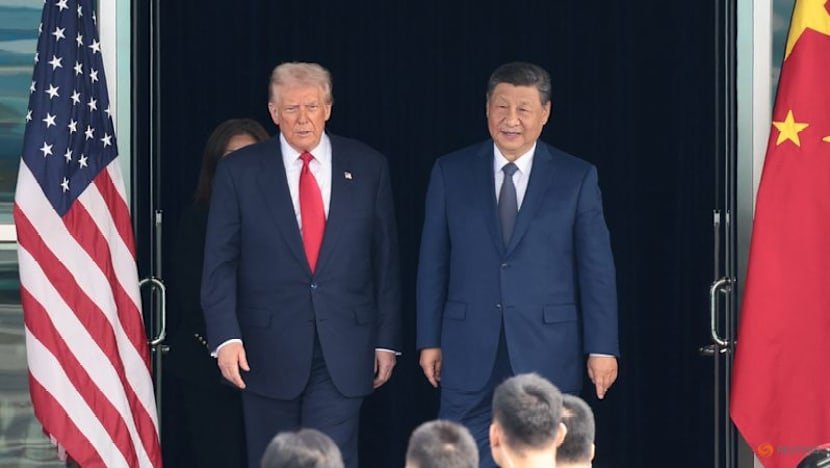
- United Nations financial crisis worsens as U.S. arrears exceed $4 billion
- China delays payments despite claiming leadership in global multilateralism
- U.N. warns it could run out of cash by August 2026 amid severe budget cuts
- Peacekeeping missions, humanitarian aid, and global programs face disruption
The United Nations is facing one of the gravest financial crises in its 80-year history, as delayed and withheld payments from its two largest contributors—the United States and China—push the institution toward a potential liquidity collapse. What appears on the surface as a budgetary dispute is, in reality, a deeper geopolitical contest for influence over the future of multilateral governance.
At the center of the crisis lies a stark imbalance: the U.N. depends on a handful of major powers for a disproportionate share of its funding. The United States and China alone account for roughly 42% of the organization’s core budget. Yet both are now using their financial leverage as a strategic tool.
Washington currently owes more than $4 billion in arrears, including approximately $2.037 billion for the regular budget and $2.247 billion for peacekeeping operations. China, while publicly positioning itself as a defender of the U.N. system, has also delayed payments and still owes $455 million despite a recent injection of nearly $850 million.
Mojtaba Khamenei Retreats Underground — and the Behaviour Signals Strategic Weakness
The consequences are immediate and severe. Secretary-General António Guterres has warned that the organization is in a “race to bankruptcy,” with internal projections suggesting the U.N. could run out of cash by mid-August 2026. Such a scenario would disrupt not only administrative functions but also critical global operations—from peacekeeping missions to humanitarian aid delivery.
To contain the crisis, the U.N. has initiated unprecedented austerity measures. More than 3,000 secretariat positions have been eliminated, offices have been shut down, and operational cutbacks have reached even symbolic levels—such as reducing interpreter hours and limiting building maintenance at its New York headquarters.
US $1.14 Trillion Defense Bill Signals War-Driven Shift in Military and Economic Strategy
Peacekeeping operations have also been scaled back, including accelerated troop withdrawals from conflict zones like the Democratic Republic of the Congo. Meanwhile, reimbursements to troop-contributing countries such as Nepal and Bangladesh have been delayed, placing additional strain on already resource-constrained nations.
The structural rigidity of U.N. finances compounds the problem. Unlike sovereign states, the organization cannot borrow funds to bridge shortfalls. Around 70% of its expenditures are tied to staff salaries, yet its leadership has limited authority to restructure or reduce personnel independently. Instead, decisions on staffing and mandates rest with its 193 member states, many of which continue to expand the U.N.’s responsibilities—now estimated at nearly 40,000 programs—without corresponding funding commitments.
The U.N. Is Going Broke as the U.S. and China Withhold Billions
An additional complication lies in the U.N.’s budgetary rules. Unspent funds at the end of the fiscal year are returned to member states as credits, regardless of whether those states have fully paid their dues. This has created a paradoxical situation in which the organization is expected to refund money it does not physically possess. In 2026, such credits are projected to reach $299 million—over 9% of the annual budget—with estimates rising to $400 million next year.
For the United States, the withholding of funds is part of a broader policy shift under the Trump administration, which has sought to reshape multilateral institutions by demanding efficiency reforms. Washington has reduced overall humanitarian contributions from over $10 billion annually in recent years to approximately $3.8 billion, now channeled primarily through the Office for the Coordination of Humanitarian Affairs. Officials argue that future payments will depend on cost-cutting measures, including staff reductions and operational streamlining.
China’s strategy, by contrast, is more incremental but equally consequential. Beijing has increasingly delayed payments to the end of the fiscal cycle, limiting the U.N.’s ability to plan expenditures. At the same time, it has expanded its influence within key budgetary committees and leveraged alliances such as the Group of 77 to shape spending priorities—often aligning with Russia to curtail funding for human rights initiatives.
The broader implications extend beyond institutional survival. The U.N. is currently tasked with addressing an expanding array of global challenges, from artificial intelligence governance to biosecurity and climate change. Yet its financial instability risks undermining its capacity to act as a credible platform for international cooperation.
If current trends persist, the crisis may force a fundamental recalibration of the multilateral system. Either member states will be compelled to reform the U.N.’s outdated financial architecture, or the institution risks gradual erosion—ceding space to alternative power structures shaped by competing geopolitical interests.
In this unfolding contest, the question is no longer whether the U.N. can balance its books, but whether it can maintain its relevance in an era where financial contributions are increasingly wielded as instruments of strategic control.