


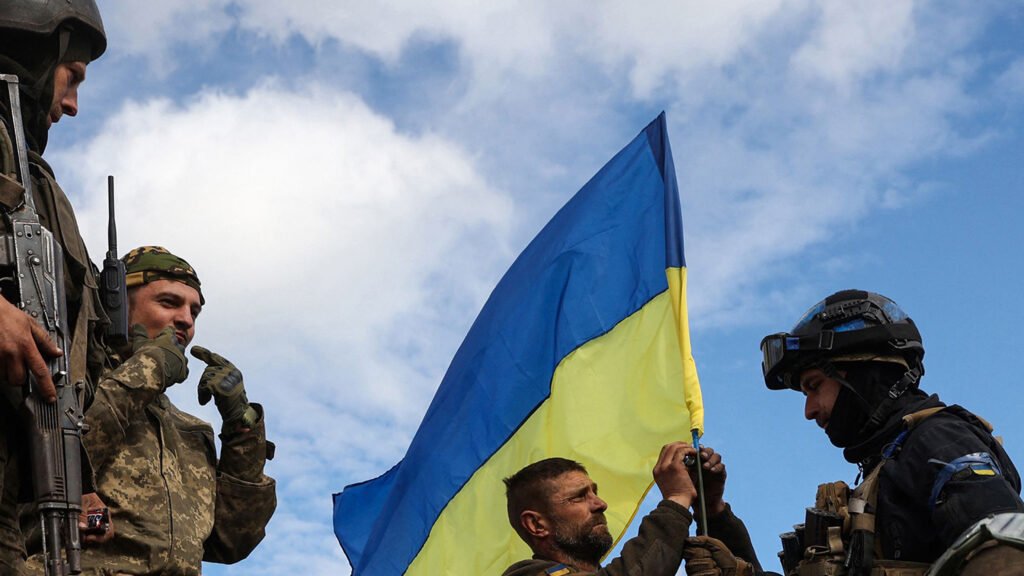
- US Europe losing Ukraine war as Russian ground forces expand control beyond expectations
- Russia controls nearly 19% of Ukraine and plans faster offensives by 2026
- Trump offers no Ukraine peace roadmap, strengthening Moscow’s leverage
- Europe faces rising security risks as U.S. leadership appears uncertain
The Ukraine war is entering a decisive phase, and the balance of power is increasingly tilting in Moscow’s favor. Despite billions of dollars in Western military aid, intelligence sharing, and sanctions, the United States and Europe are failing to alter the battlefield reality.
Russia is advancing steadily, consolidating territorial control, and shaping the political endgame—while Ukraine’s resistance is now largely limited to drone strikes and isolated counterattacks rather than sustained ground offensives.
According to Russian official figures, Moscow currently controls around 19% of Ukrainian territory, including Crimea, most of Donbas, and large portions of Kherson and Zaporizhzhia.
These gains are not symbolic. They represent strategically vital industrial zones, energy corridors, and access routes to the Black Sea. Russian ground forces are not only holding these areas but expanding beyond expectations, advancing on multiple fronts as Ukraine struggles with manpower shortages and ammunition constraints.
READ MORE: Putin says Russia will take more land in Ukraine if Europe sinks peace moves
Ukraine’s military response has increasingly relied on low-cost drone warfare, targeting Russian logistics, oil depots, and rear bases. While tactically effective and politically symbolic, these attacks have failed to stop Russian armored and infantry advances.
Western-supplied systems have not arrived in sufficient numbers or with the operational flexibility Kyiv needs to launch large-scale counteroffensives. NATO’s hesitation to escalate directly has further constrained Ukraine’s options.
ALSO READ: Trump Televised Address: Why Americans Are Watching Closely as Economic Anxiety, Security Fears, and Global Crises Converge
The political signals from Washington have added to Kyiv’s vulnerability. In his holiday season address today, President Donald Trump offered no roadmap, deadline, or concrete mechanism for a Ukraine peace deal. The absence of a clear U.S. strategy has reinforced Russian claims that the West lacks both unity and resolve. For Moscow, Trump’s silence is interpreted not as neutrality, but as strategic ambiguity—one that favors the side already winning on the ground.
President Vladimir Putin, speaking at Russia’s annual Defence Ministry meeting, openly warned that Moscow would seize more territory by force if Ukraine and its European backers refuse to engage with U.S.-led peace proposals. Russia, he said, is advancing “on all fronts” and will achieve its objectives “by force or diplomacy.” Defence Minister Andrei Belousov went further, announcing plans to accelerate offensive operations by 2026, backed by war spending projected at 5.1% of GDP in 2025—a level that underscores Russia’s long-term commitment to the conflict.
For Europe, Russia’s advances represent a strategic failure with far-reaching consequences. European leaders remain rhetorically united behind Kyiv, yet divisions persist over weapons deliveries, war fatigue among voters, and fears of economic blowback. The longer Russia consolidates its gains, the weaker Europe’s negotiating position becomes. Moscow is effectively redrawing borders by force while testing NATO’s credibility without directly triggering Article 5.
For the United States, the implications are equally stark. A Russian victory—or even a frozen conflict on Moscow’s terms—would signal the limits of U.S. power in shaping outcomes through proxy warfare. It would embolden adversaries, weaken American deterrence, and undermine Washington’s claim to global leadership. The Ukraine war was framed as a defining struggle for the rules-based order. Its current trajectory suggests that order is fragmenting.
Looking ahead, Russia’s strategy appears clear: maintain battlefield momentum, exhaust Western political will, and enter negotiations from a position of dominance. Europe faces increased security anxiety, while the U.S. risks strategic overextension without decisive results. Unless Western capitals radically rethink their approach, Russia’s advance in Ukraine may become the most consequential geopolitical shift in Europe since the Cold War.
Will the West accept a negotiated retreat, or continue a failing strategy as Russia reshapes Europe’s security order by force?