


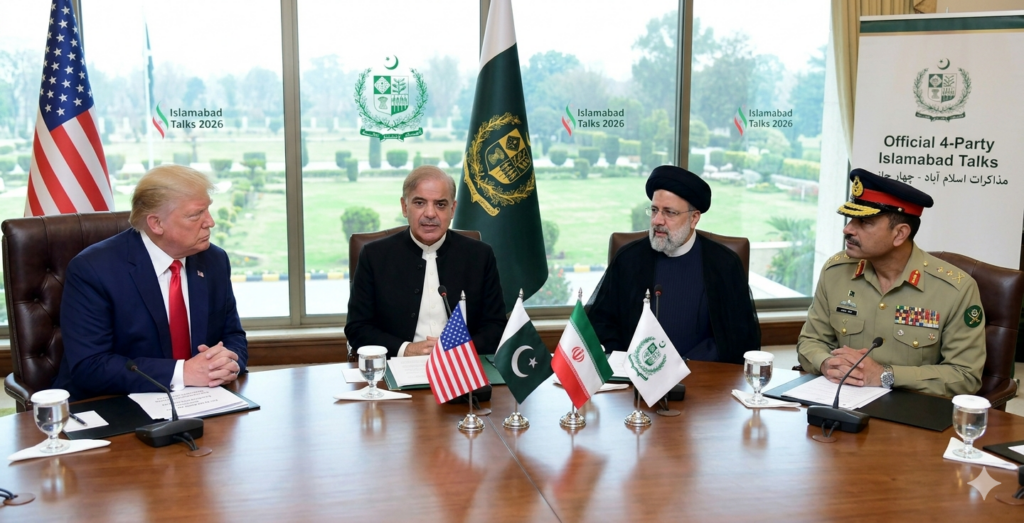
- US Iran Deal Islamabad talks are gaining momentum as Washington and Tehran move closer to a breakthrough memorandum.
- President Donald Trump may travel to Islamabad for a historic diplomatic signing ceremony.
- Global crude oil prices have declined sharply amid optimism over a possible reopening of the Strait of Hormuz.
- The proposed agreement includes sanctions relief, nuclear restrictions, maritime security guarantees, and the release of frozen Iranian assets.
The possibility of a landmark U.S.-Iran agreement appears closer than ever, with senior American officials signaling that negotiations have entered their most critical phase since the outbreak of tensions in the Gulf. Diplomats familiar with the talks say President Donald Trump could even travel to Islamabad in the coming weeks to formally endorse a historic framework agreement aimed at ending the regional crisis, reopening the Strait of Hormuz, and launching a new chapter in Middle East diplomacy.
The emerging diplomatic breakthrough has already triggered a positive reaction across global financial and energy markets. Crude oil prices have dropped sharply amid expectations that the reopening of the Strait of Hormuz and the easing of sanctions on Iran could stabilize global supply chains and prevent a prolonged energy shock. Analysts say traders are increasingly betting that a U.S.-Iran détente could reduce geopolitical risk premiums that have driven volatility in oil markets throughout the year.
According to officials briefed on the negotiations, the White House believes it is close to finalizing a one-page memorandum of understanding with Tehran that would establish the foundations for a broader nuclear and security agreement. The proposed framework reportedly includes a temporary moratorium on Iranian uranium enrichment, gradual sanctions relief from Washington, the release of billions of dollars in frozen Iranian assets, and the phased reopening of maritime transit through the Strait of Hormuz.
UAE Exit from OPEC Reshapes Global Oil Markets and Challenges Energy Cartel Power
The development marks one of the most significant diplomatic moments of Trump’s second term and could reshape the geopolitical architecture of the Middle East. Sources familiar with the talks say the memorandum contains 14 points and is being negotiated by Trump’s envoys Steve Witkoff and Jared Kushner alongside Iranian officials through both direct channels and international mediators.
What has especially fueled global attention is the increasing likelihood that Islamabad could host the next decisive round of negotiations. Diplomatic insiders say Pakistan has emerged as a preferred venue because of its strategic ties with both Washington and Tehran and its growing role as a neutral diplomatic bridge in the Muslim world.
Araghchi’s Beijing Dash: Timing, Tensions, and China’s Emerging Role as Middle East Broker
If finalized in Islamabad, the agreement would represent a massive diplomatic victory for Pakistan, positioning the country once again at the center of high-stakes international diplomacy. Political observers note that Pakistan has quietly maintained communication channels with all major stakeholders during the crisis and has consistently advocated de-escalation in the Gulf region.
The White House reportedly expects a formal Iranian response to several key provisions within the next 48 hours. While American officials remain cautious, they privately admit that the current atmosphere is the closest both sides have come to a workable agreement since hostilities intensified in the region.
Strait of Hormuz on a Knife-Edge: US-Iran Clashes Threaten Ceasefire as Tehran Strikes UAE Targets
Under the current proposal, the agreement would establish a 30-day negotiation window during which both sides would finalize a detailed roadmap covering Iran’s nuclear program, sanctions relief, maritime security, and regional military de-escalation. During this period, Iran’s restrictions on shipping through the Strait of Hormuz and the U.S. naval blockade would gradually be lifted.
Iran war latest: Trump says war will be over quickly
One of the most contentious issues remains the duration of the uranium enrichment moratorium. Sources say Iran initially proposed a five-year pause, while Washington pushed for a 20-year arrangement. Negotiators are now reportedly discussing a compromise ranging between 12 and 15 years.
The draft agreement would also reportedly include strict monitoring mechanisms, including enhanced inspections by United Nations nuclear inspectors and snap verification procedures. Tehran is also expected to commit publicly that it will never pursue nuclear weapons or weaponization-related activities.
Another dramatic development under discussion is the possible transfer of Iran’s highly enriched uranium stockpile out of the country — a demand Tehran had previously rejected. Sources familiar with the talks say multiple options are under review, including temporary relocation under international supervision.
President Trump has repeatedly hinted that major diplomatic progress is underway. Speaking during a White House event, Trump confidently stated that Iran would “end up agreeing” to the proposed framework.
“If they don’t agree, they’ll end up agreeing shortly thereafter,” Trump said, while also suggesting that the reopening of the Strait of Hormuz could happen rapidly if Tehran accepts the final terms.
The president’s comments were interpreted by analysts as an attempt to project strength while keeping diplomatic momentum alive. Trump has also reportedly pulled back from expanding military operations in the Strait of Hormuz after advisers informed him that negotiations were making meaningful progress.
Secretary of State Marco Rubio also acknowledged that discussions are advancing, although he cautioned that the process remains technically and politically complex.
“This is highly complex and technical,” Rubio said. “But we have to have a diplomatic solution that is very clear on the topics they are willing to negotiate on and the extent of the concessions they are willing to make.”
The potential breakthrough has already transformed sentiment across global markets. Brent crude and WTI futures fell as investors reacted positively to signs that Gulf shipping lanes could soon reopen fully. Energy economists say a durable truce between Washington and Tehran could ease inflationary pressures worldwide and improve stability in already fragile global supply chains.
Shipping and insurance companies are also monitoring the negotiations closely. The Strait of Hormuz remains one of the world’s most strategically important maritime chokepoints, handling a major share of global oil exports. Any lasting agreement that guarantees “safe and stable” passage through the strait would likely reduce freight costs and calm international markets.
Meanwhile, regional dynamics remain volatile. Israeli military operations in Lebanon and ongoing tensions involving Hezbollah continue to complicate the broader security environment. Reports suggest Israeli officials remain skeptical about the emerging U.S.-Iran framework and may seek stronger guarantees regarding Iran’s regional proxy networks.
Still, diplomatic momentum appears stronger than at any point in recent months. Analysts say the fact that both Washington and Tehran are publicly signaling optimism simultaneously is itself highly unusual after years of confrontation, sanctions, proxy conflicts, and failed negotiations.
For Pakistan, the possibility of hosting a Trump-Iran diplomatic breakthrough carries enormous symbolic and geopolitical significance. Islamabad has long sought a larger role in regional peace diplomacy, and hosting negotiations between Washington and Tehran would dramatically elevate Pakistan’s international standing.
If President Trump ultimately arrives in Islamabad to endorse the agreement, it could become one of the defining geopolitical moments of 2026 — a summit capable of reshaping Middle East security, stabilizing energy markets, and opening the door to a broader regional reset after years of escalating confrontation.