


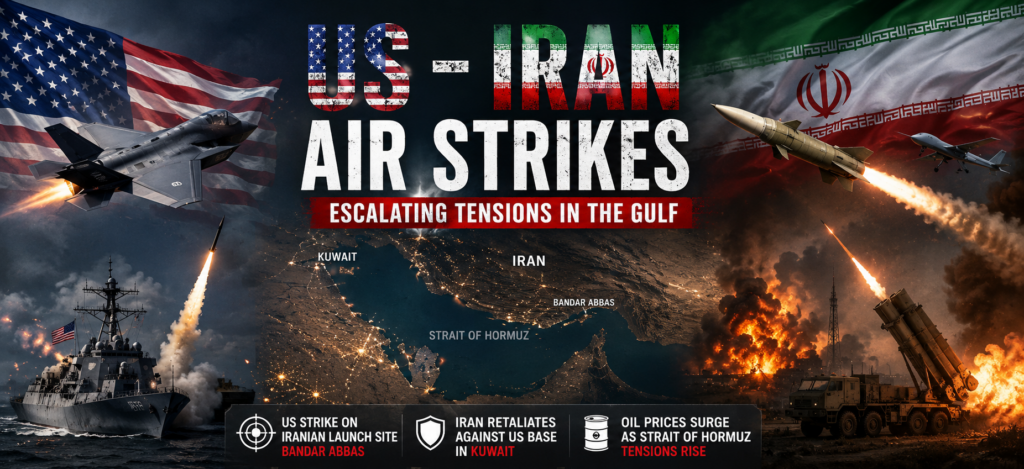
- US Iran Strikes Escalation: US and Iran exchanged fresh strikes, further weakening an already fragile ceasefire in the Gulf region.
- Rising tensions around the Strait of Hormuz pushed global oil prices higher and deepened market uncertainty.
- Pakistan’s behind-the-scenes diplomatic efforts face growing pressure as escalation reduces space for peace negotiations.
The latest round of tit-for-tat military strikes between the United States and Iran has once again exposed the fragility of the emerging ceasefire and raised serious concerns about the future of diplomatic efforts aimed at stabilizing the region. Overnight, both sides targeted each other’s military assets in what officials described as “measured” yet unmistakably escalatory actions, underscoring how quickly the situation can spiral despite ongoing negotiations.
According to U.S. officials, American forces carried out a strike on an Iranian launch site in Bandar Abbas, located along the strategically vital Strait of Hormuz. The operation followed the interception of four Iranian one-way attack drones, with intelligence suggesting a fifth drone was imminent. Washington framed its response as defensive, aimed at neutralizing an immediate threat to maritime security in one of the world’s most critical النفط transit chokepoints.
Iran, however, rejected this narrative. The Islamic Revolutionary Guard Corps (IRGC) claimed that the United States had initiated hostilities and announced a retaliatory strike targeting a U.S. military installation in Kuwait. Although Kuwaiti air defenses reportedly intercepted a ballistic missile, the symbolic significance of the attack was unmistakable. Tehran signaled that it is prepared to escalate further if provoked, warning that future responses would be “more decisive.”
US $1.14 Trillion Defense Bill Signals War-Driven Shift in Military and Economic Strategy
These developments come at a delicate moment. Only days earlier, both sides had engaged in limited strikes, including U.S. attacks on Iranian missile platforms and naval units accused of mining the Strait of Hormuz. The waterway remains partially disrupted, contributing to rising global oil prices, with Brent crude nearing $97 per barrel. Energy markets, already volatile, are reacting sharply to each new military exchange, amplifying economic pressures worldwide.
At the same time, diplomatic channels remain active. Negotiations between Washington and Tehran are focused on a broader agreement that would reopen the Strait of Hormuz and address longstanding disputes over Iran’s nuclear program. Tehran is demanding significant sanctions relief and access to billions in frozen assets, while the United States insists on stricter controls over uranium enrichment. The gap between these positions remains wide.
U.S. and Iran trade strikes as Trump cites no pressure for a peace deal
It is within this volatile landscape that Pakistan has emerged as a key intermediary. Islamabad, leveraging its relationships with both Tehran and Washington, has quietly intensified efforts to de-escalate tensions and bring both sides toward a negotiated settlement. Recent high-level engagements, including visits by Pakistan’s military and diplomatic leadership to Iran, have been aimed at building trust and identifying common ground.
However, the latest exchange of strikes threatens to undermine these efforts. Each military action hardens positions, empowers hardliners, and reduces the political space for compromise. For Pakistan, which has positioned itself as a credible regional mediator, the challenge is growing more complex. Continued escalation risks not only derailing talks but also destabilizing the broader region, directly impacting Pakistan’s own security and economic interests.
Despite these setbacks, analysts caution against writing off diplomacy entirely. Both the United States and Iran have signaled, albeit cautiously, that they remain open to negotiations. The calibrated nature of the strikes suggests that neither side is seeking full-scale war, but rather attempting to strengthen its bargaining position.
Whether Pakistan can successfully bridge the divide remains uncertain. The country has gained increasing recognition as a facilitator of dialogue, but the current cycle of retaliation highlights the limits of mediation in an environment driven by mistrust and strategic rivalry. For now, the path to peace remains narrow, and the coming days will be critical in determining whether diplomacy can prevail over escalation.