


- US Iran Talks: Trump’s conflicting statements on Iran war and negotiations are creating deep policy confusion in Washington and abroad
- Vice President JD Vance is expected to lead critical U.S.–Iran talks in Islamabad despite mixed White House messaging
- Iran’s internal divisions and worsening economic crisis are shaping its unstable negotiating posture
- Pakistan, and Field Marshal Asim Munir in particular, is emerging as an unexpected mediator in the conflict landscape
For three decades covering Washington—from Clinton’s disciplined centrism to Bush’s post-9/11 wars, Obama’s controlled disengagement, and Donald Trump’s first-term disruption—I have rarely witnessed a presidency where foreign policy signals have been so internally contradictory, yet so globally consequential.
Trump’s second term has now entered a phase where contradiction itself has become policy.
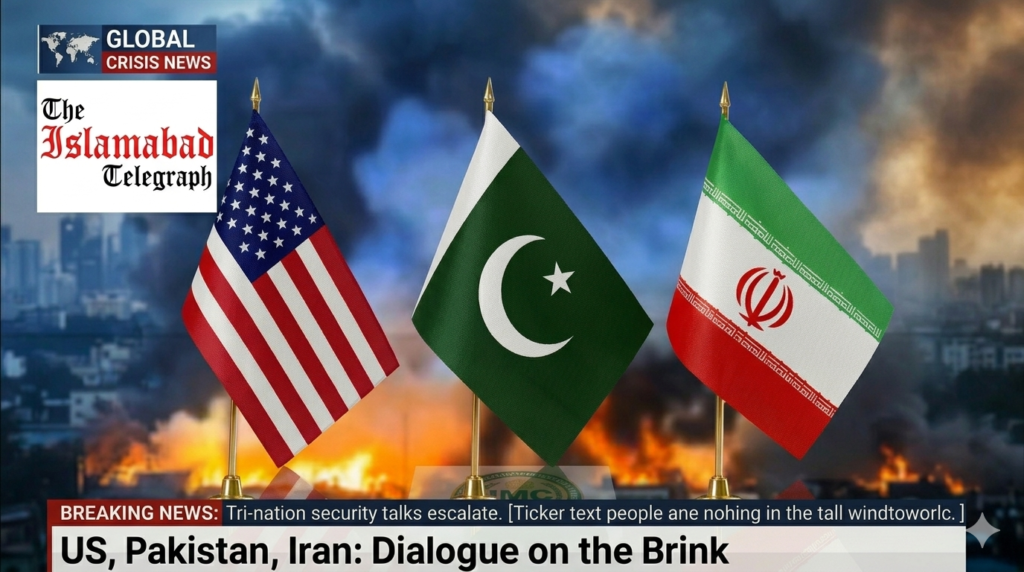
Nowhere is this more visible than in the unfolding Iran war and the rapidly shifting diplomatic choreography ahead of the second round of U.S.–Iran talks scheduled for April 22, 2026 in Islamabad, where Vice President JD Vance is expected to lead the American delegation.
High-Stakes Diplomacy: Iran and U.S. Delegations Converge in Islamabad for Critical Peace Talks
Yet even that basic fact has been destabilized by the president’s own competing statements—delivered within hours of each other.
At one moment, Trump confirms Vance is heading to Islamabad. At another, he claims security concerns have halted the trip. While senior officials scramble to correct the record, allies and adversaries alike are left interpreting Washington through fragments rather than strategy.
This is no longer simple miscommunication. It is structural confusion at the heart of U.S. foreign policy.
High-Stakes Diplomacy: Iran and U.S. Delegations Converge in Islamabad for Critical Peace Talks
Trump’s public messaging on Iran shifts between three competing narratives: imminent diplomatic breakthrough, inevitable military escalation, and full strategic uncertainty. He has claimed Iran has agreed to key nuclear concessions, then warned that no meaningful deal exists. He has described negotiations as “almost finished,” while simultaneously threatening to “destroy critical Iranian infrastructure” if talks fail.
For diplomats in Tehran, Washington, and European capitals, the problem is not just what Trump says—it is that no one can determine which version represents actual policy.
Iran US Talks: Iran’s Internal Fragmentation Meets External Pressure
Inside Iran, leadership divisions have deepened under pressure.
Iran warns it has ‘new cards on the battlefield’ as Pakistan prepares for possible peace talks
Hardliners view U.S. actions as confirmation that confrontation is unavoidable. Pragmatists argue for negotiation before economic conditions deteriorate further. But neither faction has produced a coherent strategy.
Meanwhile, ordinary Iranians continue to absorb the cost of prolonged sanctions, disrupted trade, and financial isolation. Employment opportunities remain limited, inflation continues to erode purchasing power, and access to essential goods is increasingly uneven.
Iran-US Talks in Islamabad: Iran Sends High-Powered Delegation Despite Strait of Hormuz Crisis
Yet paradoxically, external pressure has also produced internal consolidation. The U.S. strikes and escalating confrontation with Israel have strengthened nationalist sentiment and temporarily unified segments of Iranian society behind the state. However, this cohesion masks rather than resolves deeper structural economic and governance crises.
A Divided America, Unified on One Point
In the United States, political polarization remains intense—but on Iran, an unusual convergence is emerging.
Both Trump supporters and critics increasingly agree on one principle: the war must end with a defined, controlled exit strategy. The American public shows little appetite for another prolonged Middle Eastern conflict. The demand is not necessarily for disengagement, but for closure—an outcome that neutralizes Iran as a perceived threat without expanding into another generational war.
That expectation is now shaping political pressure inside Washington.
Pakistan’s Unexpected Rise in the Iran Crisis
Perhaps the most unexpected development in this evolving conflict is the rapid emergence of Pakistan as a relevant diplomatic actor.
Islamabad has moved from the periphery of the crisis to a position of strategic relevance, with Field Marshal Asim Munir increasingly viewed in Washington as a key behind-the-scenes interlocutor.
Munir’s profile in U.S. policy circles rose significantly after the 2025 India–Pakistan skirmishes, where Pakistan’s rapid military coordination and controlled escalation strategy drew attention from American analysts. Since then, his name has surfaced repeatedly in discussions about backchannel diplomacy and de-escalation frameworks.
In the current Iran crisis, Pakistan’s channels are being viewed as potential bridges between hostile negotiating environments. Informal diplomatic engagement, maritime risk reduction discussions, and communication sequencing mechanisms have all reportedly passed through Pakistani-linked intermediaries.
Among segments of American political opinion—especially within pro-Trump constituencies fatigued by war—this has created an unusual perception of Asim Munir as a stabilizing figure capable of enabling what is being described in Washington as an “honorable exit pathway.”
While this framing remains controversial and heavily debated, it reflects a broader reality: Pakistan is no longer a passive observer of Middle Eastern crises. It is increasingly embedded within their diplomatic architecture.
However, this shift is not universally accepted. In Israel and among some Western security circles, Pakistan’s emerging role is viewed with skepticism, reflecting competing strategic visions of how the Iran conflict should ultimately be resolved.
A Presidency Defined by Contradiction
Against this backdrop, Trump’s contradictory messaging takes on systemic significance.
His statements do not merely reflect communication issues—they actively shape diplomatic uncertainty across multiple theaters. Allies hesitate, adversaries recalibrate, and mediators attempt to interpret shifting signals in real time.
The result is a foreign policy environment defined less by strategic clarity and more by continuous recalibration.
As the Islamabad talks approach, the central question remains unresolved:
Is the United States moving toward structured de-escalation—or toward a fragmented escalation shaped by conflicting messages at the highest level of government?
For now, both paths appear to exist simultaneously.
And that contradiction may ultimately define not only the Iran war—but the credibility of American diplomacy itself in the months ahead.