


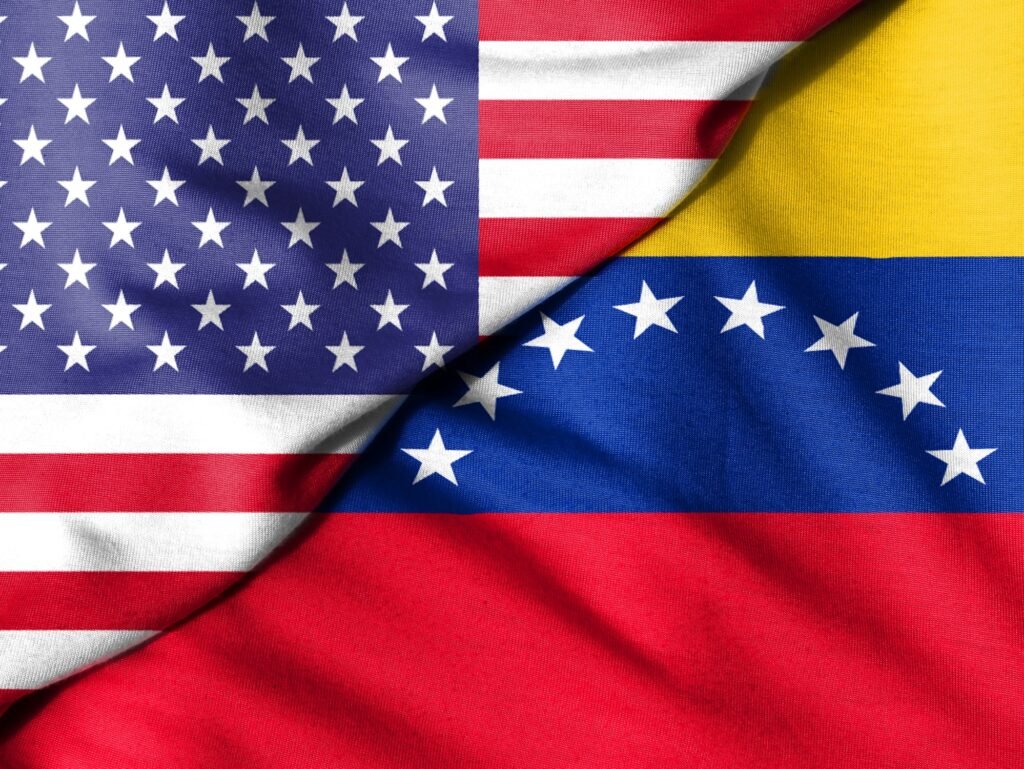
- Massive U.S. Naval Buildup: Seven U.S. warships, a nuclear submarine, and 4,500 troops deployed to the Southern Caribbean under the banner of counter-narcotics operations.
- Venezuela Cries Foul: President Nicolás Maduro accuses Washington of violating Venezuelan sovereignty and warns of potential U.S. military intervention.
- Geopolitical Crossroads: Russia and China back Maduro diplomatically, raising fears of broader great-power tensions in Latin America.
- Uncertain Mission Scope: Pentagon keeps operational details vague, fueling speculation about Washington’s true intentions.
The sudden U.S. naval buildup in the Southern Caribbean has thrown U.S.-Venezuela relations into one of their most perilous phases in decades. Seven U.S. warships, including the amphibious transport dock USS San Antonio, the amphibious assault ship USS Iwo Jima, and the USS Fort Lauderdale, carrying more than 4,500 troops, are now patrolling waters Washington claims are hotbeds for Latin American drug cartels. A nuclear-powered submarine lurks nearby, while P-8 spy planes comb the skies for intelligence.
The Pentagon calls it a counternarcotics operation. Venezuelan President Nicolás Maduro calls it a prelude to war.
For the Trump administration, which long sought to topple Maduro and once even toyed with the idea of military intervention, the official justification is drug interdiction. President Trump has repeatedly vowed to choke off drug smuggling routes into the United States, tying the issue to border security and migration—two pillars of his domestic political brand. In February, Washington even designated Mexico’s Sinaloa Cartel and Venezuela’s own Tren de Aragua as global terrorist organizations.
Despite Israeli and U.S. Blows, Iran Rebuilds Militia Arsenal Across the Middle East
But behind the headlines, this escalation reveals far deeper fault lines—regional power plays, U.S. strategic doctrine, and Venezuela’s fragile political survival.
A History of Distrust
U.S.-Venezuela relations have been poisoned for years, but tensions reached a breaking point when Washington recognized opposition leader Juan Guaidó as Venezuela’s legitimate president in 2019. The Trump administration imposed sweeping economic sanctions on Caracas, crippling its oil sector—the backbone of the Venezuelan economy.
READ MORE: Trump, Putin, and the Alaska Gamble: A Missed Opportunity or the Start of a Grand Bargain?
Maduro, surviving with support from Russia, China, and Iran, has portrayed U.S. actions as part of a long-standing imperialist campaign. He accuses Washington of orchestrating coups, funding opposition groups, and waging what he calls an “economic war” designed to strangle Venezuela into submission.
Now, with U.S. warships massing offshore, Caracas sees echoes of America’s Cold War-era interventions in Latin America—Guatemala in 1954, the Bay of Pigs in 1961, Grenada in 1983, Panama in 1989. The Venezuelan ambassador to the United Nations, Samuel Moncada, warned this week of “kinetic action”—diplomatic jargon for military strikes—accusing Washington of violating the U.N. Charter’s sovereignty provisions.
What the U.S. Says—and What It Doesn’t
Officially, the White House insists this is about narcotics, not regime change. “President Trump is prepared to use every element of American power to stop drugs from flooding into our country,” a White House spokesperson said. Many Caribbean states, worried about cartel violence, publicly back the U.S. campaign.
ALSO READ: US-Venezuela tensions rise as US warships arrive in Southern Caribbean
Yet the Pentagon has provided few details about rules of engagement or mission scope. Military planners are tight-lipped, saying only that forces are ready for “all contingencies.” The deployment of Marines, intelligence aircraft, and even a nuclear submarine hardly looks like a standard Coast Guard drug-bust operation.
This ambiguity fuels Venezuelan fears—and invites speculation about whether Washington might exploit the counternarcotics mission as cover for future action against Maduro’s regime.
Maduro’s Countermoves
Maduro, facing domestic unrest and international isolation, has responded with a mix of defiance and paranoia. He has ordered 15,000 Venezuelan troops to the Colombian border to “combat drug trafficking” and urged civilian militias to conduct weekly defense drills. Caracas insists the U.S. is plotting invasions with Colombia and the Venezuelan opposition.
While some of this rhetoric serves Maduro’s political needs—he often rallies supporters by blaming Washington for Venezuela’s economic collapse—the U.S. naval presence does raise legitimate sovereignty concerns.
Regional and Global Stakes
This standoff comes as Russia and China deepen ties with Venezuela, viewing it as a foothold against U.S. dominance in the Western Hemisphere. Russian military advisers and Chinese economic investments have kept Maduro afloat despite sanctions. Any U.S. military action risks widening geopolitical fault lines, drawing in Moscow and Beijing diplomatically—if not militarily.
At the same time, U.S. pressure could destabilize neighboring states already battling migration crises, cartel violence, and economic shocks. Caribbean nations, while supportive of anti-drug measures, quietly fear being caught between Washington and Caracas if the situation spirals.
What Happens Next
For now, both sides are posturing. The U.S. Navy flexes its muscles; Maduro denounces “imperialist aggression.” Yet miscalculation looms large. A single clash at sea or border skirmish could trigger escalation neither side truly wants.
History shows how quickly U.S. interventions in Latin America can snowball—from limited missions to regime-change quagmires. Washington insists this isn’t another Cold War-style operation. Caracas fears it’s precisely that.
The coming weeks will reveal whether this naval buildup remains a counternarcotics show of force—or the opening act in a far more dangerous drama.