


-
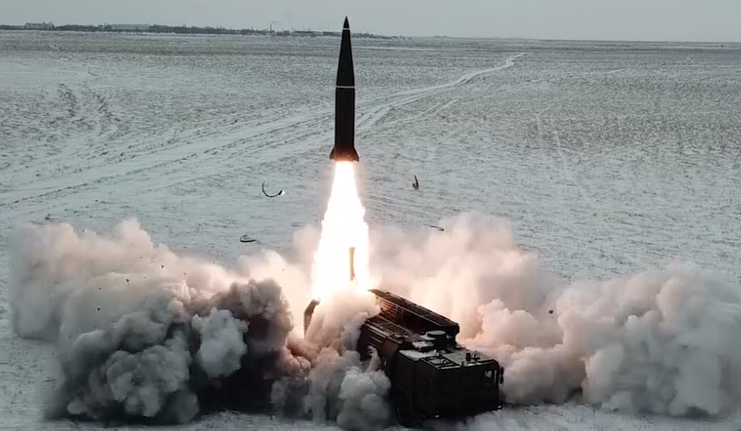
Russia has secretly deployed the INF-banned 9M729 missile 23 times since August, defying U.S. warnings and breaching long-standing nuclear norms.
-
The weapon’s 2,500 km range places almost every European capital within striking distance.
-
Ukraine alleges these strikes directly challenge Trump’s peace diplomacy and call for renewed Western deterrence.
-
The resurgence of INF-range systems signals a new era of instability — one where arms control has collapsed and deterrence is once again the only language left.
In the shadow of crumbling treaties and broken promises, Russia has quietly reignited a weapon once buried under the ashes of the Cold War. The 9M729 cruise missile — a system so controversial it forced President Donald Trump to withdraw from the Intermediate-Range Nuclear Forces (INF) Treaty in 2019 — has now been used 23 times against Ukraine, according to senior officials in Kyiv.
This revelation marks the first confirmed combat use of the 9M729 — a missile with a reach of 2,500 kilometers, capable of carrying either conventional or nuclear warheads. One missile reportedly flew over 1,200 km from launch to impact, illustrating a technical range far beyond the limits that once anchored global nuclear stability.
For the international community — from UN Security Council officials to CEOs managing Europe’s energy and defense sectors — this is not just another act of Russian aggression. It is a strategic signal that the age of arms control is ending, replaced by a ruthless race for deterrence supremacy.
The 9M79 Missile That Ended a Treaty
The INF Treaty, signed in 1987 by Ronald Reagan and Mikhail Gorbachev, banned ground-launched missiles with ranges between 500 and 5,500 kilometers. For decades, it kept Europe free of intermediate-range nuclear systems and prevented either superpower from deploying mobile, hard-to-detect weapons that could strike within minutes.
READ MORE: Exclusive: Russia uses missile in Ukraine that led Trump to quit nuclear treaty, Kyiv says
That fragile equilibrium began to erode when Washington discovered Moscow’s covert development of the 9M729. U.S. intelligence concluded that Russia’s tests violated the treaty’s limits — a claim Moscow dismissed as “fabrication.” In 2019, President Trump made a fateful decision: to withdraw from the INF Treaty, citing Russia’s deception.
Now, six years later, the same weapon that triggered the treaty’s collapse is roaring back into active service — in Ukraine’s skies.
A Message to Trump — and the West
Ukrainian Foreign Minister Andrii Sybiha was blunt: “Russia’s use of the INF-banned 9M729 against Ukraine demonstrates President Putin’s disrespect for the United States and for President Trump’s diplomatic efforts to end the war.”
ALSO READ: Trump Must Not Blink: Why He Must Meet Putin and End the Ukraine War
This statement carries layers of geopolitical messaging. Kyiv’s leadership has positioned itself in favor of Trump’s evolving peace proposals, hoping that his return to office could bring leverage over Moscow. But each new 9M729 launch complicates that calculus. It signals that Putin is not negotiating from weakness, but rather testing the limits of U.S. restraint.
Western analysts interpret the timing of these strikes — beginning less than a week after the Trump-Putin summit in Alaska — as calculated pressure. “Putin is ramping up pressure as part of the Ukraine negotiations,” said William Alberque of the Pacific Forum. “The 9M729 was designed to hit targets in Europe, not just Ukraine.”
Indeed, the missile’s range places Berlin, Warsaw, and even London within theoretical striking distance. What was once a U.S.-Russia arms control issue has now become Europe’s nightmare.
Testing Boundaries — Technically and Politically
Recent images analyzed by the Middlebury Institute of International Studies confirm fragments marked 9M729 recovered from a strike on the Ukrainian village of Lapaiivka, which killed four civilians. The fragments — including cable tubing and engine casing — matched known 9M729 configurations, leaving little doubt about the weapon’s identity.
Experts say Russia is using these launches not merely for tactical purposes, but also as field experiments. “It’s an opportunity to test the system in a live combat environment,” explained Douglas Barrie of the International Institute for Strategic Studies. “But 23 launches imply deliberate military use, not testing alone.”
The missile’s mobility — a key reason for its INF ban — allows it to be fired from concealed positions deep inside Russia. That makes detection nearly impossible and interception exceedingly difficult. Unlike the Kalibr or Kh-101, which are launched from ships or bombers, the 9M729’s ground-based launcher gives Moscow flexibility — and plausible deniability.
Trump’s Nuclear Crossroads
The timing of Moscow’s escalations has coincided with Trump’s own dramatic military directives. On Thursday, he ordered the Pentagon to resume nuclear weapons testing, citing “other countries’ testing programs” as justification. The subtext was unmistakable: Russia’s 9M729 campaign has shifted Washington’s internal calculus on deterrence.
Trump has long argued that treaties must reflect reality, not nostalgia. His administration viewed the INF collapse not as a setback, but as a necessary reset — one that would allow the U.S. to modernize and outpace adversaries. Yet Putin’s latest moves risk pushing the world into a second Cold War, one with more actors, less trust, and far more dangerous weapons.
Europe’s Security — Hanging by a Thread
“If it’s shown that Russia’s using INF-range missiles, which could easily be nuclear, in Ukraine, then that is an issue for European security — not just Ukraine,” warned John Foreman, former British defence attaché to Moscow and Kyiv.
Indeed, the entire European security architecture now faces a stress test. NATO’s missile defenses, already strained by drone and hypersonic threats, are ill-suited for low-altitude, mobile-launched cruise missiles. For European CEOs managing logistics, energy, and manufacturing chains, this instability is not abstract — it shapes insurance costs, shipping routes, and investment decisions.
Prophecy: A Dangerous Return to the Shadows
If the last decade was about competition, the coming one will be about coercion. Russia’s 9M729 campaign marks a geopolitical inflection point — where the deterrence balance is again shifting eastward, and arms control has collapsed into strategic ambiguity.
Trump’s renewed nuclear assertiveness may restore balance temporarily, but without a new framework, the world risks entering a multipolar arms race where power projection replaces predictability. Europe stands at the front line, America at the crossroads, and Russia — emboldened by its defiance — is rewriting the rules of confrontation.
Unless diplomacy revives the logic of restraint, the 9M729 will not just be a missile — it will be a symbol of how the world forgot to control its own weapons again.