



LAYYAH, SOUTH PUNJAB — A young and relentless Deputy Commissioner of Layyah has locked horns with one of the oldest forces in this part of Pakistan: the Sindh River, the mighty Indus that has spent centuries shaping the landscape around it, nourishing its fields and, every few years, reminding the people living beside it of its capacity for destruction.
The contest is unequal. The river has water, force and history. It carved its way through these plains long before Layyah existed as a district and before the communities along its banks built their homes, planted their crops and tethered their livestock beside its waters.
Asif Ali Dogar has something else: an administrative machine, heavy equipment, provincial backing and a determination that appears to have grown in proportion to the disaster itself.
The flood of 2026 is enormous. In villages along the river, water and erosion have swallowed homes and agricultural land, forcing families to flee with whatever they can load onto tractors, carts or animals. In Basti Kanjal, around 500 households have reportedly been displaced as the river continues to eat into the settlement.
While the river expands its reach, Dogar has been trying to narrow it—to force the water back towards its course, strengthen vulnerable banks and buy time for thousands of people still in its path.
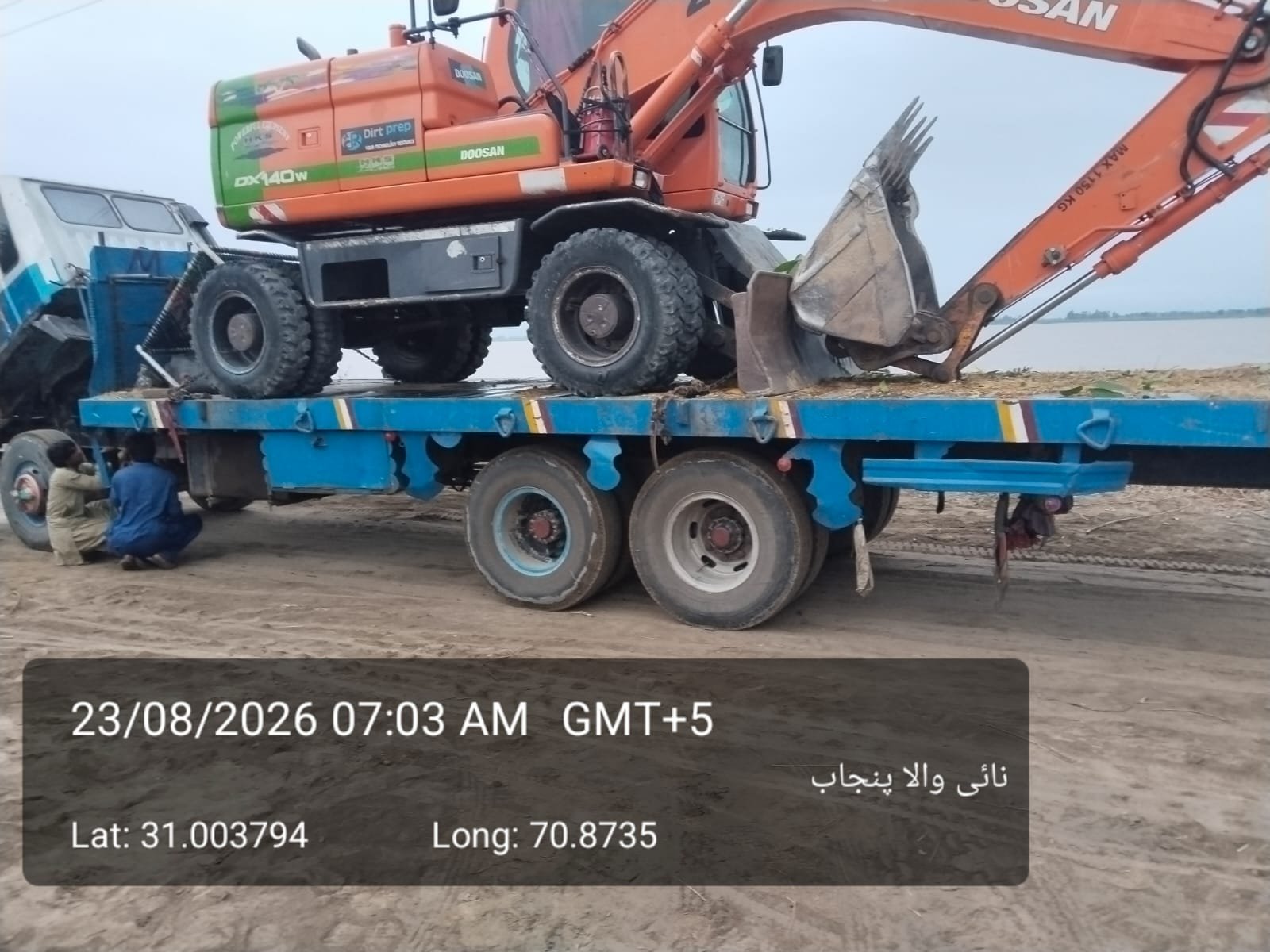
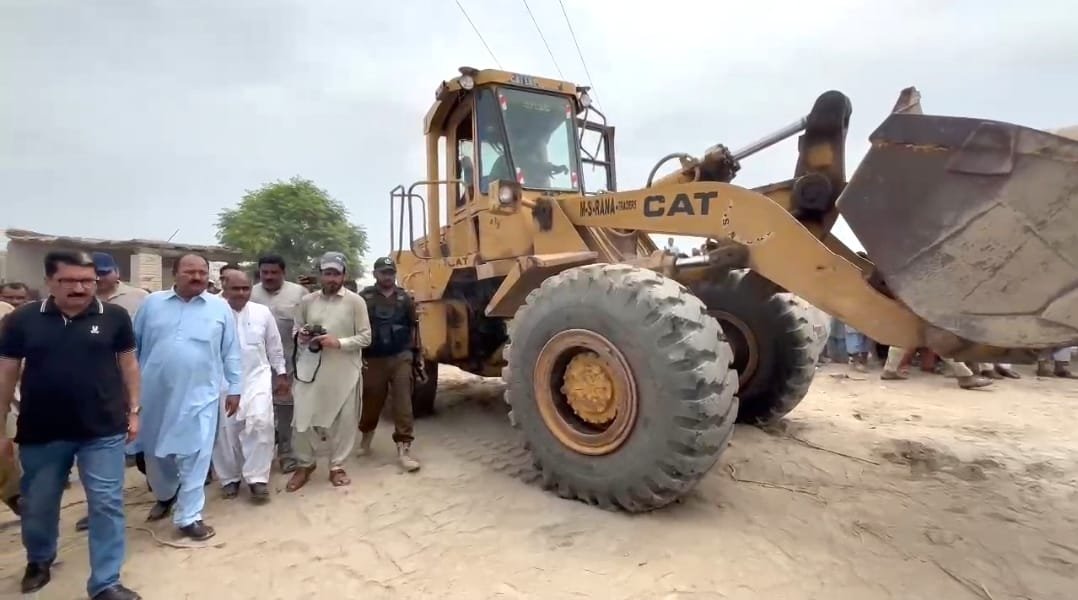
The result is an unusual spectacle on the Layyah riverfront: excavators and cranes at threatened sites, trucks carrying crushed stone and construction material moving into the countryside, workers preparing protective structures and officials moving between settlements where the difference between safety and displacement can be measured in metres.
READ NEXT: A Blueprint for South Punjab: How DC Asif Ali Dogar Accelerated the Layyah Development Transformation
It is less a conventional relief operation than a race against geography.
And the young deputy commissioner appears determined not to lose it.
The River Layyah Remembers
People in Layyah have never needed to be told that the Indus is powerful.
They have lived with it for generations.
The river gives and takes with the same indifference. Its waters make the surrounding land fertile and sustain agriculture, but when levels rise and the current begins attacking vulnerable banks, the relationship changes.
The river becomes a moving wall.
Layyah’s older residents remember the floods of the past quarter-century with unease. The 2005 floods affected scores of villages in the district, while the 2010 disaster brought extraordinary devastation across Pakistan and deep into the Indus basin.
In 2016, Dawn reported that continuous Indus erosion in Layyah had spread across thousands of acres and displaced large numbers of families, with settlements including Basti Suhiya, Basti Gishkori, Basti Bada Mohana, Basti Dullo, Basti Jarh and Basti Chandhrer among those affected.
For people living beside the river, therefore, 2026 is not a new story.
It is an old one returning with new intensity.
When a Village Becomes Water
In Basti Kanjal, the destruction is difficult to comprehend.
Hundreds of houses have been consumed by erosion. Agricultural land has disappeared. Families have evacuated with livestock and whatever possessions they could save.
A village does not vanish in one dramatic instant.
READ MORE: Punjab enters new era of development, technology with expanding public services: CM Maryam
It disappears piece by piece.
First comes the field at the edge of the settlement. Then a tree. Then a path, a boundary wall, a room—and finally a house.
By the time the river reaches the foundations, families have already been living with the knowledge that their homes may not survive.
Evacuation is not simply a matter of walking away. A household must decide what can be carried: bedding, cooking equipment, clothes, documents, food and livestock.
The possessions of an entire family can be reduced to whatever fits on a tractor.
And once they leave, there is no guarantee that the house will still exist when they return.
Asif Ali Dogar: The Man Trying to Stop It
This is where Asif Ali Dogar’s response becomes significant.
The deputy commissioner has moved the district administration into a high-tempo operation aimed not only at helping families after destruction but at preventing further destruction where possible.
The administration has dispatched heavy machinery to vulnerable sites. Excavators and cranes have been moved towards erosion points, trucks carrying stone and construction material have arrived, and workers have been deployed.
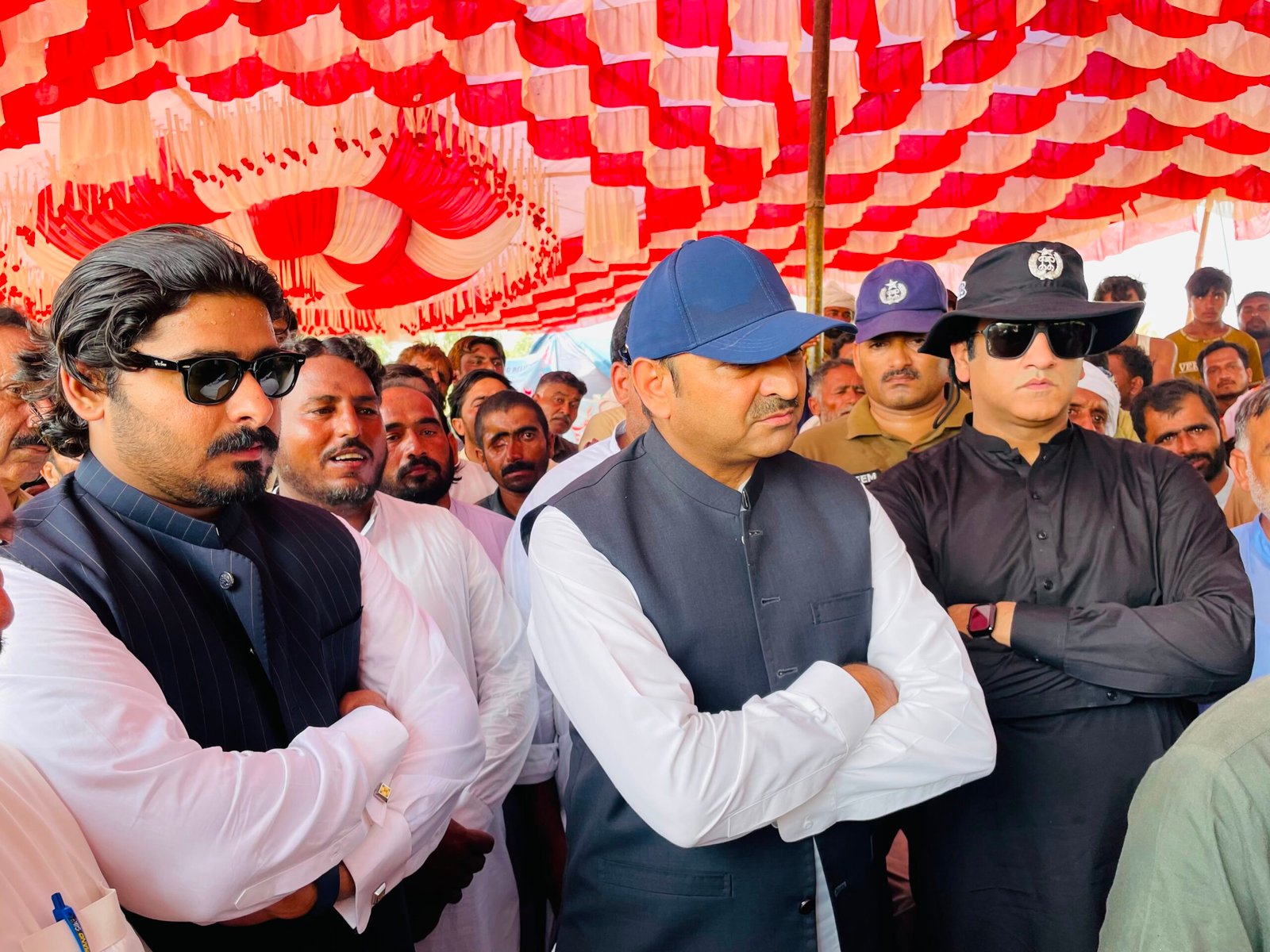
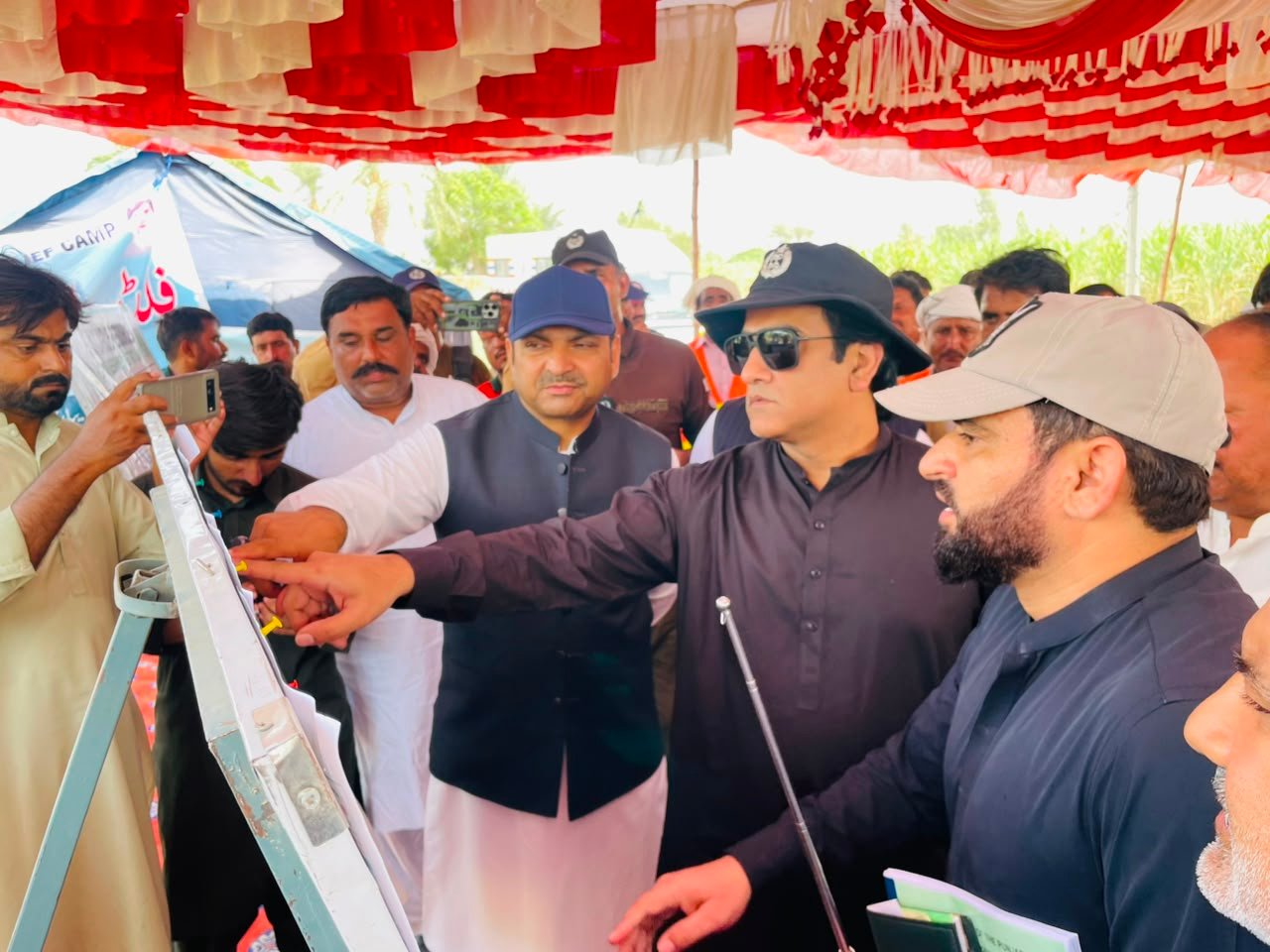
On August 18, officials visited Samra Nasheeb, Basti Kanjal and Basti Garmani to assess the situation. One hundred tents were provided, while vehicles and workers were deployed to help families move towards safer areas.
But the larger objective is to confront the erosion itself.
A stud structure is being constructed to control riverbank erosion and protect vulnerable communities. On August 23, the PDMA chief visited Samra Nasheeb on the directions of Punjab Chief Minister Maryam Nawaz Sharif to review the response.
The machinery represents more than government equipment.
It is an attempt to buy time.
Every truckload of stone is an attempt to strengthen the line between the river and the homes behind it. Every excavator is an effort to slow the river’s advance.
That is why the operation has acquired the atmosphere of a battle.
The river is advancing.
The administration is building.
“I Am the Witness”
Among residents and local observers, there is a mixture of fear, anger and cautious confidence.
Syed Imran Ali Shah, a local journalist and social figure closely observing the crisis, describes it as one of the biggest disasters witnessed in the area in decades.
Yet his assessment of the district administration is notably different from the devastation around him.
“I am the witness to district management’s quick response. They are doing all within their domain. I’m sure things will be normalized soon.”
Imran told The Islamabad Telegraph that he had personally witnessed the administration’s rapid mobilisation.
His assessment comes from communities where people are watching machinery arrive while the river continues to eat away at the land.

For many residents, the speed of the response has become almost as important as its eventual success.
They know no district administration can control the Indus completely.
But they also know the difference between an administration that arrives after a village disappears and one that reaches the river while there is still something to save.
“It’s a Huge Disaster”
Not everyone believes enough is being done.
Dr. Javed Kanjal, chief of the Kanjal clan and a prominent Layyah figure, has been far less satisfied with the response.
Speaking to Express News correspondent Irshad Roongha during a special transmission, Javed described the destruction in Kanjal as catastrophic and accused the authorities of failing to do enough to save the village.
“It’s a huge disaster. Thousands of the residents of Kanjal village have been displaced. It’s pity that Punjab government has not arrived to rescue.”
His criticism captures the contradiction at the heart of Layyah’s crisis. The administration can point to machinery, tents, transportation, construction work and officials in the field. Residents whose homes have disappeared can point to the water. Both are looking at the same disaster from different sides. For an administrator, response is measured in equipment deployed, families evacuated and protective structures built. For a displaced family, the measurement is brutally simple: whether the house is still standing.
Layyah Flood 2026: The Battle Is Measured in Inches
River erosion makes this crisis different from an ordinary flood.
Floodwater can rise and fall. Erosion can continue as the current attacks the bank, loosening soil and destabilising everything above it.
Agricultural land can disappear within hours. Roads can collapse. Houses can suddenly find themselves dangerously close to the water.
The battle therefore becomes one of inches.
A few metres of protected bank can mean the difference between a family remaining in its home and becoming displaced.
For Dogar, the geography has become a clock.
The faster the administration can move equipment, material and manpower, the greater the possibility of preventing further displacement.
Provincial Backing: Maryam Nawas Assured her Help
Dogar’s effort is taking place within a broader Punjab government response to river erosion.
The provincial government has previously approved a Rs95 million project involving ten stud embankments in Bait Moonghar to protect settlements, agricultural land and infrastructure from erosion.
More recently, the provincial disaster-management machinery has been directly engaged in the current emergency. The PDMA chief’s August 23 visit to Samra Nasheeb came on the directions of Chief Minister Maryam Nawaz Sharif, with anti-erosion construction underway and authorities reviewing relief and preventive measures.
For a district administration, that support is crucial.
A deputy commissioner can coordinate officials and deploy the machinery available to the district. But large-scale flood protection requires resources from higher levels of government.
A Crisis Beyond the Riverbank
The stakes are larger than Basti Kanjal. If erosion continues, agricultural land will be lost, livestock displaced and roads and infrastructure placed under increasing pressure. Families dependent on farming could suddenly lose both their homes and livelihoods. Then comes the second crisis: where do displaced families go, where do children study, where do animals stay, and how does a farmer earn after losing his land? These questions often emerge only after the water recedes and the immediate emergency has passed.
That is why preventing displacement is more valuable than simply managing it. If the riverbank can be protected today, a family may never need a relief tent tomorrow. If agricultural land can be saved, a farmer may never need compensation. For Layyah’s riverine communities, every protected stretch of bank represents more than flood control—it can mean preserving a home, a livelihood and a village before the damage becomes irreversible.
A Young Man Against an Ancient Force
There is no illusion that a young deputy commissioner can defeat the Indus.
No official can order an ancient river to stop flowing.
The challenge is not to defeat the river but to contain its destructive reach. That requires engineering, sustained investment, monitoring of vulnerable stretches, early-warning systems, evacuation plans and long-term river-management policies.
The present operation may buy Layyah valuable time, but the larger question is what the district can do with that time. For now, the most striking feature of the crisis is the determination visible along the riverbank, where officials and workers are attempting to hold back an advancing river.
There is something almost symbolic about an excavator facing the enormous body of water. The machine has a bucket; the river has centuries. The machine can move tonnes of earth, while the river can move a village. Yet the machinery is there, working against the current and the collapsing banks.
That is the significance of the operation. The people of Layyah have lived with the Indus long enough to know that courage does not mean believing the river can be defeated. It means refusing to surrender before every possible measure has been attempted.
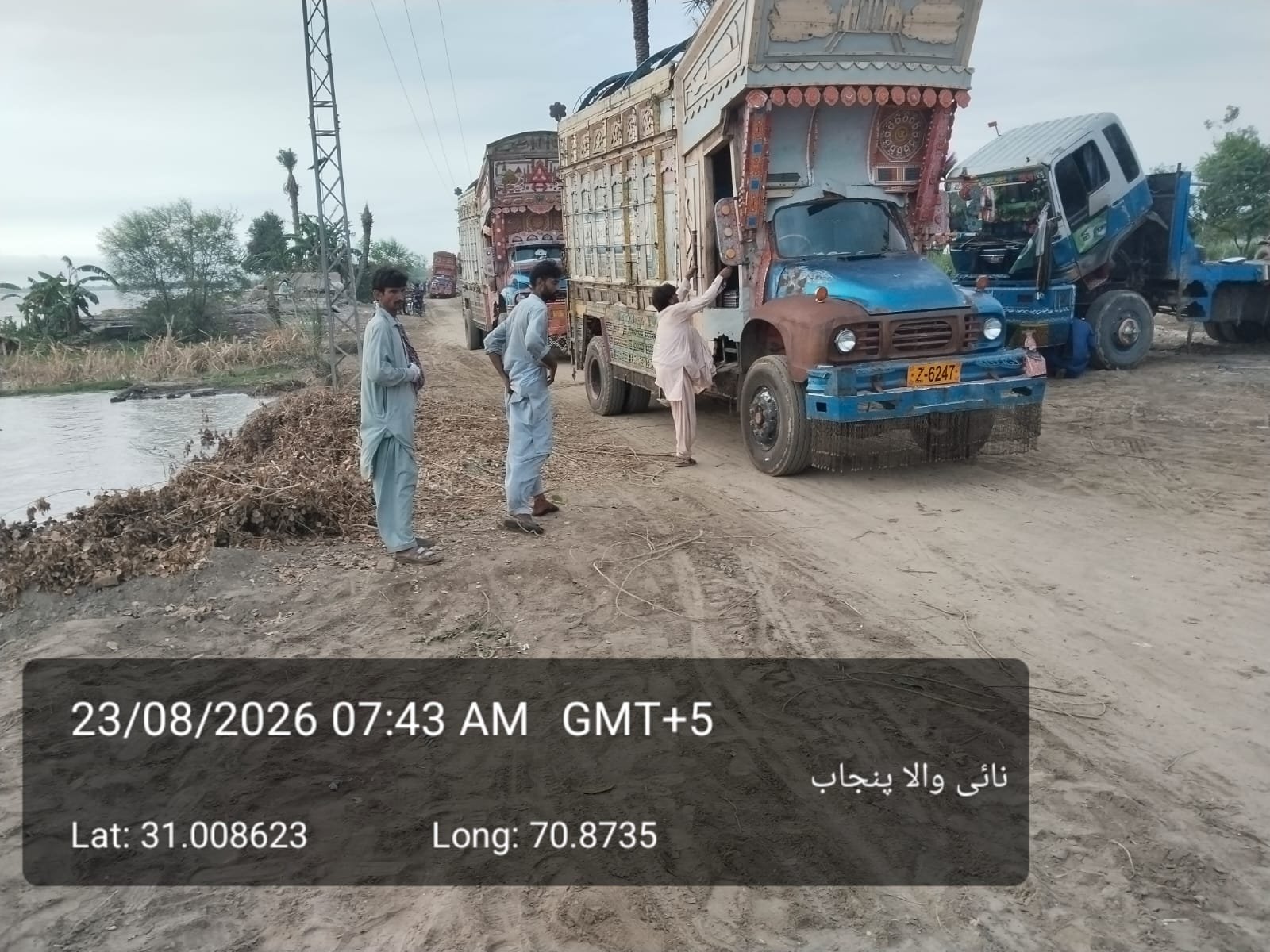
That appears to be the spirit behind Dogar’s response. The flood is huge, the erosion severe and the displacement painful. But trucks continue to arrive, stone continues to move, machinery continues towards vulnerable sites and workers remain along the riverbank.
Officials continue visiting affected communities while families continue watching the water. For Syed Imran Ali Shah, the response offers reason for cautious optimism. For Dr. Javed Kanjal, however, the devastation is evidence that much more remains to be done.
Between those two assessments lies the reality of Layyah in August 2026: the administration has moved, but the disaster has moved faster. The river has already taken hundreds of homes, while thousands more people remain vulnerable to further erosion and displacement.
For centuries, the Indus has had the final word. This time, a young deputy commissioner is trying to interrupt the sentence. The trucks keep coming, the excavators keep working and the stones keep moving into position.
On the banks of the ancient river, Layyah is fighting for one more day, one more village, one more field and one more home. The river is determined to advance; Asif Ali Dogar appears equally determined to make it stop.