



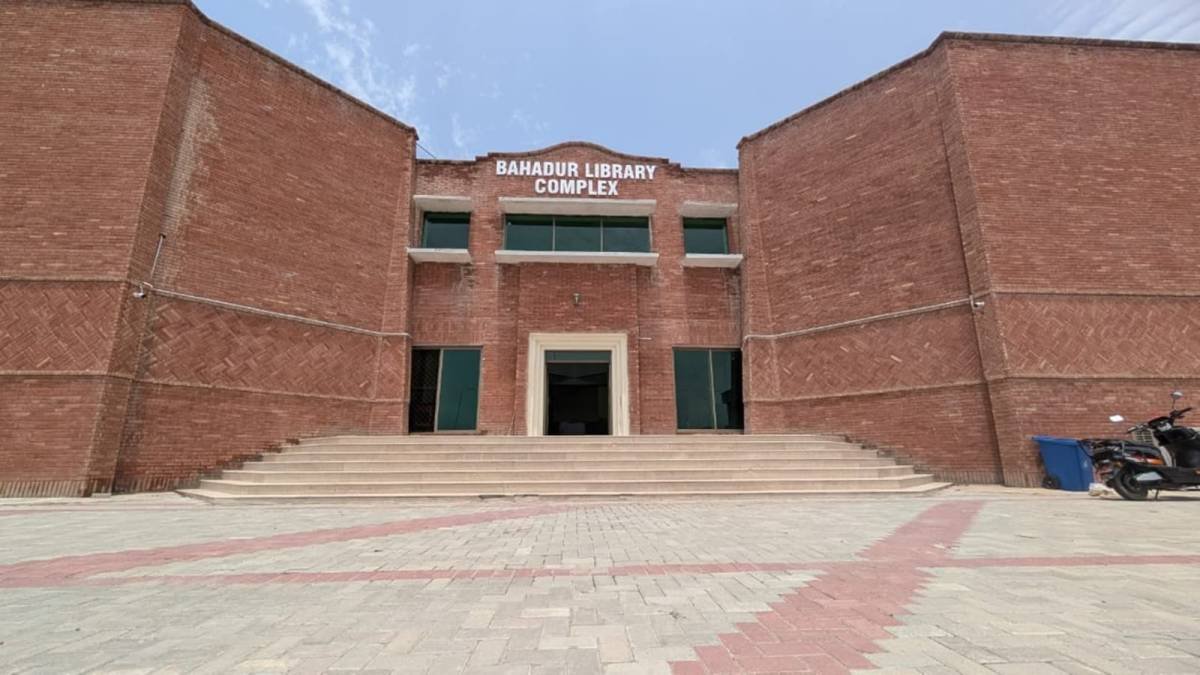
- Transforming Neglect into Knowledge: Discover how a derelict, abandoned structure in Layyah was brilliantly revived into a state-of-the-art digital library and community hub.
- Visionary Administrative Leadership: Explore the hands-on initiative of Deputy Commissioner Asif Dogar, who completed the complex without extra funding while championing youth and education.
- Empowering the Next Generation: Featuring specialized resources for CSS aspirants, a dedicated children’s area, and modern tech facilities under the governance of Punjab’s leadership.
In the quiet, sun-baked plains of Punjab, where the rhythms of life are often dictated by the slow, enduring pulse of the Indus River, public infrastructure projects have historically been vulnerable to a familiar administrative malady: the grand inauguration followed by silent, lingering decay.
Across Pakistan’s smaller districts, ambitious blueprints are frequently drafted with fanfare, only for the resulting structures to slip into institutional amnesia—abandoned, stripped of fixtures, and left as haunting monuments to wasted public capital.
Yet, occasionally, an administrative intervention breaks the cycle. It is driven not by bureaucratic routine, but by an acute sense of stewardship. In the district of Layyah, a derelict, half-built skeleton of concrete and unrendered brick has undergone a startling metamorphosis.
What was once a symbol of administrative failure is now the Bahadur Digital Library Complex—a state-of-the-art sanctuary for learning, research, and civic aspiration.
From Desolation to Vision: The Backstory of the Bahadur Digital Library
The genesis of the project dates back to the 2017–18 fiscal year. Conceived with high hopes and a substantial allocation of Rs. 124 million, the Bahadur Digital Library Complex was structurally completed by 2021.
But completion on paper rarely translates to utility on the ground. Caught in a vortex of shifting administrative priorities, lack of local ownership, and systemic neglect, the building was left entirely non-functional.
Months turned into years, and the neglect compounded. Essential fixtures, wiring, and infrastructure elements were systematically stolen or vandalized, leaving behind hollow roofs, mud-strewn floors, and chaotic, unfinished rooms. Initial official estimates suggested that restoring the complex would require an additional infusion of roughly Rs. 60 million—a steep price tag that threatened to consign the project to permanent abandonment.
Enter the district administration under the visionary leadership of Deputy Commissioner Asif Dogar. Confronted with a massive public asset rotting in plain sight, Dogar rejected the conventional bureaucratic instinct to write off the loss or wait indefinitely for fresh development grants. I
READ MORE: Maryam Nawaz Sharif’s Symbolic Gesture: A Beacon of Empowerment in Pakistani Law Enforcement
nstead, he recognized that true governance lies in resourcefulness. Over a rigorous nine-month push, the district administration took direct ownership of the crisis, mobilizing internal resolve and local cooperation to make the complex functional—entirely without requesting any additional funding.
Anatomy of a Transformation: Inside the Modern Complex
To walk through the Bahadur Digital Library today is to witness a masterclass in modern civic repurposing. The transformation is absolute, shifting the visual and structural narrative from despair to vibrancy.
The complex now stands fully restored, painted in clean, professional tones, and humming with intellectual activity. At its heart is a magnificent 500-seat multipurpose hall, designed to host academic seminars, community forums, and cultural gatherings. Flanking this are traditional reading rooms alongside a cutting-edge e-library equipped with computers and reliable internet connectivity.
READ MORE: The New Bottleneck in America’s AI Build-Out: A Shortage of Cheap Money
What sets the Layyah library apart from traditional provincial reading rooms is its holistic, contemporary design philosophy. Understanding that modern education requires diverse support ecosystems, the administration integrated specialized spaces:
-
Dedicated Children’s Library and Play Area: Fostering a reading culture from a tender age, complete with engaging resources for young minds.
-
On-Site Daycare Centre: A progressive feature that removes structural barriers for working parents, researchers, and mature students who need reliable childcare while pursuing their academic goals.
-
Advanced Tech Integration: Planned AI classrooms and e-commerce training facilities designed to equip Layyah’s youth with digital-age economic skills.
With an initial influx of 10,000 books, reinforced by modern security apparatuses including CCTV installations, the facility balances intellectual openness with absolute safety.
When contacted, deputy commissioner Layyah Asif Doger said he was just playing his role to transform Chief Minister Punjab Maryam Nawaz Sharif’s dream into reality.
” We have been strictly following Chief Minister Maryam Nawaz Sharif’s instructions to provide the masses with all essential facilities, including modern libraries, sports grounds, and vital infrastructure. Madam CM has been fully involved and highly supportive in completing projects like libraries, sports clubs, and various initiatives for the uplift of the masses,” Dogar told The Islamabad Telegraph.
— Asif Dogar, Deputy Commissioner Layyah, speaking exclusively to 伊斯兰堡电讯报
Forging Bureaucrats: The CSS Aspirants’ Sanctuary
For decades, ambitious students, graduates, and young professionals in remote districts like Layyah faced a cruel geographical and informational penalty. Preparing for elite national examinations—most notably the fiercely competitive Civil Superior Services (CSS) exams—historically required migrating to metropolitan hubs like Lahore or Islamabad, imposing heavy financial and psychological burdens on middle-class and working-class families.
The Bahadur Digital Library’s dedicated competitive examination study rooms have fundamentally altered this equation. By providing a quiet, well-resourced, and technologically empowered environment, the library acts as an equalizer. Local graduates no longer need to leave their hometowns to access standard reference texts, global digital journals, and focused peer study groups. It is an incubator for future civil servants, diplomats, and policymakers, democratizing access to state power and administrative leadership from the grassroots.
A Wave of Public Acclaim
The turnaround has generated a profound wave of goodwill and appreciation across Layyah. Academics, civil society members, students, and elders from all walks of life have lauded the initiative, viewing it as a rare triumph of executive will over administrative inertia.
In a region where cynicism toward public projects is often deeply ingrained, the revival of the library has restored faith in local governance. It demonstrates that with clear vision, uncompromising administrative oversight, and genuine empathy for public needs, stagnant systems can be powerfully redirected.
As young scholars sit beneath the bright, modern lights of the reading rooms—far removed from the mud and hollow roofs of its abandoned past—the Bahadur Digital Library stands not just as a building, but as a living testament to what is possible when leadership chooses to build for the future.
Maryam Nawaz Sharif: A Chief Minister On A Mission
Chief Minister Maryam Nawaz Sharif is spearheading a transformative era across Punjab, driven by an unwavering vision to modernize the province’s urban and rural landscape into a benchmark of progress. Under her dynamic leadership, historic commercial markets and bustling bazaars are undergoing remarkable revamps, featuring upgraded facades, optimized pedestrian walkways, and improved civic amenities that breathe new life into inner cities.
Simultaneously, public spaces are being entirely reimagined: neglected libraries are being restored into state-of-the-art digital knowledge hubs, modern sports complexes are rising to engage the youth, and monumental public transport and mass transit initiatives are bridging regional gaps to ensure seamless mobility for millions.
Insiders reveal that this unprecedented wave of development is the direct result of Chief Minister Maryam’s hands-on governance style and relentless personal supervision. Maintaining a constant, direct line of communication with commissioners and deputy commissioners across every division and district, she ensures that administrative machinery remains accountable, proactive, and fully aligned with her high standards of execution.
By combining visionary planning with grassroots administrative mobilization, Maryam Nawaz is successfully turning her promise of a prosperous, advanced Punjab into a tangible reality appreciated by citizens from all walks of life.