


- Afghan Refugee Crisis worsens as U.S. freezes all Afghan immigration cases.
- Terror incident in Washington triggers unprecedented American and European security backlash.
- Pakistan accelerates mass deportations amid rising Afghan-linked militancy.
- Thousands of Afghans who worked with the West now face danger, statelessness, and despair.
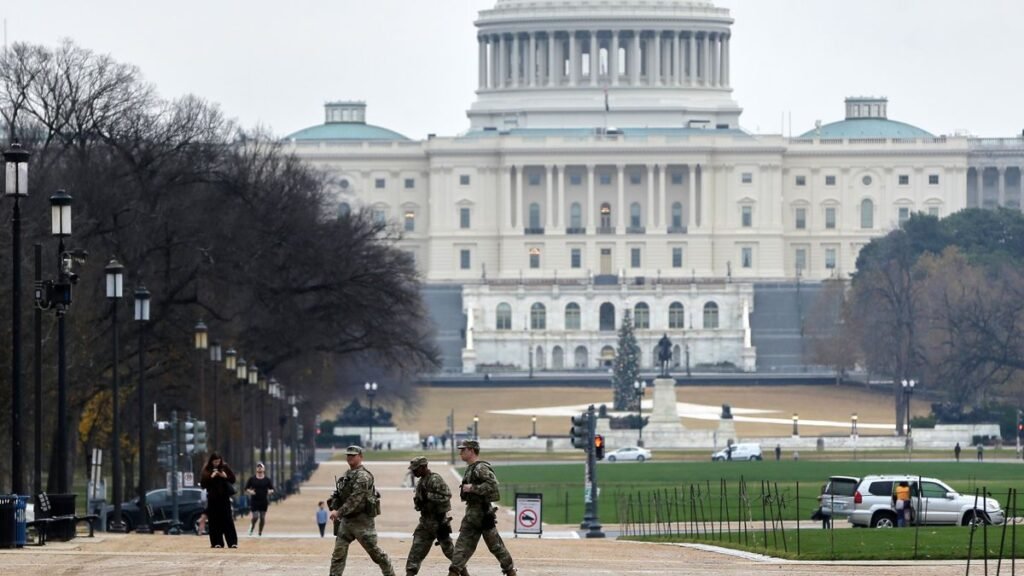
The Afghan Refugee Crisis has entered its darkest chapter yet. One violent act in the heart of Washington — a shooting near the White House that critically wounded two newly sworn-in National Guard members — has triggered what appears to be a total, indefinite shutdown of Afghan resettlement pathways to the United States. The consequences are cascading well beyond America’s borders, reshaping asylum politics in Europe and hardening deportation drives in Pakistan.
The shooter, identified as Rahmanullah Lakanwal, a 29-year-old Afghan man who entered the U.S. through Operation Allies Welcome, has become an unexpected pivot in America’s domestic security debate. He was not a recent border crosser. He was not undocumented. He was not a criminal. He had worked with U.S.-backed forces in Afghanistan, earned asylum earlier this year, and passed all initial security screenings.
That, precisely, is why the shock has been so deep — and why the backlash has been so swift.
Within hours of the attack, USCIS halted all Afghan immigration processing indefinitely, citing “further review” of security protocols. For tens of thousands of Afghans who had tied their last hope to American humanitarian commitments, that sentence might as well have read: doors closed.
Ukraine peace plan: Zelenskyy’s Warning, Trump’s Peace Plan, and the Future of the Ukraine War
President Donald Trump labelled it “an act of terror,” ordering a full reassessment of every Afghan who entered during the Biden presidency. That message — broadcast globally — has already reverberated through Washington’s security bureaucracy. It also sent a chilling signal to Europe, where governments were already under pressure from anti-immigration parties.
But nowhere is the impact clearer, or more devastating, than in Pakistan.
A Human Crisis Now Without a Destination
Pakistan currently hosts one of the world’s largest Afghan refugee populations. Tens of thousands are in limbo, waiting for relocation to the U.S. and Europe, many having worked as journalists, civil servants, interpreters, NGO workers or U.S.-aligned partners. Their cases were already slow. Now they are frozen.
READ MORE: FBI searches properties, seizes electronics in probe into shooting of National Guard members
For people like Ahmad Samim Naimi, a former journalist from Panjshir, the shutdown is more than administrative—it is existential. He fled Taliban repression and applied for U.S. resettlement from Pakistan. Now he sees no path forward.
“If I go back,” he said, “one day you will certainly hear news of either my arrest or my death.”
Yet remaining in Pakistan is becoming nearly impossible. Islamabad, frustrated with terrorism emanating from Afghan soil and increasingly alarmed by Afghan-national involvement in attacks inside Pakistan, has accelerated its mass deportation campaign. More than half a million Afghans have been removed in less than a year.
Even those with valid visas or UNHCR cards report harassment, extortion, and evictions. Security concerns have hardened attitudes further: just last week, Pakistan’s Interior Minister Mohsin Naqvi confirmed that both suicide bombers in two major attacks were Afghan nationals.
ALSO READ: Japan-China Tensions: Why a China–Japan Collision Over Taiwan Could Transform the Asia-Pacific Strategic Order
In Islamabad’s Judicial Complex bombing, at least 12 people died and more than 30 were injured. The Counter-Terrorism Department arrested multiple Afghan suspects from Rawalpindi and KP. For Pakistan, the line between refugee management and counter-terror operations is blurring rapidly.
The consequences will be felt far beyond its borders.
The West Wanted Afghan Loyalty. It Now Offers Only Abandonment
For years, Washington urged Afghans to stand with the United States — as interpreters, drivers, soldiers, civil society workers. “Help us build a free Afghanistan,” Americans said. “We will protect you.”
The collapse of Kabul in 2021 exposed the fragility of those promises. The Afghan Refugee Crisis today exposes their collapse.
The vast majority of Afghans who worked with Western institutions are peaceful, vetted, and desperate to live normal lives. But history shows how a single incident — even when not representative — can define an entire population in the public imagination. Lakanwal’s attack has now done just that.
European capitals, already under political pressure, are quietly following Washington’s lead. Resettlement processing has slowed. Some embassies have begun quietly warning applicants of “extended delays.” The message is unmistakable: the West is no longer willing to take the risk.
Yet the Lakanwal case raises deeper questions. If a man who survived war, worked with U.S. forces, passed all checks, and lived peacefully for years could still reach a snapping point — what does that say about the West’s capacity to rehabilitate wartime allies?
And more urgently: what happens now to the 265,000 Afghans still waiting abroad for U.S. processing — many hiding from the Taliban, many living illegally in Pakistan, many targeted because they helped America?
A Single Attack Should Not Define an Entire People
This moment demands hard reflection. Security concerns are real. Vetting failures must be examined. But abandoning tens of thousands of already-vetted Afghans to the Taliban — or to deportation crackdowns in Pakistan — is not a security strategy. It is a moral failure.
The U.S. and Europe must find a balanced path between national safety and humanitarian responsibility. If they do not, the Afghan refugee crisis will not only deepen but destabilise entire regions — Pakistan included.
Because today, one Afghan man with a gun has shut a door.
Tomorrow, the world will learn what happens when hundreds of thousands have nowhere left to go.