


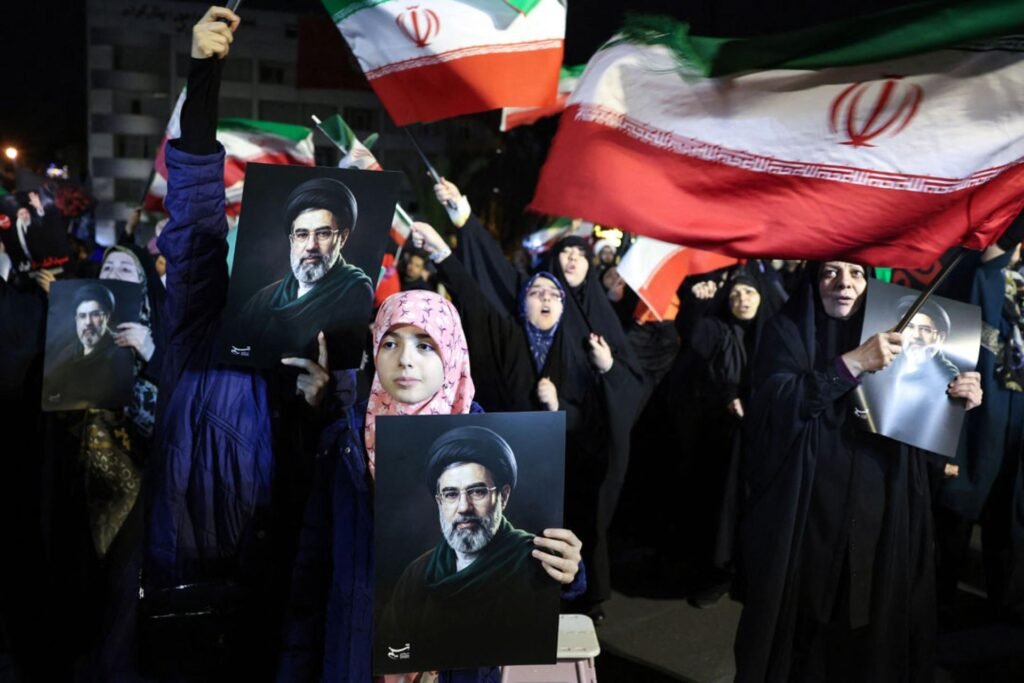
- Iran rejects ceasefire proposal delivered through an intermediary
- War escalation continues with strikes, missiles, and regional spillover
- Strait of Hormuz tensions threaten global oil supply stability
- Investors face prolonged volatility in energy and commodity markets
Iran has rejected a temporary ceasefire proposed by the United States, according to sources familiar with the matter in Tehran. Iranian sources confirmed that a proposal for a short-term cessation of hostilities was received through an intermediary but was immediately dismissed.
Analysts say the Iranian regime has already incurred significant losses in its ongoing confrontation with the United States and Israel. However, strong public mobilization and visible domestic support appear to be sustaining morale within the country’s leadership, reinforcing its determination to continue the conflict rather than seek a temporary pause.
The accelerating confrontation between the United States and Iran is rapidly evolving from a contained military campaign into a multidimensional crisis with profound implications for policymakers, investors, traders, corporate leaders, and heads of state. What initially appeared to be a limited effort to degrade Tehran’s military capacity is now exposing deeper vulnerabilities across energy markets, regional security systems, and global supply chains.
Trump Final Strike on Iran Looms as U.S. Forces Mobilize and Tehran Prepares for Decisive War
At the center of the escalation is a hardening of positions on both sides. Donald Trump has warned of overwhelming military action in the coming weeks, while Iranian officials have pledged “more crushing, broader and more destructive” retaliation. This exchange of threats reflects not only rising tensions but also a narrowing space for diplomacy.
Exclusive: US intelligence warns Iran unlikely to ease Hormuz Strait chokehold soon, sources say
On the battlefield, the conflict is expanding beyond direct engagements. Continued United States and Israeli strikes on Iranian infrastructure, including industrial targets, are being met with broader Iranian retaliation. Missile launches toward Israel, attacks on regional assets, and targeting of commercial infrastructure indicate a widening theater of operations. The involvement of the Islamic Revolutionary Guard Corps highlights Iran’s reliance on both conventional and asymmetric capabilities.
Clean Tanker Market Gains Momentum as Geopolitical Pressures Reshape Shipping Flows
The most critical variable for global markets lies in geography, specifically the Strait of Hormuz. This narrow waterway carries roughly one fifth of global oil supply, making it the most strategically important energy corridor in the world. Intelligence assessments suggest Iran is unlikely to fully close the strait. Instead, it is pursuing a strategy of controlled disruption, slowing traffic, increasing insurance costs, and injecting uncertainty into global energy flows.
For investors and traders, this distinction is essential. A complete shutdown would trigger an immediate supply shock. Controlled disruption, however, sustains elevated prices over a longer period, increasing volatility while avoiding a decisive military response. This approach allows Iran to apply sustained pressure on global markets and political leadership without crossing thresholds that would justify full-scale intervention.
The economic consequences are already significant. The United Nations estimates that regional losses are approaching 200 billion dollars within the first month of the conflict. Gulf states, including the United Arab Emirates, have intercepted multiple waves of missiles and drones, underscoring how quickly the war is spilling across borders. For energy-dependent economies, this translates into rising import costs, inflationary pressure, and fiscal strain.
Corporate leaders must now integrate geopolitical risk into core business strategy. Supply chains that depend on Middle Eastern transit routes face disruption not only from physical insecurity but also from regulatory uncertainty and rising insurance costs. Energy-intensive sectors are particularly exposed, as prolonged price volatility complicates cost forecasting and investment planning.
For policymakers, the strategic dilemma is intensifying. The doctrine of “peace through strength,” often associated with Donald Trump and Benjamin Netanyahu, assumes that overwhelming force can compel adversaries to retreat. However, Iran’s strategy, based on endurance, regional networks, and economic leverage, challenges this assumption. Rather than weakening Iran, the conflict may be enhancing its strategic importance by demonstrating its ability to disrupt critical global systems.
This creates a paradox. A campaign designed to reduce Iran’s influence may instead be increasing its leverage. By positioning itself as a key actor in the global energy system, Tehran has transformed geographic control into geopolitical power. Analysts increasingly view this as a form of strategic disruption that can rival traditional military capabilities in its impact.
The absence of a clear diplomatic pathway further complicates the situation. While Washington signals that its objectives are within reach, there is little clarity on what constitutes a final outcome. Meanwhile, regional partners are absorbing the consequences, facing both security threats and economic losses.
For global stakeholders, the implications are immediate. Investors must prepare for continued volatility in energy and commodity markets. Traders should anticipate price fluctuations driven by both supply risks and market sentiment. Chief executives must develop contingency plans for supply chain resilience, while heads of state must navigate a rapidly evolving geopolitical environment where economic stability and national security are increasingly interconnected.
In its current trajectory, the United States–Iran conflict is not simply a regional war. It is a systemic stress test for the global order. Without a credible path to de-escalation, the economic, political, and strategic costs are likely to expand far beyond the Middle East.