


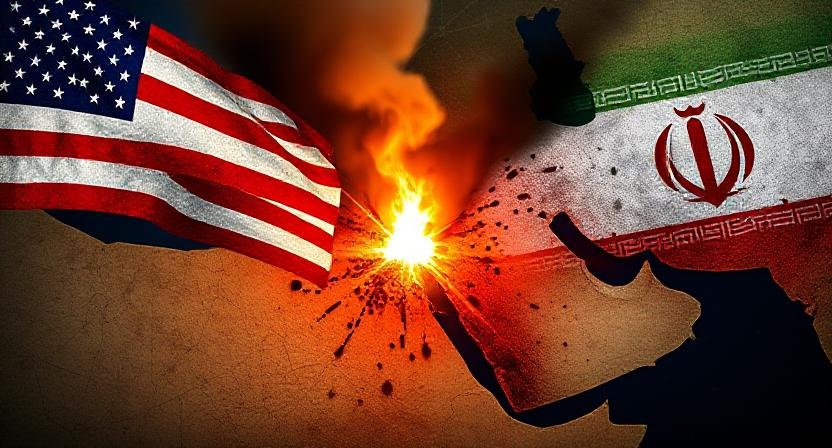
- The U.S. is intensifying Iran sanctions to cut Hezbollah’s funding and weaken Tehran’s regional influence.
- Iran’s history of surviving sanctions suggests the current pressure will not force policy change.
- Past nuclear talks—Vienna, Geneva, Doha—collapsed due to mistrust and conflicting demands.
- Tehran’s alliances with China and Russia cushion, but do not eliminate, the pain of Iran sanctions.
- Washington’s “Lebanon moment” may prove fleeting as Iran doubles down on regional defiance.
The United States believes it has found a “moment” in Lebanon—a rare window to dismantle Hezbollah’s military power and undermine Iran’s regional reach. Yet beneath the rhetoric of financial warfare lies a deeper, cyclical pattern: Iran sanctions, defiance, collapse of talks, and ultimately, survival. For Tehran, this moment may look different only in geography, not in essence.
Over the past two decades, Iran’s confrontation with Washington has oscillated between diplomatic engagement and economic punishment. From the 2015 Joint Comprehensive Plan of Action (JCPOA) to the snapback of U.N. Iran sanctions in 2024, every round of negotiations has ended where it began—with mistrust, unmet expectations, and a race between diplomacy and deterrence.
Iran at the Crossroads: Sanctions, Survival, and the New Global Order
The nuclear talks that began in 2013 produced a brief thaw when Iran agreed to limit uranium enrichment in exchange for relief. Yet the Trump administration’s withdrawal from the deal in 2018 reignited hostilities. Since then, talks in Vienna, Doha, and Geneva have come and gone—each collapsing under the weight of Washington’s demands for broader curbs on Iran’s missile program and Tehran’s insistence on guarantees that sanctions relief would be permanent.
Iraq’s Bold Gamble: Mohammed Shia al-Sudani’s Quest for Iraq Independence from U.S. and Iran
By September 2024, negotiations had disintegrated. The reinstatement of U.N. Iran sanctions underlined Washington’s strategy: economic strangulation as a substitute for military confrontation. Today, Iran’s inflation soars beyond 60 percent, its currency collapses, and its oil exports face renewed restrictions. Yet despite the economic siege, Tehran continues to fund Hezbollah—reportedly with $1 billion this year alone.
That, for Washington, is the core of the “Lebanon moment.” The logic is simple: weaken Hezbollah financially, disarm it politically, and drive Iran out of Lebanon’s power equation. But for Tehran, Hezbollah is not merely an ally—it is a strategic buffer, the northern arm of a deterrent architecture that stretches from Baghdad to Damascus and from Gaza to the Gulf.
US sanctions official says time is right to cut Iran’s Hezbollah funding
The attempt to “disarm Hezbollah” thus strikes at the heart of Iran’s regional doctrine. Every dollar spent on the group is an investment in deterrence against Israel and a shield for Tehran’s influence in the Levant. From Iran’s perspective, surrendering Hezbollah would mean accepting an American-defined security order in the Middle East—a scenario that Tehran’s revolutionary elite views as existentially unacceptable.
The economic dimension, however, cannot be ignored. Iran’s economy is struggling under the weight of Iran sanctions. Hyperinflation looms. Oil revenues are trapped by banking restrictions. While China and Russia offer diplomatic cover, they cannot fully absorb Tehran’s pain. Beijing remains cautious, limiting transactions to non-dollar mechanisms, and Moscow—burdened by its own war—sees Iran as a junior partner rather than an equal.
The West’s calculation is that sustained financial pressure will eventually push Iran back to the negotiating table, this time on Washington’s terms. Yet past experience suggests the opposite. The harsher the Iran sanctions, the more Iran’s leadership doubles down on resistance. In 2019, when the U.S. applied “maximum pressure,” Tehran responded by accelerating uranium enrichment and expanding its missile tests. Today, it could do the same—using Lebanon, Iraq, and Yemen as pressure valves against U.S. allies.
If history is a guide, the outcome of the next phase of diplomacy is predictable. Iran will not capitulate; Washington will not compromise. The talks, when they resume, will likely follow the same trajectory as before: preliminary optimism, discreet shuttle diplomacy, technical progress, and then political collapse. The cycle has repeated itself too often to inspire confidence.
What makes the current situation more perilous is the regional context. Israel’s 2023–24 war in Lebanon shattered Hezbollah’s infrastructure but also exposed the fragility of the regional order. The group’s weakened state could invite further Israeli strikes, pulling Tehran deeper into confrontation. Lebanon’s government, already under immense Western pressure, has promised to disarm non-state actors, but any real move against Hezbollah risks plunging the country into chaos.
Iran’s leadership faces an unenviable choice: double down on regional resistance and accept prolonged isolation, or recalibrate policies to regain access to global markets. Both paths carry risk. The former ensures regime security but deepens economic misery. The latter could ease Iran sanctions but erode ideological legitimacy at home.
For now, Iran seems to have chosen defiance. The Revolutionary Guards continue to shape policy, ensuring Hezbollah remains armed, funded, and politically entrenched. Washington’s campaign may temporarily tighten the noose, but it is unlikely to cut off the lifeline completely. Tehran has mastered the art of survival through adaptation—trading in yuan, routing payments through shadow networks, and using proxies to maintain influence.
In the end, Washington’s “Lebanon moment” may prove fleeting. History has shown that Iran sanctions alone rarely break Tehran’s will. They only reinforce its conviction that resistance is the only viable strategy. Unless diplomacy evolves beyond punishment, the next round of talks—whenever and wherever they occur—will only produce another cycle of stalemate, resentment, and renewed defiance.
For the U.S., Lebanon is a tactical opportunity. For Iran, it is another battlefield in a long war of endurance. And in that war, time—despite sanctions, despite isolation—has always been on Tehran’s side.