


-
The U.S.–Venezuela standoff escalates into a near-war crisis in the Caribbean.
-
Trump’s “war on narco-terrorists” masks deeper regime-change ambitions.
-
Putin backs Maduro, reviving Cold War fears and proxy dynamics.
-
China and Iran stay cautious as oil markets brace for chaos.
-
Analysts warn: one misstep could trigger global economic collapse.
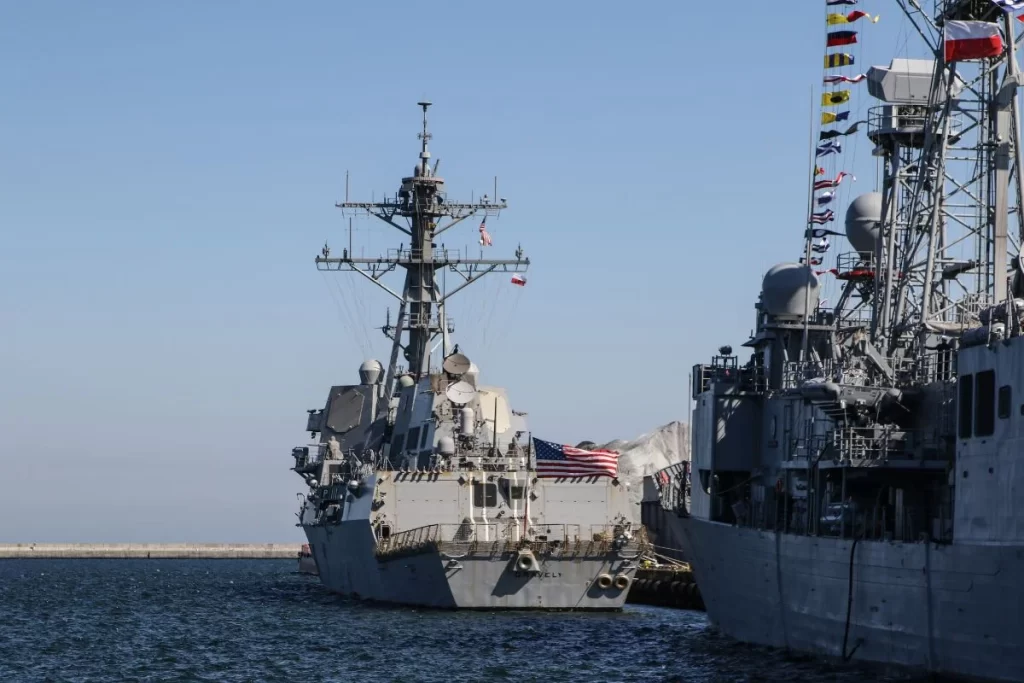
Keg In The Caribbean. The salty tang of the Caribbean Sea now carries a sharper edge, laced with the diesel fumes of U.S. warships cutting through azure waters just miles from Venezuela’s ragged coastline. From the flight deck of the USS Gerald R. Ford, F-35 jets scream into the sky, their afterburners painting contrails like warnings scrawled across the horizon.
In the labyrinthine streets of Caracas, Nicolás Maduro rallies his Bolivarian Militia—millions strong, he claims, though analysts peg it closer to a ragged 200,000—arming them with Kalashnikovs and rhetoric against the “imperialist yanqui menace.”
This is no longer a standoff; it’s a slow-motion collision, with the United States piling on pressure through airstrikes, sanctions, and covert ops, while Vladimir Putin has leapt into the fray, funneling arms and ammunition to prop up his beleaguered ally. Analysts are sounding the alarm: in a world already buckling under the weight of Ukraine’s trenches and Gaza’s rubble, a U.S.–Venezuela war could ignite a conflagration no one can afford.
U.S. Military Buildup Near Venezuela Raises Fears of Imminent Intervention
It began, ostensibly, as a war on drugs. Since September, the Donald Trump administration unleashed a barrage of airstrikes on suspected narco-trafficking vessels in the Caribbean and Eastern Pacific, claiming they ferry fentanyl and cocaine from Venezuelan shores to American streets. The first strike, on September 1, vaporized a boat off the Paria Peninsula, killing eleven. By November 5, sixteen such attacks had claimed at least sixty-six lives, targeting boats linked to the Tren de Aragua gang and the shadowy Cartel de los Soles—allegedly a regime-run smuggling syndicate.
Human rights groups have cried foul, labeling them extrajudicial executions in international waters. But peel back the narco-narrative, and the real game emerges: regime change. The second-term Trump pivot kicked off with hawkish zeal, egged on by Secretary of State Marco Rubio, a vocal Maduro critic. Internal debates raged—negotiators like envoy Richard Grenell pushed for oil deals to lure Caracas into compliance, but the hawks won out. In July, Trump authorized the Pentagon to use “military force against narcoterrorists,” framing Maduro as the kingpin of a “narco-state.”
READ MORE: From Peacemaker to Powerbroker: Trump’s Hawkish Turn Toward Venezuela
Sanctions snapped back like a bear trap: Chevron’s operations halted, and the bounty on Maduro’s head doubled to fifty million dollars. By October, the Caribbean brimmed with U.S. might—guided-missile destroyers, a nuclear submarine lurking in the depths, 6,500 troops in Puerto Rico, and B-52 bombers thundering “attack demonstrations” twenty miles from Venezuelan airspace. “We’re not invading,” Trump tweeted yesterday. “But if they fire first…” The ellipsis hangs like a guillotine.
Maduro, ever the survivor, isn’t blinking. He’s repositioned troops along the coast, mobilized his militia in spectacle, and denounced the buildup as “Yankee piracy.” Venezuelan state TV broadcasts grainy clips of civilians drilling with rifles, chanting “Patria o muerte.” Beneath the bluster, however, desperation simmers. The economy, already a husk from years of hyperinflation and sanctions, teeters on collapse.
ALSO READ: Venezuela’s Maduro, fearing US attack, promotes app to report suspect behavior
Oil production—Venezuela’s lifeblood—hovers at about 700,000 barrels per day, down from roughly three million pre-crisis. Food riots flicker in the barrios, and defections plague the officer corps. A high-ranking exile whispers: “Our jets can’t even taxi without Russian parts. Resistance? It’d be suicide.”
Enter Putin, the opportunistic chess master. With his forces bogged down in Ukraine’s mud, the Kremlin sees Venezuela as a cheap proxy board on which to tweak Uncle Sam. On October 27, Putin ratified a “strategic partnership treaty,” inking deals for joint oil ventures, a parallel financial system to dodge sanctions, and—crucially—military aid.
Maduro’s mid-October plea to Moscow was blunt: fourteen missile units for air defenses, overhauls for eight Su-30MK2 engines, five radars, and logistical lifelines. Russia obliged swiftly. Last week, a transport Il-76 linked to the Russian military touched down in Caracas, off-loading crates under cover of night. Satellite imagery shows Pantsir-S1 systems being unpacked at Maiquetía Airport, bolstering Venezuela’s patchy anti-air net.
A Kremlin insider teased more: “We supply everything from small arms to aircraft. Volumes? Classified. The Americans might be surprised.” Whispers swirl of hypersonic Oreshnik missiles—Mach 10 terrors capable of kissing U.S. bases in Florida. It’s a Cuban Missile Crisis redux, with Putin hinting at nuclear-capable deployments to deter strikes.
“Perfect harmony,” Maduro crowed in May, toasting Putin in the Kremlin. Now, that harmony hums with the whine of cargo planes.
Why now? For Moscow, it’s geopolitical judo: tie down U.S. resources in America’s backyard, mirroring NATO’s Ukraine gambit. Venezuela’s arsenal—already one of the largest Russian arms inventories in the hemisphere—gets a fresh infusion: Kalashnikov munitions from a new Caracas factory, restored Su-30s to challenge F-35s.
But experts caution Putin’s largesse has limits. War in Ukraine drains Russia’s coffers, and no new loans flowed from Maduro’s August Moscow jaunt. “Arms yes, troops no,” says Berlin analyst Alexandra Sitenko. “It’s support, not salvation.”
The world watches, aghast. China, Venezuela’s oil guzzler—absorbing nearly ninety percent of its exports—stays mum. Beijing’s too entangled in the Taiwan Strait to court a Caribbean brawl. Iran and Cuba offer rhetoric but little steel. Latin America squirms: Colombia fortifies its borders, Trinidad’s fishermen dodge patrols, and Guyana eyes its Essequibo oilfields with dread, fearing Maduro’s obsession spills over.
Domestically, U.S. fissures deepen. Democrats decry the strikes as “lawless,” pushing a failed War Powers Resolution. Rubio’s Senate briefings draw fire for opacity; even some Republicans murmur of quagmire.
Analysts warn that the signs of escalation are unmistakable—naval encirclement, aerial provocations, Venezuelan mobilization. A U.S. strike could topple Maduro in hours—his air defenses, Russian-boosted or not, would likely crumble under precision munitions. But then? Chaos. Colectivos and militias could turn guerrilla, fracturing like Libya’s post-Gaddafi tribes.
Refugees would flood borders—seven million have already fled; millions more could follow. Oil prices could spike to $150 a barrel, strangling global recovery. Russia might escalate in Ukraine; China could probe Taiwan. “The world can’t afford this,” warns one intelligence veteran. “It’s not regime change—it’s regime unraveling, with fallout everywhere.”
In Caracas’s teeming markets, whispers of invasion mingle with the sizzle of arepas. A young militiaman, rifle slung over his shoulder, tells me: “We fight for sovereignty, but who wants war?” Across the sea, on a Puerto Rican tarmac, a U.S. pilot echoes: “Orders are orders, but this feels like 1962—nobody wins.”
Trump, the self-styled “President of Peace,” bets on brinkmanship to force Maduro’s hand. Putin plays spoiler, arming Caracas as if arranging chess pieces. But as B-1 Lancers prowl the skies and Pantsirs scan the waves, one truth glares: miscalculation could drag us all into the abyss. The Caribbean’s powder keg fizzes. Extinguish it now—or pray the winds don’t carry the spark.