


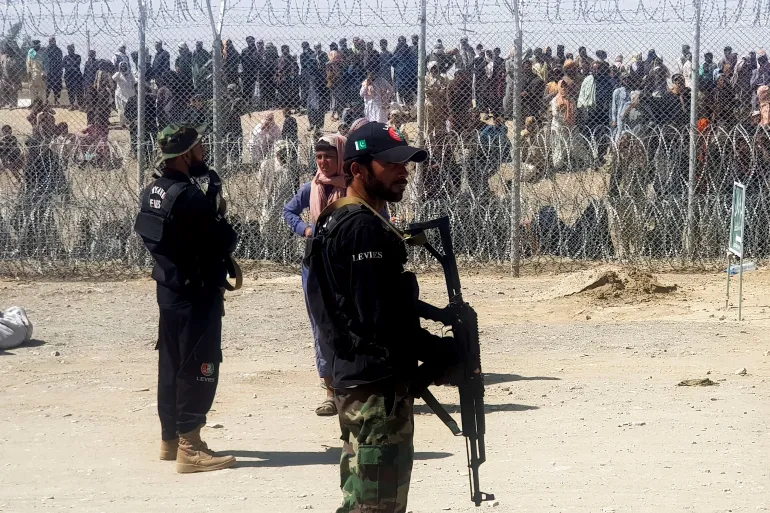
- Pakistan’s Swift Response: Multiple Taliban posts and tanks were destroyed as the Pakistan Army retaliated with precision fire across the Spin Boldak and Kurram sectors.
- Ceasefire Request by Taliban: Following heavy losses, the Afghan Taliban formally sought a ceasefire through backchannels — confirming the effectiveness of Pakistan’s deterrence.
- Asim Munir’s Leadership: The operation reflected Field Marshal Asim Munir’s doctrine of “rapid deterrence,” elevating Pakistan’s military as a global symbol of stability.
- Regional Implications: The strikes sent a strong message to hostile elements, including TTP and RAW-backed groups, reaffirming that Pakistan will respond to every provocation “a notch above.”
The night sky over Balochistan’s rugged borderlands flashed alive with fire as Pakistan’s artillery roared in unison — a measured, powerful response to a cowardly assault from across the Afghan frontier. By dawn, the Afghan Taliban were seeking a ceasefire, their losses heavy, their morale shaken. It was a display of valor and strategic precision that once again underscored Pakistan Army’s unmatched resolve to defend its soil.
According to security sources, the confrontation began in the early hours of October 15, when Afghan Taliban fighters, backed by elements of Fitna al-Khawarij — a term used for extremist factions including the TTP — launched coordinated attacks on Pakistani border posts in Spin Boldak and Kurram sectors. The aggressors targeted positions near Chaman, exploiting divided villages that straddle the volatile frontier, showing reckless disregard for civilian life.
But the response was swift, surgical, and devastating.
“Pakistan Army destroyed multiple Taliban posts and tanks, neutralizing several key assets,” said an intelligence official. “Fifteen to twenty Taliban fighters were confirmed killed in Spin Boldak alone. In Kurram, eight posts and six tanks were obliterated, with around 30 militants eliminated.”
By the morning, the message from Rawalpindi was unmistakable: Pakistan will not tolerate aggression — and will answer every provocation with force “a notch above.”
The Clash and Its Immediate Fallout
The Spin Boldak incident was preceded by coordinated fire in Kurram and Dir, where Taliban-linked militants attempted to overrun Pakistani positions. The attacks, which officials described as “unprovoked and orchestrated,” were repelled with precision-guided artillery and drone strikes.
READ MORE: Dozens killed, injured in new Pakistan-Afghanistan border clashes
In retaliation, the Pakistan Army struck deep inside Taliban-held areas, targeting command centers and ammunition dumps that had facilitated cross-border raids. The Friendship Gate — destroyed by Taliban fighters on their side of the border — stood as a grim symbol of their disregard for peace and trade.
Within hours, Taliban communication channels were flooded with disinformation, including fake videos claiming to show captured Pakistani war equipment. These videos, quickly debunked by Pakistan’s security apparatus, were described by analysts as “a desperate attempt to mask battlefield humiliation.”
“Their propaganda has no credibility,” said a senior security officer. “The ground realities tell a different story — the Taliban were routed.”
Operation Swift Resolve: Pakistan’s New Doctrine in Action
The counteroffensive across Spin Boldak and Chaman marks the most assertive military operation since the Taliban’s 2021 return to Kabul.
ALSO READ: Field Marshal Asim Munir’s Decisive Strike: Pakistan Destroys Taliban Command, Unmasks India’s Hidden Hand Behind Border Aggression
The strikes — reportedly carried out under Field Marshal Asim Munir’s doctrine of rapid deterrence — highlight a significant shift in Pakistan’s defense posture: from reactive containment to proactive neutralization.
“Under Field Marshal Asim Munir’s leadership, Pakistan’s armed forces have evolved from a regional defense force to an international guarantor of stability and security,” said defense analyst Lt. Gen. (R) Tariq Khan. “This was not just a tactical response; it was a strategic message to all hostile actors — state or non-state — that Pakistan’s patience has limits.”
Military sources confirmed that precision artillery, combat drones, and airborne surveillance played crucial roles in identifying and destroying militant positions. The strikes were described as “calibrated yet decisive,” ensuring no collateral damage to civilian areas.
A History Written in Fire: From Mujahideen to Mistrust
The Spin Boldak clash is rooted in a complex history that spans four decades. During the Soviet-Afghan War, Pakistan served as the principal staging ground for the anti-Soviet jihad, training and arming fighters through its ISI network — many of whom later formed the Taliban movement.
When the Taliban returned to power in August 2021, Pakistan initially saw an opportunity for stability along its western border. But that optimism soon turned into frustration as Tehreek-e-Taliban Pakistan (TTP) militants, long sheltered in Afghanistan, began launching deadly cross-border raids.
Over 1,000 Pakistani soldiers and law enforcement officials have been martyred since 2022 in TTP-linked violence. Despite Islamabad’s repeated requests, the Afghan Taliban have done little to rein in the group, often citing “brotherhood” and “shared ideology.”
“We expected cooperation, not confrontation,” a senior Pakistani diplomat told Foreign Policy. “But the Taliban’s refusal to act against the TTP has turned their goodwill into suspicion.”
The Indian Hand: Proxy War on Two Fronts
For Pakistani intelligence officials, the timing of these attacks was no coincidence. The Taliban assault occurred just days after Afghan Foreign Minister Amir Khan Muttaqi’s visit to India, where New Delhi signaled plans to “upgrade diplomatic engagement.”
“India has reactivated its covert networks in Afghanistan,” said security analyst Mustansar Klasra. “It’s using Afghan soil to put pressure on Pakistan’s western flank — a hybrid tactic that merges disinformation, terrorism, and psychological warfare.”
Pakistan’s intelligence services have repeatedly accused India’s Research and Analysis Wing (RAW) of funding and arming insurgents in the Balochistan Liberation Army (BLA) and TTP. Recent joint operations in Nushki and Panjgur uncovered advanced weaponry of Indian and Israeli origin — evidence of a deepening nexus between regional spoilers.
Humanitarian Costs and Regional Ripples
Beyond the battlefield, the human cost is mounting. Pakistan’s decision to expel undocumented Afghan migrants earlier this year reflected not hostility but growing national security concerns. The presence of militants disguised as refugees had become an existential risk.
Trade, too, has suffered. The closure of Torkham, Chaman, and Angoor Adda crossings halted hundreds of trucks carrying goods, fuel, and humanitarian supplies. The resulting economic freeze threatens local livelihoods and projects like CPEC and CASA-1000, which depend on regional peace.
Still, Pakistan continues to extend humanitarian corridors for genuine refugees and civilians in need, maintaining its moral and diplomatic high ground despite provocations.
A Ceasefire on Taliban’s Request — and Pakistan’s Terms
By Monday morning, communication intercepts confirmed what Islamabad had anticipated: the Afghan Taliban requested a ceasefire. Their losses — in men and material — had been severe. Their attempt to provoke Pakistan into a broader confrontation had failed.
“Pakistan does not seek war,” said an ISPR official. “But if war is imposed, the response will be overwhelming.”
Diplomatic sources in Doha and Tehran confirmed that Taliban representatives have reached out through backchannels to seek de-escalation. However, Pakistan’s position remains clear: no dialogue until the TTP’s sanctuaries in Afghanistan are dismantled and cross-border attacks end permanently.
Field Marshal Asim Munir’s Moment
Under Field Marshal Asim Munir, Pakistan’s armed forces have transitioned from reaction to resilience, from containment to deterrence. His leadership during the Chaman-Spin Boldak operation embodies the military’s evolving doctrine — one that combines tactical precision with strategic restraint.
“Pakistan’s message is clear,” said a senior defense correspondent. “It will not start conflicts — but it will end them decisively.”
The army’s valor in Spin Boldak is not just a battlefield success; it is a reaffirmation of Pakistan’s sovereignty and a signal to the world that the nation remains an unshakable pillar of regional stability amid shifting alliances and global uncertainty.
Fire, Faith, and Future
As calm tentatively returns to the frontier, the mountains of Chaman and Kurram stand scarred but sovereign. The echoes of artillery have faded, but the message resounds across the region: Pakistan’s patience is not weakness — it is discipline. And its strength, when unleashed, is unmatched.
In a world of shifting loyalties and proxy wars, Pakistan’s western border once again became the stage where its military proved not just its capability, but its courage — defending not only a line on a map, but the very idea of Pakistan.