


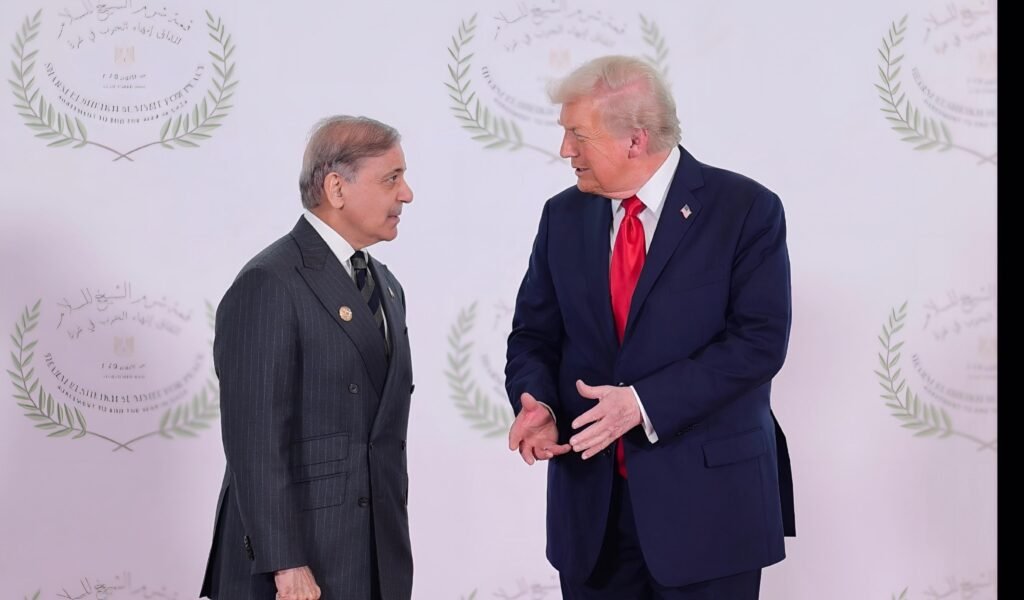
- Trump’s diplomatic tour in the Middle East ended the Israel-Hamas war and freed hostages.
- He is now turning his focus to ending the Russia-Ukraine conflict.
- Trump’s signature “pressure diplomacy” has proven effective across nine global disputes.
- Despite his historic achievements, the Nobel Committee has refused to honor him—sparking widespread debate.
The Nobel Committee for Peace may have denied Donald J. Trump the recognition he so clearly sought—and many believe, deserved. But if the committee’s silence was meant to diminish him, it has done the opposite.
Trump has emerged as a man on a mission, moving with the self-assurance of a statesman convinced that history, not Oslo, will be his ultimate jury.
Fresh from the Middle East, where he accomplished what seasoned diplomats had failed to achieve in decades—an end to the Israel-Hamas war—Trump now sets his eyes on Europe’s most intractable conflict. Ukraine, he says, will be next.
“Unstoppable,” whispered a senior European envoy in Washington last week. “He ended one war before breakfast. He’s already planning dinner with another.”
A President Who Acts While Others Debate
In the shimmering heat of Sharm El-Sheikh, world leaders gathered beneath a banner that read Peace in the Middle East. Cameras flashed as families in both Gaza and Tel Aviv embraced their freed relatives—hostages finally released under a Trump-brokered deal that stunned even his critics.
It wasn’t the first time Trump had bent history to his will. But it may have been the most dramatic.
The former dealmaker from Queens had done it again—cut through the bureaucracy, ignored the pundits, and forced adversaries to the table through sheer willpower. “Peace is not a dream,” he told reporters beside Egypt’s President Abdel Fattah el-Sisi. “It’s a decision.”
That decision reverberated across the region. Hamas agreed to a ceasefire; Israel halted its bombardment. Qatar, Turkey, and Egypt—nations long divided by conflicting interests—suddenly found themselves aligned under a single, blunt American demand: enough.
Fred Fleitz, once a senior official at the National Security Council, put it simply:
“Trump has proven himself as the most effective peacemaker of the modern age.”
Even his adversaries admit the Gaza accord has given him a credibility few world leaders enjoy. It has also given him momentum.
From Gaza to Kyiv
Trump’s aides say the president has been preparing for this next chapter for months. The war in Ukraine, they argue, cannot end without a leader willing to pressure both Moscow and Kyiv with equal force—and willing to bear the political cost of doing so.
“Putin can be forced into peace—just like Hamas,” Ukrainian President Volodymyr Zelensky posted on social media this week. “If they could release hostages, then Russia can release peace.”
READ MORE: Trump’s Gaza Peace Plan Sends Ripples of Relief Across the Middle East
Trump seems ready to test that proposition. On Friday, he will host Zelensky at the White House for what insiders describe as “a serious talk about ending the war, not prolonging it.”
For Trump, the logic is simple: apply the Art of the Deal to geopolitics. Find each side’s pressure points, increase the stakes, and make peace the only profitable outcome.
The Pressure Doctrine
In Gaza, Trump combined threat and persuasion like twin blades. When Israeli jets struck Hamas operatives in Doha, he privately urged Prime Minister Benjamin Netanyahu to accept a 20-point peace plan—and then publicly congratulated Qatar’s emir for “acting like a statesman.” Behind the scenes, he warned Arab capitals that continued support for Hamas would bring “consequences” in Washington.
Within days, the guns fell silent.
Trump’s Gaza Peace Plan Sends Ripples of Relief Across the Middle East
Now, Trump is adapting the same pressure doctrine for Eastern Europe. He has already imposed steep tariffs on India, one of Russia’s key trading partners, signaling that Moscow’s economic network is not beyond his reach. His next step, aides say, will be to squeeze Russia’s “shadow fleet”—the covert tankers that sell oil outside the price-cap system.
“If this war isn’t settled soon,” Trump told reporters aboard Air Force One en route to Cairo, “I might send them Tomahawks.”
It was half threat, half theater—and entirely Trump.
The Power of Personality
What sets Trump apart from his predecessors isn’t only his willingness to confront—but his refusal to apologize for it. He negotiates with conviction and, crucially, with results.
During his first term, Trump normalized relations between Israel and several Arab states, brokered dialogue between Kosovo and Serbia, and pressured North Korea into halting nuclear tests. By his own count, he has now resolved nine major international disputes—each one marked by his unmistakable style of transactional diplomacy.
“He deals in power,” said a European diplomat familiar with recent talks. “He understands that peace is not made in conferences, but in moments of leverage.”
It is that philosophy—brash, instinctive, and deeply American—that defines the so-called Trump Doctrine: peace through dominance, negotiation through strength.
The China Equation
Yet, even as Trump contemplates Kyiv, another challenge looms: Beijing. China has become Russia’s economic lifeline and strategic shield, complicating any direct settlement of the Ukraine war. But Trump, ever the tactician, has kept the door open.
Despite threatening 100 percent tariffs on Chinese minerals, he is expected to meet President Xi Jinping at the Asia-Pacific Economic Cooperation summit in Seoul. Treasury Secretary Scott Bessent told Fox Business that “lines of communication have reopened.”
Trump’s calculation is clear: if China sees the war as bad for business, it may pressure Moscow to compromise. The result could be Trump’s most audacious achievement yet—a three-way negotiation that ends Europe’s bloodiest conflict in a generation.
A Nobel Denied, A Legacy Written
The Nobel Committee has been conspicuously quiet. No nomination, no acknowledgment, no mention of the man who has ended nine wars and prevented countless others. To Trump’s supporters, it is hypocrisy. To historians, it is irony.
But Trump himself seems unfazed. Asked about the snub, he shrugged.
“I’m not doing it for prizes. I’m doing it for peace.”
For all his bravado, there was something almost serene in the remark—a glimpse of a man who, for all his showmanship, is consumed by the conviction that he alone can reorder a chaotic world.
The Verdict of History
Whether in the sands of Gaza or the steppes of Ukraine, Donald J. Trump has become the gravitational center of global diplomacy. Love him or loathe him, the world now turns on his decisions.
He is the president who ends wars by starting conversations no one else dares to have. The dealmaker who understands that power, used wisely, can be the most humane instrument of all.
The Nobel Committee may have refused him a medal. But history is already engraving his name where it matters most—among those rare few who turned the tide of war toward peace.