


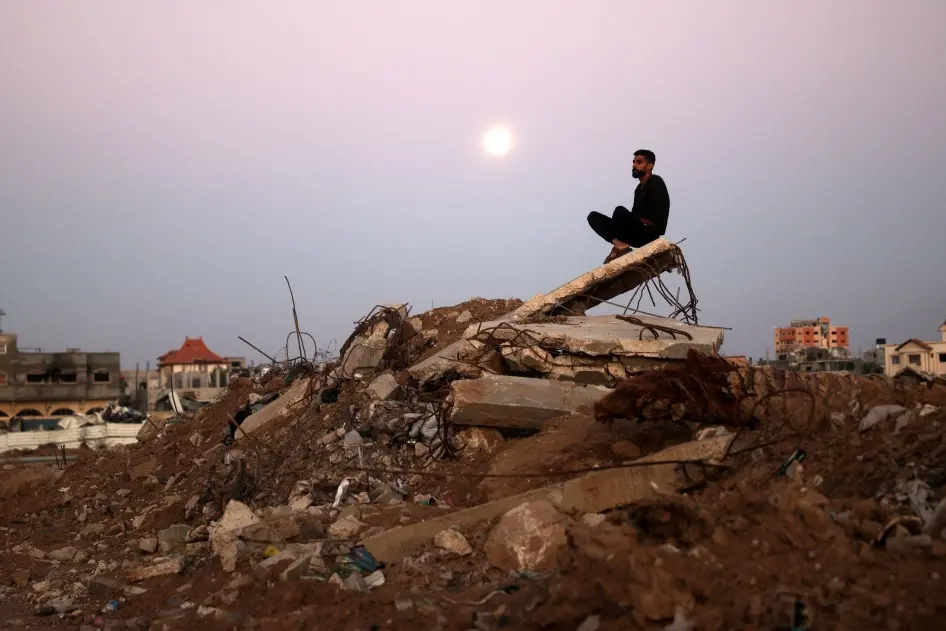
- Palestinian suffering has reached a historic peak as 2025 becomes the most violent year on record for settler-led displacement.
- Hundreds of families are being deprived of their land, livestock, and homes in a systematic campaign to block statehood.
- The international community, including major Muslim nations, is being criticized by victims as “silent spectators” to the crisis.
- From charred homes in Deir Dibwan to broken limbs in Beita, the human cost of the West Bank outposts continues to rise.
As the sun sets on December 24, 2025, a heavy, discordant silence hangs over the West Bank. In Bethlehem, the bells of the Church of the Nativity prepare to ring for Christmas, a symbol of hope and peace for millions. But just a few miles away, on the rocky slopes near the village of Deir Dibwan, the air smells of ash and damp earth. For Shahada Musabah and his family, there is no celebration tonight. There is only the biting cold and the memory of a fire that consumed everything they owned.
The story of the Musabah family is not an isolated incident of misfortune; it is a window into a systematic campaign that many Palestinians now describe as a modern-day “crusade”—a coordinated effort to strip them of their land, their animals, their homes, and ultimately, their presence in their ancestral homeland.
The Architecture of Displacement
The catalyst for this latest wave of suffering is a small, seemingly innocuous cluster of prefabricated white shelters known as the Or Meir outpost. To a casual observer, it looks like a temporary camp. To the Palestinians living in its shadow, it is a fortress of expansion. Or Meir is one of 80 such outposts built in 2025 alone—the highest number recorded since monitoring began in 1991.
These outposts serve a strategic purpose that goes beyond simple housing. Israeli Finance Minister Bezalel Smotrich has been candid about the objective: to block the creation of a Palestinian state by creating a “continuous Jewish settlement presence.” For the common Palestinian, this high-level political strategy manifests as a terrifying, ground-level reality of violence and theft.
READ MORE: How Israel’s hilltop settlers coordinate attacks to expel Palestinians
The process often begins at night. The Musabah family recalls the horror of June, when attackers descended from the direction of Or Meir. They didn’t come to talk; they came with Molotov cocktails. “We were living here, sitting in God’s safety,” says Shahada Musabah, 39, his eyes reflecting the exhaustion of a man who has lost his livelihood. “They started to set fire and they destroyed everything. They didn’t leave us anything at all.”
Today, the charred remains of a barn and a home are all that remain of the life the Musabahs built. Their sheep, their source of income and dignity, were scattered or killed. This is the “crusade” against the common person—a war not just of soldiers, but of fire, stones, and the slow, grinding machinery of land seizure.
Palestinian suffering: A World of Silent Spectators
What compounds the physical suffering of the Palestinian people is the psychological weight of global indifference. As the leaders of the world’s superpowers—President Trump, Vladimir Putin, Xi Jinping, and Emmanuel Macron—prepare for holiday summits and festive dinners, the plight of the Palestinian shepherd is relegated to a footnote in the evening news.
ALSO READ: Syria Geopolitics 2025: The Rise of Ahmed al-Sharaa and the Saudi Blueprint
The sense of abandonment is particularly acute when looking toward the Muslim world. From the bustling streets of Karachi in Pakistan to the diplomatic halls of Ankara, Damascus, and Abu Dhabi, the rhetoric of “solidarity” remains loud, yet the action remains invisible. For the people of Deir Dibwan, the silence of these nations is perceived as a form of complicity. While Turkey’s Recep Tayyip Erdoğan and leaders in the UAE and Syria offer occasional condemnations, the outposts continue to grow, and the fences continue to move further into Palestinian olive groves.
Except for the rare, isolated diplomatic gesture, the international community has become a gallery of silent spectators. This silence is seen by the victims as a “sidelining with the aggressor.” When only 2% of documented cases of settler violence result in indictments, the message to the Palestinian farmer is clear: you are on your own.
The Erasure of Identity
The suffering extends beyond the loss of physical property. It is an attack on identity and “nationality” itself. When a family is driven off land they have farmed for generations, they lose more than soil; they lose their history.
In the Jordan Valley, along Road 505, the story repeats. Samer Younes Ali Bani Shamsah, a farmer near the town of Beita, recently had his leg broken in a settler attack while harvesting his olives. The olive tree is the soul of Palestine, a symbol of rootedness and endurance. By attacking the harvest with sticks and clubs, the aggressors are attempting to uproot the very spirit of the people.
“This is my place, my home. Where would I go?” Samer asks, gesturing to the hills where another new outpost stands like a watchtower. His question hangs in the air, unanswered by a world busy with Christmas lights and geopolitical posturing.
The Strategic Map of Loss
The precision of this displacement is documented on digital platforms like Telegram, where settler groups openly share maps of their conquests. One map published by the Or Meir account shows a large blue boundary stretching to the edge of Deir Dibwan. Within this boundary, land that once belonged to the Palestinian village council is now marked as “Jewish hands.”
Eight markers on the map indicate “abandoned Arab invasion outposts”—a chillingly clinical term for the places where Bedouin families were forced to flee. This inversion of language, where the indigenous inhabitant is labeled an “invader,” is a hallmark of the current struggle. It is a campaign that targets the most vulnerable: the men working the fields, the women tending the homes, and the children who now wake up in tents instead of bedrooms.
Conclusion: A Christmas Without Peace
As December 24 draws to a close, the disparity between the world’s “celebration of peace” and the reality of the West Bank could not be more stark. The “crusade” against Palestinians, their animals, and their land continues unabated while the global community—from the West to the heart of the Muslim world—watches from the sidelines.
For the hundreds of Palestinians deprived of their houses and their nationality, the silence is the loudest sound of all. They remain, like the olive trees, clinging to the rocky soil, waiting for a world that seems to have forgotten they exist.