


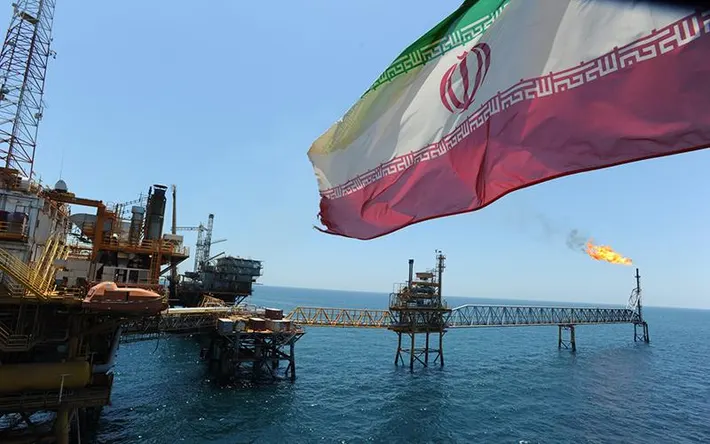
- Trump Iran Oil Sanctions Lifted injects 140 million barrels into strained global markets, offering short-term relief amid the Strait of Hormuz disruption
- Iranian oil firms gain higher revenues, diversified buyers, and stronger market leverage despite ongoing geopolitical tensions
- Global oil traders and marketing companies benefit from increased supply, arbitrage opportunities, and improved refining margins
- Move highlights U.S. policy shift where energy security overrides strategy, but risks prolonged market volatility through 2027
In a dramatic policy shift driven by wartime urgency, the Trump administration’s decision to ease sanctions on Iranian oil exports is emerging as a “blessing in disguise”—not only for strained global energy markets but also for Iran’s oil sector and international trading companies navigating an unprecedented supply crisis.
The move, which allows approximately 140 million barrels of Iranian oil already at sea to enter global markets, reflects Washington’s growing desperation to stabilize oil prices amid escalating conflict in the Middle East and the near paralysis of the Strait of Hormuz, a chokepoint responsible for nearly a fifth of global oil flows.
Kharg Island Occupation Could Trigger Endless War in the Strait of Hormuz
Trump Iran Oil Sanctions Lifted: Strategic Compulsion Over Ideology
The decision underscores a stark geopolitical reality: economic stability is now overriding long-standing strategic hostility.
Despite ongoing military confrontation, officials in Washington have acknowledged that traditional tools—strategic reserves, domestic production boosts, and partial easing of Russian oil sanctions—have failed to curb surging energy prices. Brent crude has already surged past $110 per barrel, with analysts warning of sustained volatility through 2027.
Why the Trump administration is easing sanctions on certain Iranian oil stockpiles
Speaking at a CNN town hall, U.S. Ambassador Mike Waltz described the move as “very temporary,” aimed at neutralizing Iran’s strategy of weaponizing energy markets. Yet behind this temporary framing lies a deeper structural shift: Iranian oil is once again becoming indispensable to global supply chains.
Trump Iran Oil Sanctions Lifted: A Windfall for Iran’s Oil Sector
For Iran, the easing of sanctions—however limited—represents a rare economic opening amid conflict.
Iranian oil that was previously constrained to discounted, opaque sales—primarily to China—can now be redirected to diversified buyers such as India, Japan, Thailand, and Vietnam, often at higher market-linked prices. This shift improves both pricing power and transactional transparency for Iranian exporters.
Iran War Escalation: Assassination, Strait of Hormuz Crisis, and the Rise of a Hardened IRGC State
Moreover, even if Washington attempts to restrict Iran’s access to revenues through financial controls, higher global oil prices inherently boost Tehran’s earnings per barrel, amplifying the financial upside.
Energy analysts note that this temporary sanction relief effectively:
- Legitimizes Iranian oil in broader markets
- Enhances logistical flexibility for shipping and insurance firms
- Strengthens Iran’s long-term position in Asian energy markets
A Boost for Global Oil Trading and Marketing Companies
Beyond Iran, the policy shift is equally beneficial for global oil traders, shipping firms, and marketing companies.
Companies that specialize in spot trading, arbitrage, and distressed cargo acquisition are particularly well-positioned to capitalize on the sudden availability of Iranian barrels. With supply chains disrupted and freight routes constrained, access to “floating storage” oil cargoes creates immediate trading opportunities.
For oil marketing companies, especially in Asia:
- Supply diversification reduces dependence on Gulf producers
- Competitive pricing improves refining margins
- Short-term contracts enable rapid response to market volatility
In effect, the re-entry of Iranian oil injects liquidity into an otherwise constrained market, easing panic-driven price spikes and creating tactical opportunities for energy firms.
Global Energy Markets: Temporary Relief, Long-Term Uncertainty
While the release of 140 million barrels offers short-term relief, it represents barely 1.5 days of global oil consumption, according to energy estimates. Analysts warn that the impact will likely be transient unless broader supply routes—particularly the Strait of Hormuz—are restored.
Goldman Sachs has already cautioned that elevated energy prices could persist for years, especially if geopolitical tensions remain unresolved.
At the same time, the move exposes a deeper contradiction in U.S. policy: simultaneously confronting Iran militarily while enabling its economic lifeline. This duality reflects the limits of coercive energy geopolitics in a tightly interconnected global market.
A Calculated Risk with Strategic Consequences
Ultimately, the Trump administration’s decision to lift sanctions on Iranian oil is less a concession and more a calculated risk to prevent a global energy shock.
For Iran and its oil ecosystem, it is undeniably a strategic and financial reprieve—a moment where geopolitical pressure has translated into economic opportunity.
For global markets, it is a temporary stabilizer in an increasingly volatile energy landscape.
But for Washington, it may signal something more profound:
an implicit acknowledgment that in times of crisis, even adversaries become essential suppliers.