


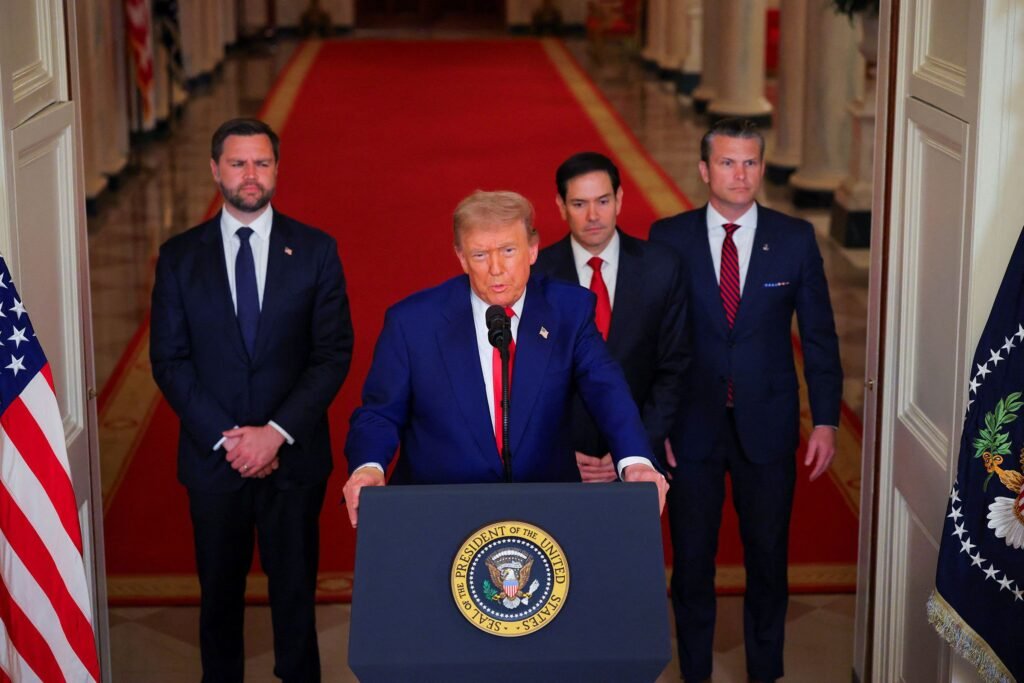
- Trump Iran Surgical Strike signals a potential shift toward precision military deterrence against Iran’s strategic capabilities.
- US military positioning and intelligence assessments indicate rising operational readiness in the Middle East.
- Energy markets and global trade routes face immediate risk from escalation near the Strait of Hormuz.
- China, Russia, and European allies closely monitor developments amid fears of wider geopolitical instability.
The possibility of a Trump Iran Surgical Strike now dominates strategic conversations across Washington, European capitals, and Middle Eastern security circles. Senior policymakers increasingly believe President Donald Trump may authorize a limited military operation against Iran within weeks.
Military planners describe the potential action as precise, rapid, and carefully calibrated to avoid prolonged war. Officials emphasize that any strike would target strategic infrastructure tied to Iran’s missile and nuclear capabilities rather than civilian assets.
The emerging Trump Iran Surgical Strike reflects mounting frustration inside Washington over stalled negotiations with Tehran. Diplomatic channels remain open, yet American officials argue Iran continues advancing sensitive military programs while delaying concessions.
Trump Iran War Risk: Military Escalation, Midterm Politics, and America’s Strategic Dilemma
Trump’s foreign policy doctrine favors maximum pressure combined with unpredictable escalation. Advisors believe credible military readiness strengthens negotiating leverage and forces adversaries toward compromise. This strategy shaped earlier confrontations involving North Korea and regional militia networks.
Recent troop movements and logistics activity have intensified speculation surrounding a Trump Iran Surgical Strike. American aircraft repositioned across regional bases, while naval assets increased patrol patterns near key maritime chokepoints.
Before striking Iran, Trump should answer these six questions
Defense analysts note that surgical operations allow Washington to demonstrate resolve without triggering full-scale invasion. Precision strikes could degrade Iranian military infrastructure while limiting casualties and reducing escalation risks.
Energy markets already reflect anxiety linked to the potential Trump Iran Surgical Strike. Oil traders monitor developments closely because any disruption near the Strait of Hormuz could rapidly affect global supply chains and inflation forecasts.
European governments express concern but acknowledge growing security tensions across the region. Several NATO officials privately admit that diplomatic momentum has slowed despite repeated negotiation attempts.
US Attack on Iran Appears Imminent as Trump Weighs Final Decision Amid Massive Military Buildup
The political timing also matters. Trump faces pressure from congressional allies who argue that delayed responses encourage Iranian strategic confidence. Hawks within Washington’s policy community increasingly advocate decisive action to restore deterrence credibility.
Supporters claim a Trump Iran Surgical Strike could reset negotiations by demonstrating American willingness to act decisively. Critics warn that even limited strikes carry unpredictable regional consequences.
Iranian leadership has issued warnings against military escalation, promising retaliation against American interests if attacked. Regional militias aligned with Tehran maintain operational presence across Iraq, Syria, and parts of the Gulf.
Despite those threats, American planners believe precision targeting and overwhelming technological superiority would limit Iran’s response options. The Pentagon reportedly favors short-duration operations designed to conclude before escalation spirals.
The potential Trump Iran Surgical Strike also intersects with broader geopolitical competition involving China and Russia. Both powers maintain economic and diplomatic ties with Tehran and oppose unilateral military action.
China relies heavily on Iranian energy exports, purchasing large volumes of oil through alternative financial arrangements. Beijing fears instability could disrupt energy flows and complicate its global economic strategy.
Russia, meanwhile, views tensions as an opportunity to challenge American influence while strengthening partnerships outside Western alliances. Analysts expect Moscow to condemn any strike diplomatically while avoiding direct confrontation.
Within the United States, debate continues over whether force strengthens or undermines long-term stability. Some strategists argue that limited military action prevents larger wars by restoring deterrence early.
Others warn that miscalculation remains the greatest risk surrounding a Trump Iran Surgical Strike. Even carefully planned operations could trigger retaliation against shipping routes, regional bases, or allied governments.
Financial institutions and multinational corporations already assess contingency scenarios tied to escalating tensions. Insurance costs for shipping and energy infrastructure have begun rising amid uncertainty.
Trump himself continues signaling openness to negotiation while maintaining firm rhetoric. He repeatedly states that Iran must accept stricter limitations or face severe consequences.
Close advisers describe a decision window approaching rapidly. Intelligence assessments reportedly conclude that delaying action could allow Iran to strengthen defensive capabilities.
The Trump Iran Surgical Strike therefore represents both a military option and a negotiating signal. Washington seeks leverage without committing to prolonged conflict.
Global leaders now watch closely as diplomatic deadlines approach. Markets, militaries, and governments prepare for rapid developments that could reshape Middle Eastern security dynamics.
Whether negotiations succeed or fail, strategic momentum increasingly points toward decisive action. The coming weeks may determine whether the Trump Iran Surgical Strike remains a warning—or becomes reality.