


- Trump-Saudi Arabia Dear Promise Next-Level Security: Saudi Arabia gains F-35 jets, cutting-edge missile defenses, and robust intelligence ties, securing the kingdom while maintaining Israel’s strategic balance.
- Economic Game-Changer: Trillions in U.S.-Saudi investments in AI, semiconductors, and renewable energy set the stage for a regional boom.
- Muslim World Boost: Pakistan, UAE, Malaysia, and Indonesia stand to gain from new trade, technology, and political partnerships.
- Historic Regional Integration: Lays the groundwork for long-term Middle East stability and prosperity, echoing the transformative impact of post-WWII Europe.
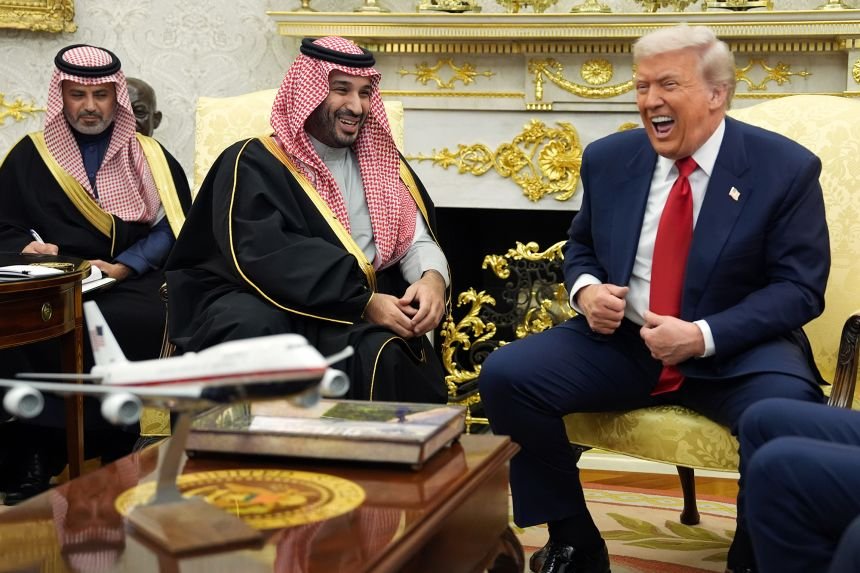
Trump-Saudi Arabia Deal has become hot topic globally. President Donald Trump’s recent engagement with Saudi Crown Prince Mohammed bin Salman (MBS) in Washington is already being called historic—and for good reason. Beyond headlines about F-35 jet sales, semiconductor investments, and trillion-dollar economic pledges, this partnership is set to transform the Middle East—and the broader Muslim world—for generations.
Melania Trump played a subtle but critical role in the visit, helping craft an atmosphere of diplomacy and soft power that enabled breakthrough discussions. From Islamabad to Kuala Lumpur, Jakarta to Abu Dhabi, Muslim-majority nations are taking note: the Trump-MBS alliance is poised to stabilize a region long plagued by conflict, extremism, and uneven economic growth.
A Bold Vision for the Region
The Trump-Saudi Arabia Deal is not just another diplomatic agreement—it is a blueprint for peace, prosperity, and security in the Middle East. MBS’s Vision 2030 has already demonstrated Saudi Arabia’s capacity for economic diversification, social reform, and political modernization. Trump brings the essential elements of U.S. security guarantees, investment incentives, and global influence to make this vision achievable.
The deal signals a new approach to regional integration. Air and missile defense networks, high-tech semiconductor hubs, and joint economic corridors will bind Gulf nations and partners closer together, providing long-term stability while keeping rivals like China at bay. Expanding the Abraham Accords’ framework, this deal opens pathways for inclusive regional cooperation, potentially setting the stage for eventual Saudi-Israeli normalization.
Impact on the Muslim World
The consequences of this deal extend far beyond Riyadh and Washington. Countries like Pakistan, Malaysia, Indonesia, and the UAE stand to gain from enhanced trade, energy partnerships, and defense cooperation. Pakistan, in particular, could see strengthened ties with Saudi Arabia, ensuring energy security, investments, and political support. Southeast Asian nations could leverage the deal for technology transfers, economic modernization, and stronger regional influence.
READ MORE: MBS’s Visit To USA: A White House Welcome That Mirrors Trump’s Royal Reception in Riyadh
MBS has long argued that opportunity should be seized without delay, and Trump’s decisiveness mirrors that philosophy. Despite opposition—most notably from Israel—this agreement demonstrates that transformative progress cannot be stopped by entrenched interests or predictable resistance.
Strategic Security Gains
Defense remains a cornerstone of the partnership. The F-35 fighter jets sale, advanced missile defense systems, and intelligence-sharing strengthen Saudi Arabia’s security capabilities while maintaining Israel’s qualitative edge. Beyond aircraft, cybersecurity initiatives and military technology cooperation will position Saudi Arabia as a regional hub for innovation and security.
ALSO READ: A ‘pariah’ takes the win
The deal also sends a clear signal: Saudi Arabia is a reliable partner for the United States, capable of anchoring regional stability while countering destabilizing influences. For the first time in decades, the kingdom’s military modernization is paired with economic and technological progress, creating a holistic model for regional leadership.
Economic Transformation
Economically, the agreement promises to unleash trillions in U.S.-Saudi investments. Semiconductor ecosystems, artificial intelligence industries, and renewable energy initiatives will modernize Saudi Arabia and create spillover benefits for neighboring Muslim-majority countries. By keeping U.S. technology and oversight central, the deal prevents critical sectors from falling under rival powers’ influence, while fostering sustainable development.
Saudi Arabia’s mega-projects, from futuristic cities to state-of-the-art infrastructure, are poised to have a transformative impact across the Middle East. The integration of Pakistan, UAE, Malaysia, and Indonesia into this new economic network will reinforce regional stability and create opportunities for trade, investment, and technological growth.
Historical and Prophetic Significance
Observers of the Middle East recognize the potentially prophetic nature of this deal. Transformative regional cooperation has long seemed impossible without major shifts in leadership and vision. Trump’s decisive diplomacy and MBS’s ambitious modernization agenda provide precisely that combination.
This partnership could become a benchmark in history: a bold, pragmatic effort to break the cycle of conflict and chart a path toward lasting peace and prosperity. Countries across South Asia and Southeast Asia are now positioned to benefit from a more secure, prosperous, and interconnected region.
Four Key Takeaways
- Next-Level Security: Saudi Arabia gains F-35 jets, cutting-edge missile defenses, and robust intelligence ties, securing the kingdom while maintaining Israel’s strategic balance.
- Economic Game-Changer: Trillions in U.S.-Saudi investments in AI, semiconductors, and renewable energy set the stage for a regional boom.
- Muslim World Boost: Pakistan, UAE, Malaysia, and Indonesia stand to gain from new trade, technology, and political partnerships.
- Historic Regional Integration: Lays the groundwork for long-term Middle East stability and prosperity, echoing the transformative impact of post-WWII Europe.
The Deal of the Century
Trump’s signature on this deal—defying opposition and navigating decades of historical complexity—signals a decisive shift in Middle Eastern geopolitics. By fusing economic transformation, military modernization, and regional integration, the Trump-Saudi Arabia Deal is the deal of the century.
It is not merely an agreement between two nations; it is a vision for an entire region. From Riyadh to Jakarta, Islamabad to Abu Dhabi, the Muslim world stands to gain unprecedented opportunities for growth, security, and modernization. While critics may voice concerns, the momentum of Trump and MBS’s leadership cannot be ignored.
The deal will reverberate for decades, shaping the Middle East for good—and ensuring that the United States and Saudi Arabia remain the architects of a new era of stability and prosperity.