


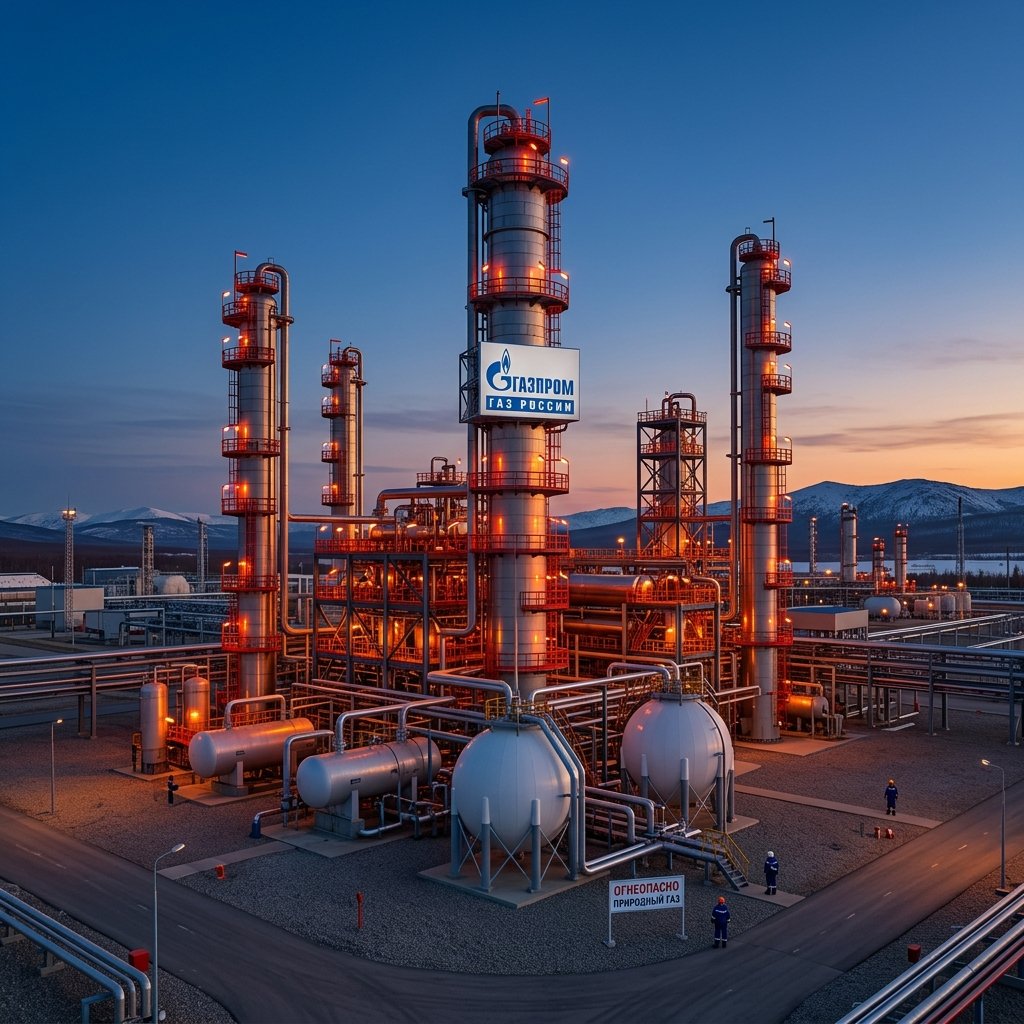
- Trump warns Zelensky to stop attacking Russian energy resources, warning that strikes on diesel facilities are worsening a global fuel shortage.
- The Middle East crisis is putting both Hormuz and Bab el-Mandeb under pressure, threatening major energy flows and pushing oil prices sharply higher.
- Washington increasingly faces a difficult energy-security calculation: supporting Ukraine while preventing further disruption to an already strained global fuel market.
President Donald Trump’s demand that Ukrainian President Volodymyr Zelensky stop attacking Russian diesel and energy infrastructure is about more than the Russia-Ukraine war. It signals that Washington is increasingly worried that the global energy system has entered a dangerously tight phase in which another major disruption could turn an already severe fuel squeeze into a wider economic crisis.
Trump said Sunday that he had asked Zelensky to stop targeting Russian diesel facilities because the attacks were contributing to a global shortage. “There are plenty of other targets,” Trump said, arguing that Ukraine could continue striking Russian military objectives without hitting fuel infrastructure. His warning came as average U.S. diesel prices crossed $6 a gallon, an all-time high that threatens to feed inflation through transportation, agriculture and manufacturing.
The significance of Trump’s intervention lies in what it reveals about the energy market. The United States is no longer confronting a single supply disruption. It is dealing with several overlapping shocks involving Russia, Ukraine and the Middle East.
Ukraine has increasingly targeted Russia’s oil refineries because they provide fuel and revenue essential to Moscow’s war effort. For Kyiv, these are legitimate strategic targets. But Washington has to consider a different calculation. Russia is one of the world’s major energy producers, and damage to its refining capacity removes fuel from an international market that is already under extraordinary pressure.
READ NEXT: Mecca Defence Agreement Dilemma: Why Islamabad and Ankara Cannot Be Riyadh’s Rapid Reaction Force
That is particularly important for diesel.
Diesel powers trucks, agricultural machinery, construction equipment, ships and industrial transportation. When diesel prices surge, the consequences eventually reach supermarkets, farms, factories and households. A shortage of diesel can therefore become an inflationary shock far beyond the energy sector.
Trump appears to understand that risk.
His intervention comes as the Middle East creates another enormous threat to global energy supplies. The Strait of Hormuz and Bab el-Mandeb, two of the world’s most important maritime chokepoints, are both under severe pressure.
Traffic through Hormuz has fallen dramatically amid the Iran conflict, while Iran-backed Houthi forces have advanced around Yemen’s Red Sea coast and seized Perim Island near the entrance to Bab el-Mandeb. The developments have placed energy shipments under pressure on both sides of the Arabian Peninsula.
The crisis has become even more serious because Saudi Arabia’s East-West pipeline, designed partly to bypass Hormuz, was attacked and temporarily shut down. The 1,200-kilometre pipeline can move roughly 4 million to 5 million barrels of oil a day, equivalent to around 4 to 5 percent of global supply.
This is creating what can increasingly be described as a dual maritime energy crisis.
The Strait of Hormuz crisis and dual maritime threat is particularly important because pressure on both Hormuz and Bab el-Mandeb means energy producers have fewer safe alternatives for reaching international markets.
READ MORE: Russia Is Churning Out Smart, Cheap New Weapons Faster Than Ukraine or the U.S.
The Guardian reported that the Saudi pipeline shutdown could leave the kingdom’s Red Sea export stocks with only several days of breathing room, while Brent crude has moved above $100 a barrel. Reuters reported Monday that Brent was around $107.81, with tanker rates also reaching record levels as the risks to shipping increased.
The numbers explain Trump’s concern.
If Middle Eastern production and transport capacity remains constrained while Russian refining capacity is simultaneously attacked, the world has less effective fuel supply precisely when it needs more.
This also explains why Trump’s warning is focused specifically on diesel rather than simply crude oil.
The United States can potentially find alternative sources of crude, but replacing lost refining capacity and refined products is considerably more difficult in the short term. The global market is already absorbing disruptions caused by the Iran war, restrictions around Hormuz and the growing threat around Bab el-Mandeb.
For Ukraine, however, Trump’s request creates a difficult dilemma.
Kyiv has an obvious strategic incentive to attack Russian refineries. Every damaged refinery can reduce Moscow’s ability to supply its military and civilian economy. Stopping such attacks could give Russia time to repair infrastructure and restore fuel production.
But Washington is now looking at the conflict through a wider economic lens.
The question is no longer simply whether Ukraine can hurt Russia. It is whether further attacks on Russian energy infrastructure could contribute to a global fuel crisis at precisely the moment when Middle Eastern energy routes are also being disrupted.
Trump also has a domestic political calculation. Diesel prices affect freight, food and farming, making energy inflation particularly damaging ahead of the U.S. midterm elections. A prolonged fuel-price shock could quickly become a political liability for the administration and congressional Republicans.
Yet the strategic calculation goes beyond elections.
Washington cannot simultaneously confront Iran, manage the consequences of attacks around Hormuz and Bab el-Mandeb, watch Saudi Arabia lose an alternative oil-export route and see Russian refining capacity destroyed while assuming global markets will remain stable.
The separate conflicts are becoming one interconnected energy crisis.
A strike in Hormuz affects Asian refineries. A Houthi advance around Bab el-Mandeb affects shipping between Asia and Europe. An attack on a Saudi pipeline removes an alternative export route. A Ukrainian drone strike on a Russian refinery can tighten diesel supplies thousands of miles away.
The geography is different. The economic consequences are not.
That is why Trump’s message to Zelensky matters.
He is effectively telling Ukraine that some military targets are tolerable, but energy infrastructure has become a different category because the global system has too little spare capacity to absorb another major supply shock.
If Hormuz remains constrained, Bab el-Mandeb continues to deteriorate and Russian refining capacity keeps coming under attack, the next energy shock may not require another war.
The world may simply discover that it has run out of spare capacity to absorb the wars it already has.