


- Disarmament is survival: Laying down arms could save Gaza from further devastation.
- Hostages and prisoners: A mass exchange would free thousands on both sides.
- Israeli withdrawal: Trump’s plan creates a framework for troops to leave Gaza.
- International oversight: A new administration could bring stability and services.
- Palestinian future: True resistance now means securing life, not more war.
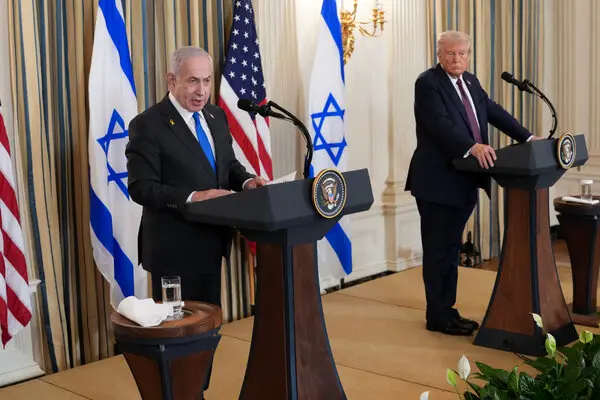
Donald Trump has placed Hamas before the starkest choice in its history: disarm and secure a future for Palestinians in Gaza, or reject compromise and condemn an entire people to perpetual war. For all its flaws, Trump’s Gaza cease-fire proposal is the only realistic path out of a conflict that has consumed tens of thousands of lives and reduced Gaza to rubble.
Israel has already signaled its willingness to move forward. Hamas has cautiously welcomed prisoner releases and hostages’ exchange but has evaded the central question: will it disarm? This hesitation is not strategy—it is selfishness. By clinging to weapons, Hamas clings to its own relevance, even at the cost of Palestinian lives.
The Trap of Resistance
For years, Hamas has justified its armed struggle as “resistance.” Yet after nearly two years of devastating war, resistance has delivered little beyond death, displacement, and despair. Palestinians are living in tents, their homes flattened, their future uncertain. The “honor” of holding onto weapons does not rebuild schools or hospitals. It does not reopen the sea for trade. It does not heal the wounds of traumatized children.
The Marinette: Lone Yacht Sails Toward Gaza After Israel Crushes World Flotilla
Trump’s plan—however transactional—offers an exit. Disarmament, prisoner releases, Israeli withdrawal, and international oversight would not end the Palestinian struggle for sovereignty, but it would end the cycle of bombardment that has made sovereignty impossible.
Israel’s Calculus
Israel will not tolerate a Gaza ruled by a militant army on its doorstep. Any deal that leaves Hamas armed is a deal destined to collapse. Netanyahu’s government has its own domestic imperatives; it cannot politically survive a cease-fire that looks like surrender. T
READ MORE: Trump Signs Order That Could See U.S. Military Defend Qatar
his is why Trump’s plan matters—it provides both sides with a face-saving ladder down. Israel gets hostages back and can declare victory. Hamas gets prisoners released and a chance to reconstitute itself politically.
The Role of the United States
Trump’s involvement is not altruism; it is strategy. Washington is desperate to restore credibility in the Middle East, and Trump is betting that Gaza can deliver him the diplomatic win his predecessors never achieved. Yet American motives are secondary. What matters is that Trump’s plan creates a structure neither Hamas nor Israel can ignore.
A Future Beyond Hamas
If Hamas accepts, Gaza could be governed by a new internationalized Palestinian authority, one capable of delivering basic services rather than rockets. If Hamas refuses, it will reveal itself for what many already suspect: an organization more invested in its own survival than in the survival of its people.
ALSO READ: Moldova’s Democratic Choice Is a Triumph for Europe
The future of Palestinians cannot be mortgaged to Hamas’s pride. True resistance now means resisting the urge to sacrifice generations for an ideology of endless war.
A Moment of Decision
Trump’s plan is not perfect. It is not the long-promised two-state solution. But it is a lifeline—one that offers Palestinians a chance to breathe, rebuild, and reclaim dignity. The alternative is clear: continued destruction, indefinite displacement, and a war without end.
Hamas must decide: does it want to be remembered as the movement that traded rifles for nationhood, or the one that buried Gaza under the ruins of its own stubbornness?
The choice is no longer about resistance. It is about survival.