


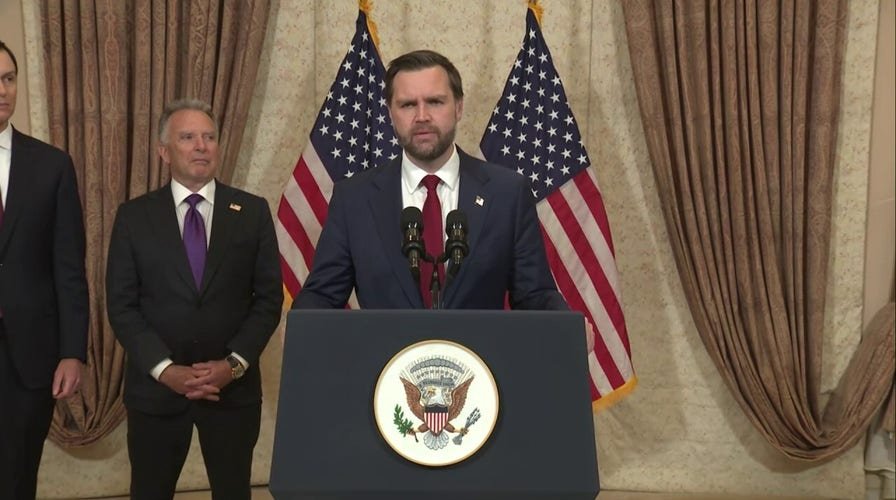
- U.S.-Iran Talks Islamabad officially begin after midnight arrival of JD Vance-led delegation
- Iranian delegation expected early Tuesday, confirming both sides are entering negotiations
- Sources signal possible breakthrough, including ceasefire extension and long-term roadmap
- Pakistan emerges as key mediator amid rising global tensions and oil market volatility
SLAMABAD — High-stakes negotiations between the United States and Iran are now formally underway in Pakistan, as a J. D. Vance-led high-powered American delegation is expected to arrive in Islamabad on Tuesday signaling a dramatic shift from uncertainty to active diplomacy in one of the most volatile geopolitical crises in recent months.
According to senior officials familiar with the development, the U.S. delegation—headed by Vice President Vance and accompanied by key envoys— are expected to arrive in the Pakistani capital on Tuesday under tight security. The arrival effectively confirms that the much-anticipated second round of U.S.-Iran talks will proceed, despite days of escalating tensions and conflicting signals from both sides.
Sources privy to the negotiations said the Iranian delegation is expected to arrive later on Tuesday for face-to-face engagements to begin within hours. Pakistani authorities have already sealed off parts of the diplomatic enclave, underscoring the gravity of the talks and Islamabad’s central role as a mediator.
Iran-US Talks in Islamabad: Iran Sends High-Powered Delegation Despite Strait of Hormuz Crisis
The negotiations come just days before a fragile ceasefire between Washington and Tehran is set to expire on Wednesday, raising fears of a renewed military escalation in the region. However, insiders suggest momentum is now building toward a diplomatic breakthrough.
“A breakthrough is expected soon” a senior official with direct knowledge of the talks told reporters on condition of anonymity. “The outcome will likely include an extension of the ceasefire deadline and, more importantly, a structured roadmap aimed at ending the U.S.-Iran conflict permanently.”
The development marks a significant turnaround from earlier uncertainty, when Iranian officials publicly cast doubt on their participation. Esmaeil Baqaei had said Monday that Tehran had not yet made a final decision regarding the talks, citing concerns over Washington’s “excessive demands” and shifting positions.
Why the UAE Cannot Be Ignored in Iran Talks
Iranian state media had gone further, suggesting that Tehran might entirely forgo the negotiations, blaming U.S. actions—including a controversial naval seizure over the weekend—for undermining trust.
Tensions surged after Donald Trump announced that U.S. forces had intercepted and seized an Iranian-flagged cargo vessel attempting to bypass an American-imposed blockade near the strategically vital Strait of Hormuz. The vessel, identified as the Touska, was taken into custody following a dramatic military operation involving naval fire and an airborne Marine boarding.
Strait of Hormuz Crisis 2026: IRGC Fires on Indian Tanker as Oil Prices Surge Amid Global Supply Fears
The incident marked the first such seizure since the blockade was imposed earlier this month and triggered sharp warnings from Tehran. Iran’s top military command has since vowed retaliation, describing the operation as “piracy” and warning of imminent consequences.
Despite the heightened rhetoric, diplomatic signals from Tehran have been mixed rather than uniformly hostile. Iranian President Masoud Pezeshkian struck a notably conciliatory tone on Monday, emphasizing that “continuing the conflict benefits no one” and calling for a resolution grounded in “honor, wisdom, and prudence.”
Iran talks on shaky footing after U.S. seizure of ship in Strait of Hormuz
Such statements have fueled cautious optimism among mediators in Islamabad, who see a narrow but real window for de-escalation.
Pakistan’s role has drawn increasing international attention, with global stakeholders viewing the talks as a potential turning point not only for U.S.-Iran relations but also for broader regional stability. Markets have already reacted to the volatility, with oil prices surging and global equities dipping amid fears of supply disruptions linked to the Strait of Hormuz crisis.
Strait of Hormuz Impact on Singapore: Energy Shock Threatens Asia’s Trade Lifeline
The stakes could hardly be higher. The ongoing conflict has disrupted maritime trade, stranded thousands of seafarers, and driven up energy prices worldwide. Any extension of the ceasefire—or movement toward a comprehensive agreement—would likely have immediate global economic implications.
For now, all eyes are on Islamabad.
As delegations prepare to sit across the negotiating table, the atmosphere remains tense but cautiously hopeful. If Tuesday’s talks yield even a preliminary framework for continued dialogue, diplomats say it could mark the beginning of the end of a conflict that has pushed the region to the brink.
Whether that hope materializes will depend on the willingness of both Washington and Tehran to move beyond brinkmanship—and seize what may be their last, best chance at peace.