



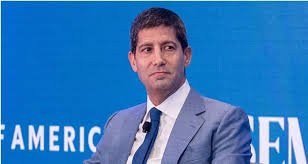
Kevin Warsh’s nomination as the next Federal Reserve Chair by President Donald Trump has immediately reshaped expectations across Wall Street, Washington, and global financial markets. Seen as a figure who blends political loyalty, elite financial connections, and institutional experience, Warsh appears to fit Trump’s vision of a central bank leader ready to challenge the status quo. Yet behind the polished image lies uncertainty over how aggressively Warsh will cut interest rates and how far he will push his promised overhaul of Federal Reserve policy.
Trump has publicly urged the Fed to slash interest rates toward crisis-era levels near 1%, arguing that cheaper borrowing would turbocharge economic growth and strengthen American competitiveness. However, Warsh’s track record as a former Fed governor from 2006 to 2011 paints a more cautious picture. Known as an inflation hawk, Warsh consistently warned about overheating markets and excessive monetary stimulus. This history suggests he may resist the dramatic rate cuts Trump desires, particularly as economic data continues to signal resilience rather than recession.
Market expectations reflect that skepticism. Interest rate futures currently price in only two modest quarter-point cuts in 2026, keeping benchmark rates in the 3.50% to 3.75% range. Notably, those projections barely shifted after Trump announced Warsh’s nomination — a clear sign that investors doubt any rapid pivot toward ultra-loose monetary policy.
Beyond interest rates, Warsh enters office with an ambitious reform agenda aimed at what he has labeled the Federal Reserve’s “institutional drift.” Over the past decade, he has criticized the central bank for expanding far beyond traditional monetary policy into areas like financial regulation, climate risk, and social policy. Turning those critiques into concrete reform, however, may prove far more difficult than delivering fiery speeches or opinion columns.
The modern Federal Reserve has evolved into a hybrid institution, combining monetary authority with regulatory power and congressional oversight. That blurred structure has even puzzled Supreme Court justices, particularly in cases questioning whether Fed officials can be fired by the president. Any serious restructuring of the Fed’s mandate would likely require cooperation from Congress — a notoriously slow and politically divided body.
Some changes could happen internally. Under outgoing Chair Jerome Powell, the Fed has already stepped back from climate-focused initiatives and scaled down diversity and inclusion efforts. Warsh could further centralize Fed messaging, limit public commentary from regional bank presidents, and align more closely with Treasury Secretary Scott Bessent on economic strategy. Analysts believe Warsh may also reshape how the Fed communicates future policy, reducing reliance on short-term forecasts and shifting toward a more flexible, data-driven framework.
One of Warsh’s most controversial targets remains the Fed’s massive balance sheet, which ballooned during the 2008 financial crisis and the COVID-19 pandemic through quantitative easing programs. Warsh opposed many of those bond-buying efforts while serving under former Chair Ben Bernanke and later resigned partly in protest.
Today, however, the balance sheet is deeply embedded in how the Fed manages interest rates and global liquidity. It supplies critical funding to banks and supports the international role of the U.S. dollar. Even critics within the Fed argue that as the economy grows, the balance sheet must expand with it. That reality could sharply limit how much Warsh can unwind past stimulus without triggering market instability.
Economists remain divided on what a Warsh-led Federal Reserve would ultimately look like. Some see a pragmatic policymaker who values market confidence and inflation control above political pressure. Others anticipate a more disruptive chair willing to challenge long-standing norms.
What seems clear is that Kevin Warsh’s tenure — if confirmed — will test the balance between Trump’s push for rapid interest rate cuts and the Fed’s traditional caution. While the rhetoric points toward dramatic change, institutional constraints, economic conditions, and market realities may slow any radical transformation.
For now, investors, policymakers, and global markets are watching closely. The future of U.S. monetary policy may not hinge on bold promises, but on how far Warsh is willing — and able — to push reform within one of the world’s most powerful financial institutions.