



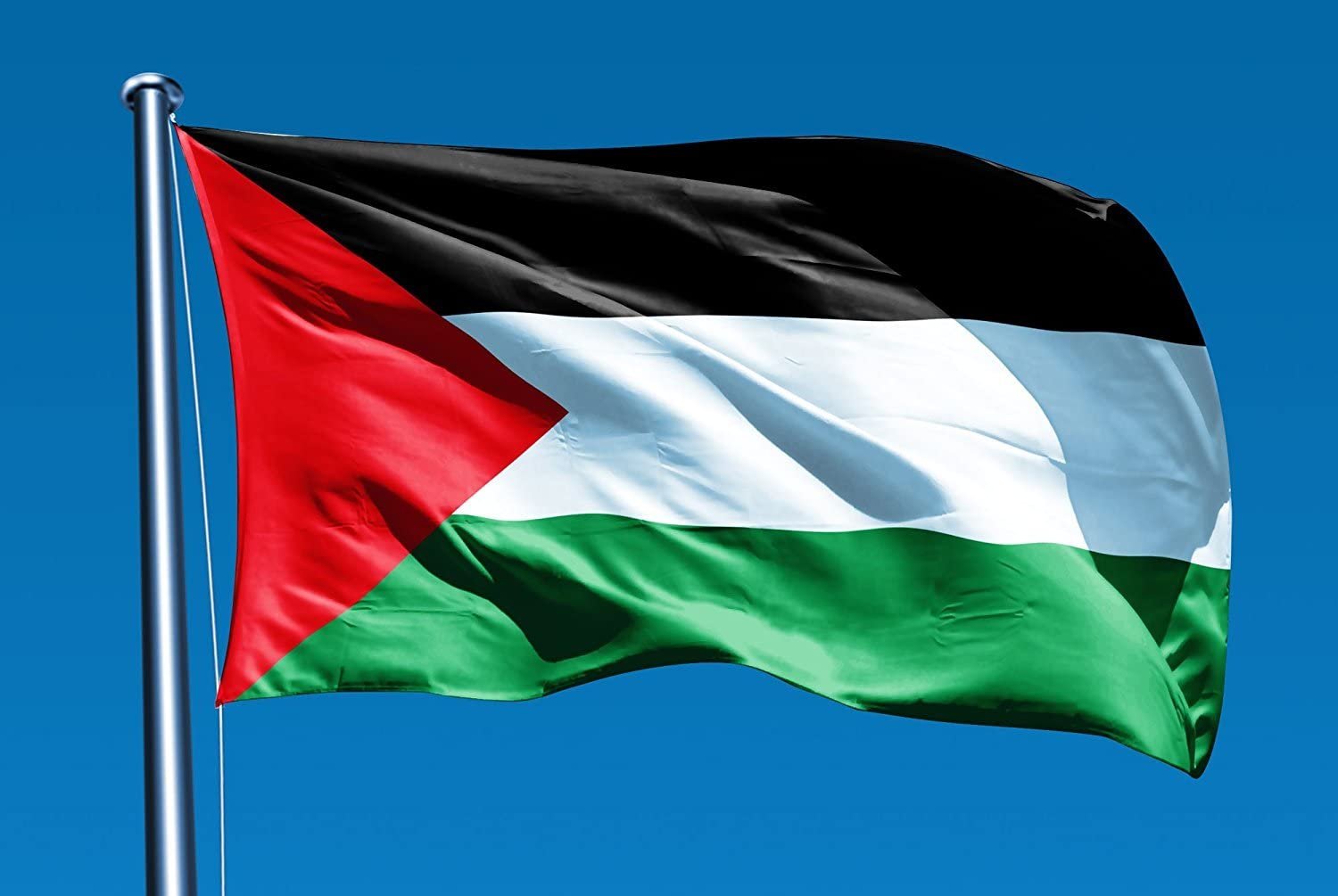
- Palestine Issue: Palestinian support for the Two-State Solution is rising, including in Gaza, despite years of war, destruction and displacement.
- Pakistan and major Muslim-majority states continue to support an independent Palestinian state based on the pre-1967 borders, with East Jerusalem as its capital.
- The central challenge is implementation: security, borders, settlements, Jerusalem, refugees, reconstruction and credible Palestinian leadership remain unresolved.
For years, the Israeli-Palestinian conflict has appeared trapped between failed negotiations, wars and political distrust. Yet new polling from the Arab Barometer points to a significant development: despite Gaza’s devastation and political disillusionment, support for a negotiated two-state settlement has increased.
The findings challenge the assumption that prolonged war automatically pushes Palestinians away from compromise. In its October 2025 survey, Arab Barometer found that 56 percent of Palestinians in the West Bank preferred a two-state solution, while support in Gaza reached 64 percent, up from 54 percent in 2023. A separate Palestinian Center for Policy and Survey Research poll in August 2026 found 61 percent of Gazans favoring two states based on the 1967 borders.
For Gaza, this shift carries particular weight. The territory has suffered enormous destruction, displacement and humanitarian hardship, yet the polling indicates that many Gazans remain focused on rebuilding rather than leaving. Arab Barometer also found increased openness to normalization between Arab states and Israel when normalization is tied to meaningful progress toward Palestinian independence.
READ NEXT: UN Commission Israel Genocide Report Details Systematic Violations Against Children
Arab governments have increasingly linked regional integration with a political pathway for Palestinians. The issue is therefore no longer simply whether Arab states can establish relations with Israel, but whether such relations can be connected to a credible and durable settlement of the Palestinian question.
Pakistan has consistently placed an independent Palestinian state at the center of its diplomatic position. In August, Foreign Minister Ishaq Dar reiterated Islamabad’s support for a sovereign, contiguous Palestinian state based on the pre-1967 borders, with Al-Quds Al-Sharif as its capital. Pakistan has also backed efforts to implement the Gaza peace framework while stressing Palestinian self-determination and reconstruction.
READ MORE: Palestinians Want a Two-State Solution
That position is shared, in varying forms, by major Muslim and Arab states. A September 2026 joint statement by Pakistan, Türkiye, Egypt, Indonesia, Jordan, Qatar, Saudi Arabia and the United Arab Emirates described the two-state solution as the viable path toward a lasting peace, calling for a sovereign Palestinian state along the 1967 lines with East Jerusalem as its capital.
The diplomatic challenge is turning public preference into political reality. Palestinian support for two states does not erase demands concerning borders, settlements, Jerusalem, security, refugees and sovereignty. Polling does not demonstrate that Israelis and Palestinians agree on settlement terms. Israeli public opinion remains divided, while political positions on Palestinian statehood continue to constrain negotiations. Arab Barometer’s broader findings show that support for two states exists on both sides, but agreement on the details remains far more difficult.
There is also a leadership problem on the Palestinian side. Arab Barometer found widespread alienation from both Fatah and Hamas, suggesting that any future peace process may require political renewal rather than simply restoring the pre-war status quo. A government that cannot command public legitimacy would struggle to implement difficult compromises or guarantee security.
The emerging lesson is that the conflict may not lack a political destination; it lacks the conditions and leadership required to reach it. That gap could determine whether diplomacy succeeds or fails. The new Palestinian polling does not guarantee peace, but it weakens the argument that Palestinians have abandoned diplomacy altogether.
For the international community, the implication is clear: reconstruction, security and political negotiations cannot be treated as separate tracks indefinitely. Gaza needs rebuilding, Israel needs credible security guarantees, and Palestinians need a genuine political horizon. Without all three, ceasefires may remain temporary pauses.
The two-state solution has survived decades of failure because it addresses central demands on both sides: Israeli security and Palestinian national self-determination. The latest evidence suggests that, even after years of war, a substantial Palestinian constituency still sees compromise as possible. The harder question is whether political leaders are prepared to match that public pragmatism with difficult decisions capable of ending the conflict.