



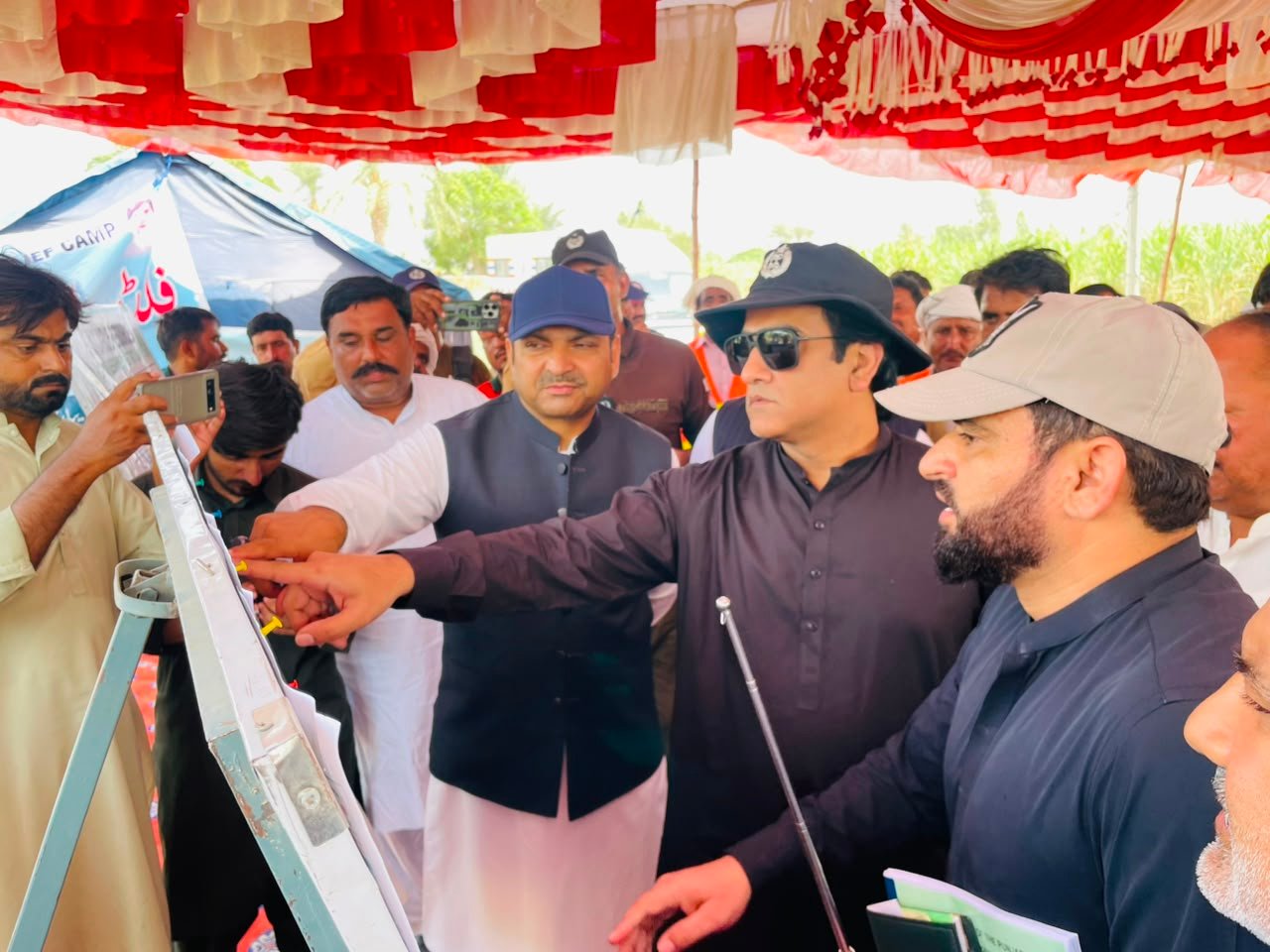
- Layyah Deputy Commissioner Asif Ali Dogar cancelled Mutation No. 1382 and restored 24 kanals and 6 marlas of Forest Department land to the state.
- The district administration identified multiple irregularities, including an unverified 1973 document, a 50-year unexplained delay and the absence of proper judicial proceedings.
- Dogar subsequently referred the case to NAB Multan for investigation into the alleged role of the private beneficiary and officials involved in the disputed transfer.
When Punjab Chief Minister Maryam Nawaz Sharif told officials that government land had to be protected from encroachers, land grabbers and those who manipulated the state’s records, Deputy Commissioner Layyah Asif Ali Dogar appears to have taken the instruction as something more than another government directive. He turned it into a campaign.
Across Layyah, in southern Punjab, his administration began examining disputed state properties and transfers, looking beyond the people occupying government land to the paperwork that had allowed some parcels to leave government control in the first place. In one case, the investigation led him to 24 kanals and 6 marlas of forest land beside the main M.M. Road in Fatehpur — and ultimately to a reference sent to the National Accountability Bureau in Multan.
“Credit goes to Chief Minister Maryam Nawaz Sharif. Without her support it was not possible for me to recover a square foot of land,” Dogar told The Islamabad Telegraph. The chief minister, he said, remained in contact with the officer during the recovery effort and extended unusually strong support for the administration’s attempts to reclaim state property. The result was a recovery that Dogar’s office regarded as important not merely because of the value of the land, but because of what it suggested about the state’s willingness to challenge transactions embedded in official records. The land was restored to the government on Aug. 25, 2026.
The case began when the Deputy Conservator of Forests, Forest Division Layyah, brought to Dogar’s attention the alleged adjustment of forest land in Chak No. 244/TDA, Fatehpur, Tehsil Karor. The parcel, according to the official record examined by the district administration, measured 24 kanals and 6 marlas and formed part of a larger holding of 132 kanals and 19 marlas in joint Khata No. 60/59. Revenue records identified Rectangle No. 84/4 as forest property in the form of a shelter belt along the M.M. Road. Its location and size gave it substantial value, with the deputy commissioner’s report describing the property as worth billions of Pakistani rupees.
READ NEXT: In Layyah, a Fight Over 24 Kanal Becomes a Test of the State’s Resolve
The Forest Department said it had discovered that 24 kanals had been deducted from its land without its knowledge. Dogar immediately sought reports from the Assistant Commissioner, Karor, and the Deputy Conservator of Forests. The Assistant Commissioner subsequently submitted a report prepared by the relevant revenue officer, together with copies of the record, while the original file was called from the record room. What emerged was a chain of transactions that, according to the district administration, raised questions about how public land could have been converted into a private benefit through the correction of revenue records.
At the center of the case was Mutation No. 1382, sanctioned and attested on Feb. 6, 2023. According to the official inquiry, the mutation transferred the disputed 24 kanals and 6 marlas from the Forest Department to the Thal Development Authority, or TDA, ostensibly to adjust an RL-II claim made by Nasir Ali, son of Muhammad Ilyas, of Rajput caste. The transfer followed an order dated Jan. 24, 2023, passed by the then Additional Deputy Commissioner (Revenue), Layyah. The district administration concluded that such an adjustment was contrary to the applicable policy and law because the property remained forest land both on the ground and in the revenue record.
The paper trail led further back, to an alleged claim dating to 1973. The original application relied on an order attributed to the Settlement and Rehabilitation Commissioner, Punjab, dated April 11, 1973. According to the official report, Nasir Ali’s father, Ilyas, was said to have obtained Claim No. 4978 from another individual, Yawar Ali, through an agreement. But the file contained only an unregistered and unverified photocopy of that agreement, which did not contain the parties’ CNIC numbers. The 1973 order itself was also found only as a photocopy and had not been verified with the Settlement and Rehabilitation Wing of the Board of Revenue Punjab.
READ MORE: Layyah gets Green Bus service
For the district administration, the passage of time presented another problem. Nearly half a century had elapsed between the purported 1973 order and its implementation. The inquiry found that the 50-year delay had not been explained. More significantly, officials concluded that claims involving evacuee property and displaced persons were required to be dealt with under the relevant laws and policies of the Settlement and Rehabilitation Wing rather than through a simple “Correction of Record” or alteration of proprietary rights. The report therefore questioned whether the then Additional Deputy Commissioner (Revenue) had possessed the jurisdiction to make the adjustment at all.
The procedural record raised still more concerns. According to Dogar’s reference, there were no reports from the adjustment branch of the Deputy Commissioner’s office, despite that branch being relevant to the matter. No parties were summoned before the order was passed. The Forest Department, whose land was being considered for adjustment, was neither summoned nor made a party to the proceedings. The inquiry also found no judicial order governing the transaction. Instead, the disputed transfer rested on what the report described as a four-line order based on reports from revenue field staff, whose authenticity was itself questioned.
The Tehsildar, Karor, endorsed by the Assistant Commissioner, recommended cancellation of Mutation No. 1382. Dogar accepted the recommendation after reviewing the record and concluded that forest land could not lawfully be adjusted in favor of a claim allottee. On Aug. 25, he issued detailed Order No. DC/NTO/3052 cancelling the mutation concerning the 24 kanals and 6 marlas. The correction was then entered into the revenue record through Mutation No. 1841, restoring the property to the Forest Department.
But Dogar did not stop with recovering the land. The investigation turned toward the officials and individuals whose actions had allegedly enabled the transfer. That distinction is central to the case. Recovering public property can restore an asset to the state; determining how it was removed can expose weaknesses in the administrative machinery that allowed the transaction to occur. Dogar’s office therefore forwarded the case, along with the relevant record, to NAB Multan for further legal action against the alleged beneficiary and officials involved.
The reference, dated Sept. 5, 2026, was addressed to the Additional Director (Coordination), NAB Regional Office Multan. It identified Nasir Ali, son of Muhammad Ilyas, resident of Chak No. 94/TDA, Tehsil Karor, as the alleged beneficiary of the disputed adjustment and requested further proceedings in light of the irregularities identified by the district administration. The case was sent against the backdrop of an existing NAB inquiry into alleged bogus adjustments involving TDA land and misappropriated departmental property.
The allegations remain matters for investigation and due process. NAB will have to determine whether criminal or accountability violations occurred, who was responsible and whether the documentary trail establishes intentional wrongdoing. Yet the significance of the Layyah episode lies partly in what happened before the accountability process began. A district administration questioned a transaction that had already entered the official record, reconstructed its history, restored the property and then referred the suspected irregularities to an accountability agency.
For Punjab, Pakistan’s most populous province, that sequence carries a larger message. State land does not disappear only when bulldozers move onto government property. It can also disappear through mutations, orders, claims, missing files, questionable photocopies and administrative decisions that acquire the appearance of legality simply because they have been entered into a register. The Layyah case demonstrates why recovering public property requires more than removing an encroacher: it requires following the paperwork back to the officials and decisions that made the transfer possible.
Dogar’s intervention has therefore become a test of whether the campaign to reclaim government land can extend beyond visible occupation to the less visible architecture of administrative abuse. The 24-kanal parcel along the M.M. Road is back in the state’s record. The NAB reference now places the questions raised by the file before an institution empowered to investigate them. And in Layyah, the deputy commissioner who began by recovering land has made clear that, in his view, the investigation does not end when the government gets its property back.
The land was the first recovery. The paper trail was the second.