



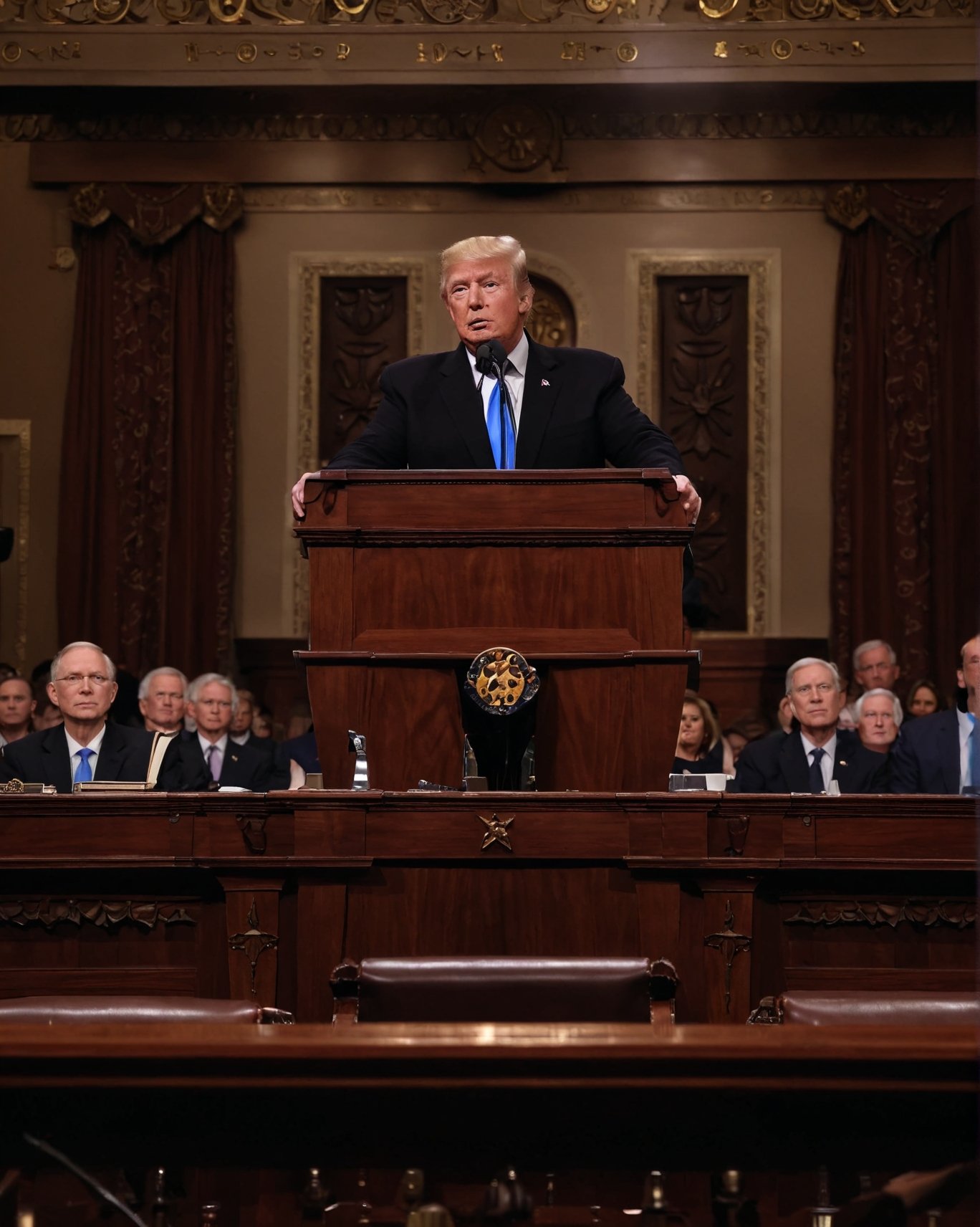
President-elect Donald Trump’s plan to use recess appointments to secure the confirmation of his controversial Cabinet nominees has sparked significant debate, raising questions about its feasibility, legality, and potential impact on American governance. Trump’s reliance on this constitutional mechanism reflects his intent to sidestep potential Senate opposition, ensuring his preferred appointees assume office. However, the approach faces serious political and procedural obstacles, creating uncertainty about whether it can be effectively implemented.
Trump’s Recess Appointments
Recess appointments, enshrined in Article II, Section 2 of the U.S. Constitution, allow a president to temporarily appoint officials to roles requiring Senate confirmation while Congress is in recess. These appointments last until the end of the next congressional session, bypassing the need for a Senate vote. The practice dates back to the early days of the republic when Congress often adjourned for long periods, and slow travel made urgent confirmations impractical. Founding Father Alexander Hamilton justified recess appointments as a critical safeguard to ensure the continuity of government operations.
Historically, recess appointments were widely used by presidents, including Bill Clinton and George W. Bush, who each made over 100 during their terms. However, the process has grown increasingly contentious, with critics viewing it as a way to circumvent the Senate’s constitutional role of providing advice and consent.
The debate intensified in 2014 when the Supreme Court ruled in NLRB v. Noel Canning that recess appointments are only valid during recesses lasting more than 10 days. This landmark decision significantly restricted the practice, prompting Congress to adopt procedural tactics to block recess appointments, such as holding brief “pro forma” sessions during breaks.
Recess Appointments And Congress
Trump’s push for recess appointments comes as he prepares to enter office with a roster of nominees likely to face fierce resistance in the Senate. Among them are former Rep. Matt Gaetz as attorney general and Robert F. Kennedy Jr. as head of the Department of Health and Human Services. Both picks have drawn intense criticism.
What are recess appointments and can Trump confirm nominees that way?
What are recess appointments and how will Trump administration picks be vetted?
What are recess appointments and how could Trump use them to fill his Cabinet?
Gaetz, a staunch Trump ally, faces allegations of sexual misconduct, which he denies, and Kennedy’s vaccine skepticism and promotion of health-related conspiracy theories have alarmed public health experts. Despite a Republican-controlled Senate, these controversial figures may struggle to secure the votes needed for confirmation.
Can Trump Confirm Nominees—Like Gaetz And RFK Jr.—Without Senate? Recess Appointments, Explained
To expedite the confirmation process, Trump has urged Senate Republicans to support recess appointments, stating on November 10, “Without [recess appointments], we will not be able to get people confirmed in a timely manner.” However, implementing this strategy requires overcoming substantial hurdles. For Congress to enter a recess long enough to trigger the president’s authority, both the House and Senate must agree to adjourn for more than three days. This agreement is unlikely, given the polarized political climate and the procedural tools available to Democrats.
Senate Democrats could employ a range of delaying tactics to prevent an adjournment resolution, including proposing endless amendments and using the filibuster. Overcoming these obstacles would require 60 votes, a threshold Republicans are unlikely to meet without bipartisan support. Even within the GOP, skepticism about some of Trump’s nominees could further complicate the process.
In theory, Trump could invoke his constitutional authority to adjourn Congress if the House and Senate cannot agree on a recess. Article II, Section 3 grants the president this rarely used power, though it has never been exercised in U.S. history. Trump previously threatened to use it in 2020 during the COVID-19 pandemic but ultimately refrained. If he were to pursue this option now, it would likely provoke a legal and political firestorm. Critics, including Democratic Rep. Jamie Raskin, have characterized such a move as authoritarian, warning it could spark a constitutional crisis.
Legislative roadblock
Beyond legal challenges, pursuing recess appointments could hinder Trump’s broader legislative agenda. Extended Senate recesses would reduce the time available for Congress to address policy priorities during the critical early days of his administration. Key initiatives, such as immigration reform, tax cuts, and infrastructure investment, could be delayed as attention shifts to confirmation battles.
The controversy surrounding Trump’s nominees has further fueled opposition. Gaetz, in particular, has faced pushback even within the Republican Party due to his polarizing reputation and ongoing legal issues. While Trump views Gaetz as a loyalist who will implement his agenda, his potential appointment could create friction within the Department of Justice and undermine public trust. Similarly, Kennedy’s history of promoting health-related conspiracy theories raises concerns about his ability to lead the Department of Health and Human Services effectively, particularly in the aftermath of the COVID-19 pandemic.
Trump’s reliance on recess appointments also highlights the partisan nature of the debate. Republicans who now support the strategy were staunchly opposed to it during Barack Obama’s presidency. Then-Senate Majority Leader Mitch McConnell denounced Obama’s use of recess appointments as a “power grab” and led efforts to limit the practice through the courts. In the 2014 Noel Canning case, conservative justices, including the late Antonin Scalia, criticized recess appointments as an “anachronism” and argued they should be used sparingly. The reversal of positions underscores how political expediency often shapes lawmakers’ views on constitutional principles.
Conversely, Democrats who opposed Trump’s threats to use recess appointments were less vocal when Obama employed similar tactics. This inconsistency reflects broader concerns about the erosion of institutional norms in American politics. Both parties have increasingly weaponized procedural tools to advance their agendas, exacerbating polarization and undermining trust in government.
If Trump succeeds in making recess appointments, the precedent could have lasting implications for the balance of power between the executive and legislative branches. Critics argue it would weaken the Senate’s role in the confirmation process, concentrating more authority in the presidency. Such a shift could erode the system of checks and balances that underpins American democracy, setting the stage for future conflicts between the branches of government.
Supporters of Trump’s strategy contend that recess appointments are a legitimate exercise of presidential authority, especially when faced with obstructionist tactics in the Senate. They argue that the Constitution grants the president this power to ensure the government can function effectively. However, the broader implications of overusing recess appointments remain a subject of intense debate.
The stakes are high as Trump navigates these challenges. His decision to prioritize loyalty over experience in his Cabinet selections reflects a desire to avoid the resistance he faced during his first term. However, this approach risks alienating moderate Republicans and independents, potentially complicating his efforts to govern effectively.
The outcome of this battle will shape the trajectory of Trump’s presidency and set a precedent for future administrations. Whether he succeeds in leveraging recess appointments will depend on his ability to navigate the legal, political, and procedural hurdles ahead. As the debate unfolds, it will test the resilience of America’s constitutional framework and the willingness of its leaders to uphold the principles of governance.
For now, Trump’s strategy remains a high-stakes gamble with uncertain outcomes. The president-elect’s determination to secure his nominees highlights his resolve to assert executive authority, but it also underscores the challenges of navigating a deeply divided political landscape. Whether his efforts succeed or falter will have profound implications for the presidency, the Senate, and the broader balance of power in American government.