



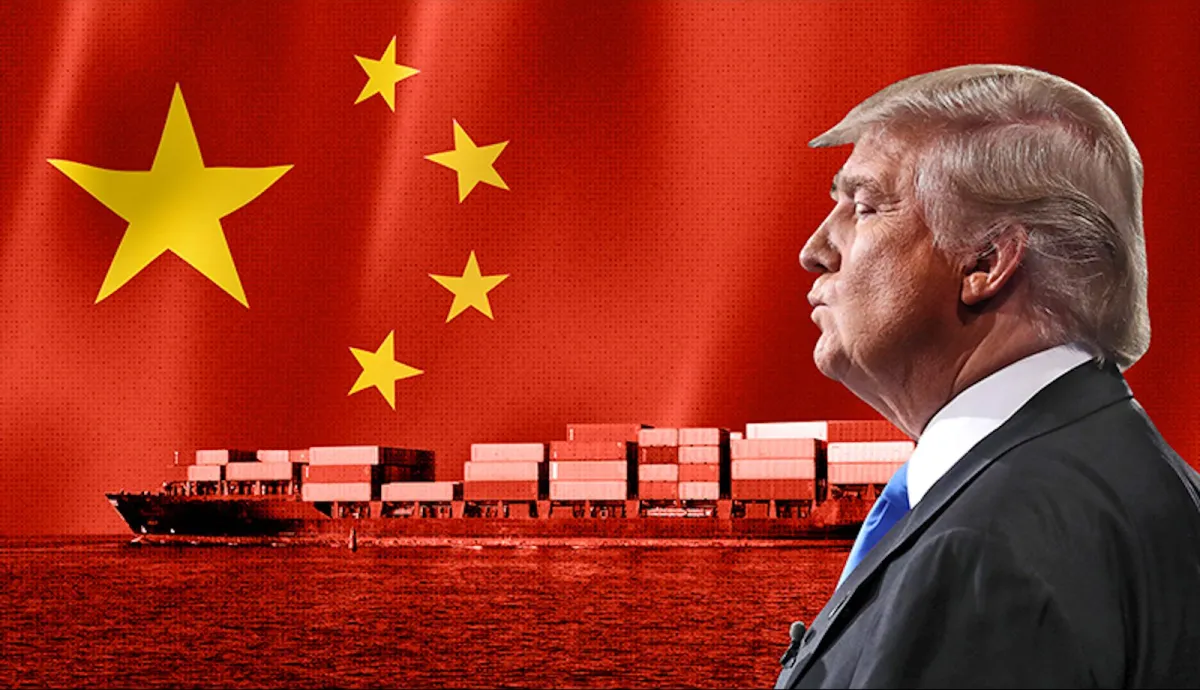
- China raised tariffs on U.S. goods to 84% and filed a formal WTO complaint in response to Trump’s 104% import duties.
- The EU imposed 25% retaliatory tariffs on a wide range of U.S. products, with more countermeasures expected.
- Experts warn that a full-scale trade war is now underway, likely to increase consumer prices globally and spark a recession.
- American households may face thousands of dollars in additional costs annually due to rising tariffs and disrupted supply chains.
April 9, 2025 | Washington D.C., Brussels, Beijing — In a dramatic escalation of global trade tensions, China and the European Union announced sweeping retaliatory tariffs on U.S. goods on Wednesday, directly responding to a fresh wave of import duties imposed by U.S. President Donald Trump. The coordinated countermeasures have stoked fears of an entrenched trade war, sending shockwaves through financial markets and raising concerns of an impending global recession.
A Coordinated Blowback
Shortly after the United States implemented a punishing 104% tariff on Chinese imports—effective as of 12:01 a.m. EST on Wednesday—China hit back hard. China’s Finance Ministry announced it was raising its own tariffs on U.S. goods to 84%, up from 34%, covering a broad range of agricultural products, automotive components, and high-tech machinery.
Calling Washington’s move “a mistake on top of a mistake,” the ministry filed an urgent complaint with the World Trade Organization (WTO), accusing the U.S. of “blatant violations of multilateral trade norms” and “weaponizing economic interdependence.”
“The Chinese government has the determination and the means to defend its legitimate interests,” the filing reads. “We urge WTO member states to take collective action to preserve the integrity of the global trade system.”
Within hours, the European Commission followed suit, imposing 25% tariffs on a list of American goods, including whiskey, motorcycles, and steel products. Brussels confirmed this is merely the “first round of countermeasures,” signaling further escalation if Washington doesn’t back down.
“These retaliatory tariffs are measured, proportionate, and fully compliant with WTO rules,” EU Trade Commissioner Valdis Dombrovskis stated in a press conference. “We cannot allow the rules-based international order to be dismantled piece by piece.”
“A Trade War No One Wins”
Policy experts on both sides of the Atlantic are sounding alarms over the long-term consequences of tit-for-tat economic warfare.
“This is no longer a skirmish—it’s an all-out trade war,” said Dr. Rebecca Lindstrom, senior economist at the Peterson Institute for International Economics. “Tariffs are cascading across continents like dominoes, and history tells us this ends badly for everyone involved.”
Professor Zhou Yi, a trade law expert at Tsinghua University in Beijing, warned of the cascading impact on global supply chains. “From microchips to Christmas ornaments, the cost of goods will rise sharply. The U.S. consumer will be among the hardest hit, but the shock will reverberate through developing economies that rely on export manufacturing.”
More Read: China announces 84% tariffs on US goods in showdown with Trump. Europe also hits back
In Brussels, Jean-Claude Mesnier, a former EU trade negotiator, emphasized the fragility of current diplomacy. “When trade becomes a geopolitical weapon, trust collapses. The economic damage might be quantifiable, but the political cost is incalculable.”
China , U.S Trade War: A Heavy Toll on Consumers
Though Trump insists the tariffs are about restoring American industrial power, economists say the reality on the ground is starkly different.
A Path to Peace in Gaza: Revisiting Trump’s Vision Through a Global, Humanitarian Lens
According to a recent study by the National Retail Federation, American households are already paying between $2,400 and $4,100 more per year due to previous tariff rounds. The latest increases are expected to push those figures even higher.
“Tariffs are taxes in disguise,” said Mark Zandi, chief economist at Moody’s Analytics. “The myth that China or the EU pays the tariff is deeply misleading. It’s American businesses and consumers who pick up the tab.”
The impact is visible across sectors. Toymakers in Guangdong province, who supply nearly 90% of the U.S. market’s holiday decorations, report a chilling drop in orders. “We used to get inquiries by the container-load this time of year,” said Mei Xu, manager of EverBright Plastics. “Now, we hear nothing.”
Retailers across the U.S. are scrambling. “We’re looking at 10–15% price hikes across our inventory within two months,” said Jennifer Castillo, a logistics manager for a mid-sized importer in California. “That includes school supplies, clothing, and electronics. It’s going to be brutal on low-income families.”
The auto industry is bracing for impact, too. With tariffs affecting European and Japanese parts, manufacturers face rising production costs that will inevitably be passed on to buyers.
U.S. Recession Warnings Mount
Financial markets have reacted violently to the growing uncertainty. Since the announcement of new U.S. tariffs on April 2, the S&P 500 has seen its sharpest drop since its inception. Oil prices have plummeted to four-year lows, and even typically safe assets like Treasury bonds are being sold off.
JPMorgan Chase CEO Jamie Dimon warned that the U.S. economy is on the brink. “We are heading into dangerous territory,” he said in a statement. “The cost of borrowing is rising, small businesses are being squeezed, and consumer confidence is waning. This could very well push us into a recession.”
More read: EU countries set to approve first retaliation against U.S. tariffs
Indeed, with tariffs now affecting over 70% of all goods traded between the U.S., China, and the EU, the structure of global commerce is being reshaped in real time.
Meanwhile, Japan and Canada issued a rare joint statement pledging to stabilize global financial markets. “In previous crises, the U.S. led the way,” said Canadian Finance Minister Chrystia Freeland. “Now, it seems more interested in lighting the match.”
“Be Cool!”: Trump Dismisses Concerns
President Trump has remained defiant in the face of backlash. On social media, he dismissed fears of economic fallout: “BE COOL! Everything is going to work out well. The USA will be bigger and better than ever before!”
In remarks to reporters, Trump doubled down on his aggressive stance. “These countries are calling us up, kissing my ass,” he said. “They know we’re serious now.”
The president has hinted at further tariffs, including a “major” duty on pharmaceutical imports and an increase of China tariffs to 125%, effective immediately. Simultaneously, he announced a 90-day pause on tariffs for “non-retaliating” countries—an apparent olive branch to some nations seeking negotiation.
But his erratic approach is drawing bipartisan criticism at home. “We don’t know if the medicine will be worse than the disease,” said Republican Senator John Kennedy of Louisiana. “You can’t tank the economy to win a political argument.”
Democrats are divided. Michigan Governor Gretchen Whitmer warned, “Tariffs need to be used like a scalpel, not a hammer.” Meanwhile, progressives accuse the administration of using trade policy to score political points ahead of the 2026 midterms.
The View from Geneva: WTO in Crisis
At the World Trade Organization, China’s formal complaint accuses the U.S. of undermining the rules-based global order. Beijing is urging the WTO to authorize collective action to “preserve global economic stability.”
WTO Director-General Ngozi Okonjo-Iweala has called an emergency summit of member states. “We are witnessing a breakdown in the very principles that founded this institution,” she said. “We must act quickly, or risk becoming irrelevant.”
Yet even the WTO’s power is limited. The Appellate Body—the organization’s de facto supreme court—remains paralyzed due to U.S. opposition to appointing new judges. As a result, disputes remain unresolved, further weakening the multilateral system.
The Broader Picture: A Fractured Future
Beyond the immediate headlines, the implications of the trade war could reshape the global economy for years to come.
As nations turn inward, long-established supply chains are being dismantled. Multinationals are shifting operations to “friendlier” jurisdictions, fragmenting production and increasing costs. Countries like Vietnam, Mexico, and India may benefit in the short term, but the broader system of efficient, just-in-time trade is under existential threat.
“Globalization is not dead, but it’s in the ICU,” said Dr. Lindstrom. “We are witnessing the end of one era and the messy birth of another.”
For now, what’s certain is that consumers across the world—from Kansas City to Kinshasa—are about to feel the heat of a trade war that shows no sign of cooling.