



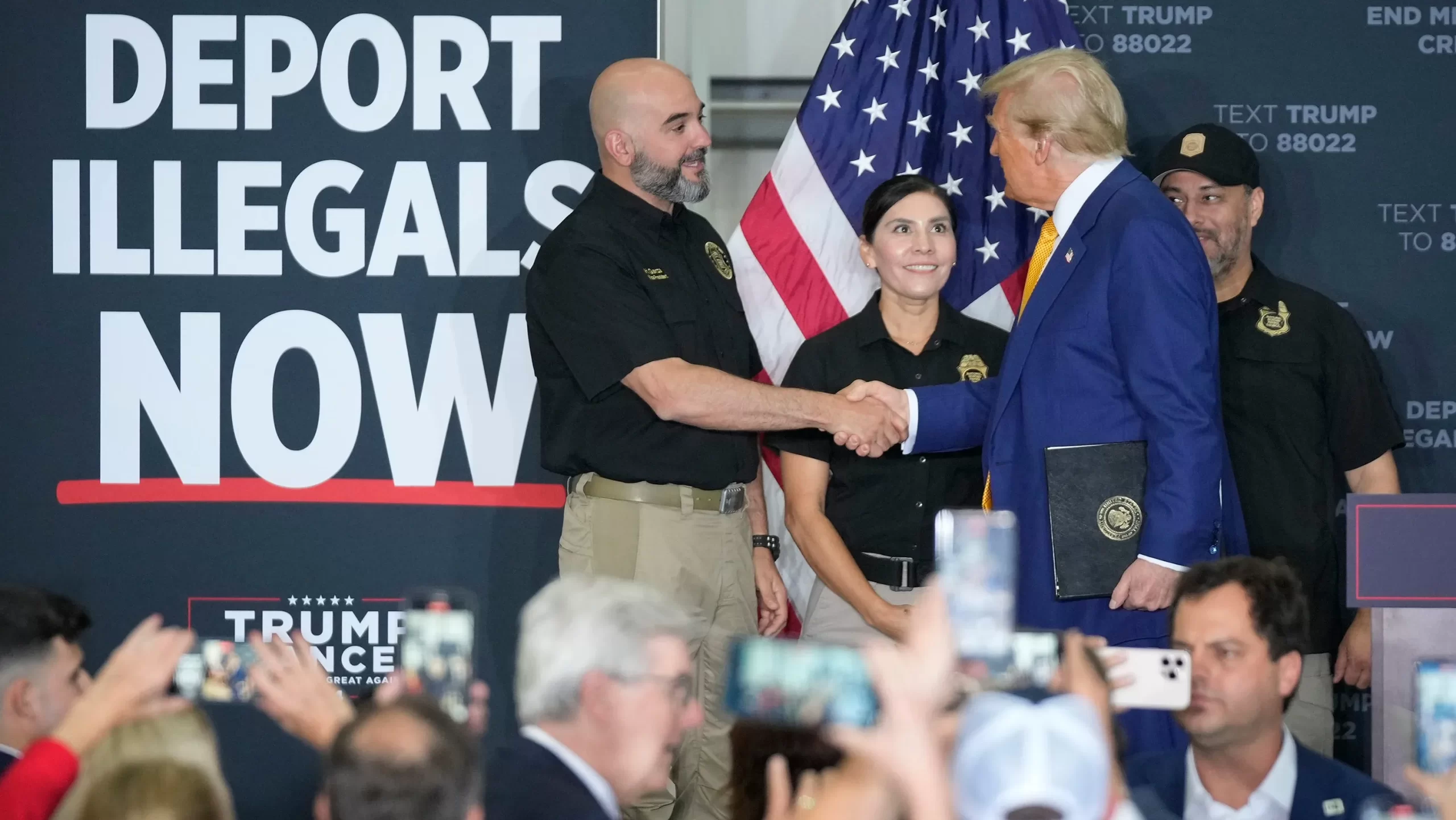
- Over 50 Immigrants Charged: Since April 11, at least 50 unauthorized immigrants have been prosecuted under a revived 1940 wartime law, sparking legal uproar and national debate.
- 57,000+ Registrations Filed: The new federal registry has logged 57,000+ immigrant entries, raising fears of mass deportations and data misuse.
- Judges Push Back in 6+ States: Courts in at least six states have dismissed or questioned the validity of these charges, citing lack of prior enforcement and due process.
- 2 to 3 Million at Risk: Up to 3.2 million immigrants could now face legal action or deportation if they fail to comply with the Trump-era registry rule.
In a controversial legal maneuver that has sparked fierce debate across the United States, the Trump administration has begun wielding a little-known law from 1940 to criminally charge undocumented immigrants for failing to register with the federal government. The strategy, part of a wider crackdown on illegal immigration during Trump’s second term, marks a dramatic revival of a wartime-era statute once used to track suspected foreign spies during World War II — and has already resulted in dozens of prosecutions, judicial backlash, and civil rights alarm.
The Forgotten Law: A WWII Relic Reawakened
At the heart of this new enforcement push is a section of the Immigration and Nationality Act that requires noncitizens aged 14 and above to register their presence with the U.S. government. Originally enacted in 1940 under the Alien Registration Act — a response to fears of enemy agents during World War II — the law mandates immigrants to provide fingerprints, addresses, and other identifying information. Though never repealed, enforcement of the law dwindled in the decades following the war.
The last major revival came after the 9/11 terrorist attacks, when President George W. Bush’s administration ordered special registration for nationals from mostly Muslim-majority countries. Over 10,000 people were deported under that initiative before it was discontinued by President Obama in 2016.
Now, in 2025, the Trump administration has resurrected the same requirement — this time with an explicit intent to prosecute violators. According to a February memo by Attorney General Pam Bondi, federal prosecutors were instructed to utilize “all available criminal statutes” to target illegal immigration, including failure to register.
The Numbers So Far: 57,000 Registered, Dozens Charged
Since the Department of Homeland Security launched the new online registration form on April 11, more than 57,000 immigrants have reportedly signed up, according to USCIS spokesperson Matthew Tragesser. The registry, however, has also resulted in an aggressive series of criminal prosecutions. At least two dozen immigrants have been charged under the revived statute for failing to register — a misdemeanor offense punishable by up to six months in jail and a $5,000 fine.
Yet, the federal judiciary is already pushing back.
So far, at least six cases have been dismissed or dropped by prosecutors after judges questioned whether defendants were even aware of the registration requirement — particularly since the sign-up system only went live the same day many of them were arrested.
READ MORE:Migrants criminally charged after failing to register with U.S. government
In one Louisiana case, U.S. Magistrate Judge Michael B. North dismissed charges against five migrants, noting there was “no evidence” the defendants had knowledge of the law or that they had any opportunity to comply prior to their arrest. One of the accused, a Honduran man named Osborn Nash Bodden Welcome, was arrested on the very morning the registry website was launched.
Trump, Legal Confusion and Judicial Pushback
The Trump administration’s strategy to resurrect dormant immigration statutes has created a legal maelstrom. Judges from Arizona to Louisiana to Montana have raised concerns about the lack of prosecutorial precedent, lack of notice to immigrants, and apparent vagueness of the registration process.
Some federal judges questioned whether it was constitutionally valid to criminalize noncompliance with a law few knew existed — especially one that had not been actively enforced in over 50 years. In Phoenix, U.S. Magistrate Judge Deborah Fine called the charge “not the most serious” and criticized the government’s case against a 25-year-old Mexican national who had no prior contact with immigration enforcement.
In some cases, prosecutors themselves appear unprepared. ICE agent James Schneider, testifying in the Arizona case, admitted agents had not received formal training on building such cases. “Everything has been pretty fluid,” he said. Prosecutors later withdrew the charges.
Despite these setbacks, the administration shows no signs of retreating.
The Deportation Pipeline: Register or Face the Consequences
Though the criminal cases under the registration statute are relatively low-level, immigrant rights advocates argue that the Trump administration is using them as a stepping stone for mass deportation.
Even immigrants who have successfully fought off criminal charges have been deported through separate civil immigration proceedings. According to court records, at least 13 individuals have pleaded guilty and are either in deportation proceedings or already removed from the country.
READ MORE:Trump’s ‘Liberation Day’ Tariffs Struck Down: Legal Setback, But Not End of Protectionist Push
The Justice Department and DHS are reportedly using local traffic stops, jail screenings, and even roadside checkpoints to identify individuals who have not registered. Those arrested are typically handed over to ICE and placed in expedited removal proceedings — regardless of whether their criminal case proceeds.
Critics argue the system presents a catch-22 for undocumented immigrants: register and risk detection and deportation, or stay in the shadows and face criminal prosecution.
“It’s a trap,” said Angélica Salas, executive director of the Coalition for Humane Immigrant Rights in Los Angeles. “There’s no benefit to registering. What we tell everybody is: do not sign up without a lawyer. It’s actually a registry that has consequences.”
The Advocacy Backlash
Civil rights organizations have mounted legal challenges against the registration mandate. In March, several groups — including Salas’s organization — filed a federal lawsuit to block the measure. A district court judge in Washington, D.C., denied their request for an injunction just hours before the regulation went into effect.
However, the legal landscape remains fluid. As the judiciary continues to evaluate the constitutionality and application of the obscure law, immigrant rights advocates are preparing for a broader fight.
“This isn’t just about paperwork,” said Michelle Lapointe, legal director of the American Immigration Council. “It’s about using obscure laws to criminalize presence — and weaponizing the legal system to drive people out of the country.”
A Calculated Strategy or Trump’s Political Overreach?
The Trump administration’s use of the 1940 registration law is part of a broader pattern: unearthing rarely used statutes to create legal pathways for deportation. This approach mirrors recent efforts to expand military enforcement zones along the southern border and prosecute immigrants for “trespassing” — a tactic that also faced judicial resistance.
Analysts see this as a calculated escalation in Trump’s second-term immigration playbook. Having faced legal roadblocks to sweeping executive orders in his first term, Trump’s team is now deploying existing but dormant laws to achieve similar ends through the courts.
As deportation cases rise and legal challenges mount, the outcome of this registration crackdown could set a new precedent in U.S. immigration enforcement — one that redefines how aggressively the government can pursue undocumented residents through technical compliance laws few knew even existed.
What Comes Next For Trump?
Despite judicial setbacks, the Trump administration appears undeterred. Prosecutors are appealing dismissed cases, ICE continues to screen local jails for unregistered immigrants, and the Justice Department is pressing forward with its national enforcement strategy.
Whether courts continue to push back — or ultimately allow the law to stand as a valid immigration control tool — remains uncertain.
For now, millions of immigrants across the U.S. face a grim reality: a government demanding registration under threat of prosecution, in a system that many see as less about public safety and more about political punishment.