



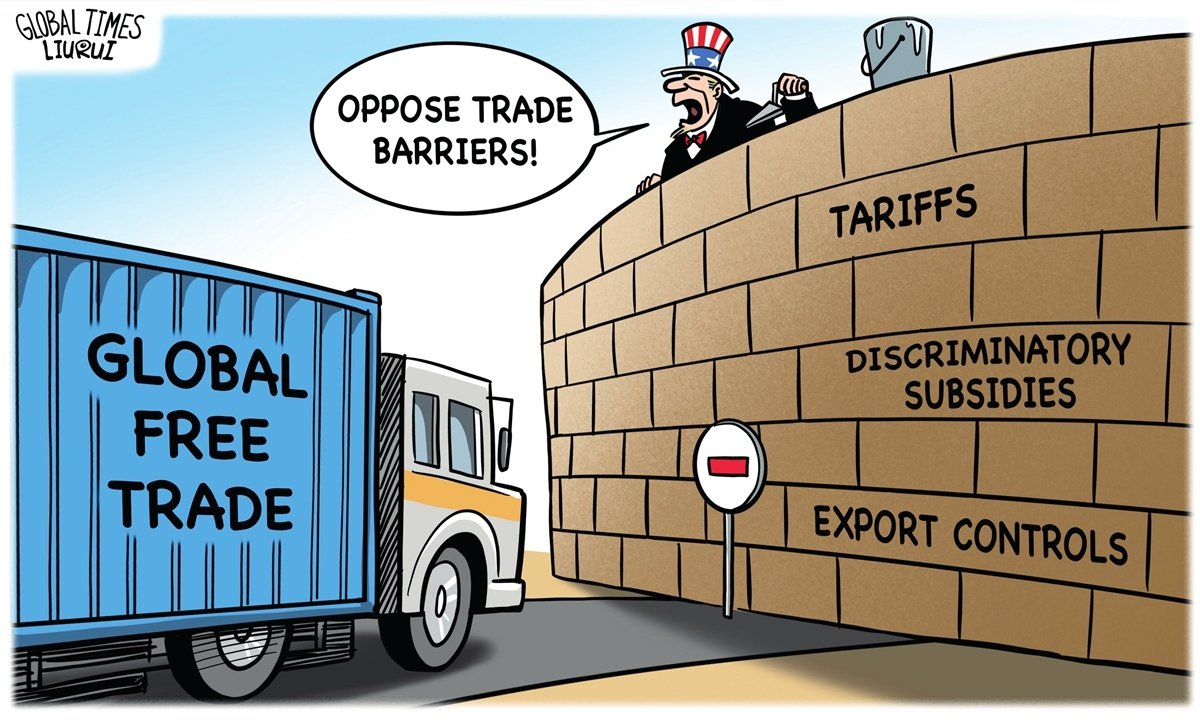
- Global Supply Chains at Risk: Trump’s 50% steel and aluminum tariffs are disrupting transnational supply chains, triggering price hikes and production slowdowns in critical sectors from construction to automotive manufacturing.
- Hidden Consumer Costs: U.S. producers are passing higher input costs onto consumers — with steel prices up 16% — fuelling inflation while squeezing middle-class households.
- Allies on Edge: Canada, Mexico, and the EU are pushing back, with threats of retaliatory tariffs and legal challenges that could escalate into a full-blown global trade war.
- Legal Chaos in U.S. Courts: A federal court has blocked many of Trump’s tariffs, creating legal uncertainty and leaving thousands of importers in limbo over enforcement and compliance.
The world is teetering on the edge of a fresh economic slump, and a familiar figure sits at the center of the storm: U.S. President Donald Trump. Having returned to office with a fiery promise to restore American “trade justice,” Trump’s aggressive tariff hikes — spearheaded by a dramatic surge in steel and aluminum duties — are already sending ripples through the global economy.
According to a sobering report released Tuesday by the Organization for Economic Cooperation and Development (OECD), global economic growth is expected to slow significantly in 2025 and beyond, in large part due to Trump’s protectionist trade policies. If current tariffs remain in place and trade disputes continue unresolved, the OECD projects U.S. GDP growth to decline from 2.8% in 2024 to just 1.6% in 2025, with a further dip to 1.5% in 2026. Global growth projections have similarly been revised downward — from 3.1% to 2.9% in 2025.
“Weakened economic prospects will be felt around the world, with almost no exception,” warned Álvaro Pereira, the OECD’s chief economist, echoing earlier alarms sounded by the International Monetary Fund.
While the OECD avoids naming Trump directly, the underlying message is clear: the protectionist agenda he launched on “Liberation Day” this April — a day marked by sweeping new tariffs on imported goods — is emerging as a significant drag on both U.S. and global output.
Trump Tariffs: A Return to Trade Wars
The centerpiece of Trump’s new trade policy is a stunning escalation in import taxes, particularly on metals. Steel tariffs doubled from 25% to 50% on Wednesday, with aluminum duties following suit. Trump defended the move, citing persistent “dumping” of low-cost metals by foreign producers.
“The increased tariffs will more effectively counter foreign countries that continue to offload low-priced, excess steel and aluminum in the United States,” Trump said in a statement from the White House.
But economists are warning of a different outcome. The Congressional Budget Office estimates that these tariffs — in place prior to May 13 — may reduce the federal deficit by $2.8 trillion. However, the cost is steep: elevated input prices for U.S. manufacturers, decreased global trade flows, and shrinking consumer purchasing power.
Trump Warns of Russian Retaliation Amid Stalemate in Ukraine Peace Talks
Indeed, steel prices in the U.S. have already surged 16% since Trump’s return to office, with domestic steel now priced at nearly $984 per metric ton — far higher than European and Chinese equivalents, which hover at $690 and $392, respectively.
Global Pushback and Retaliation
Trump’s protectionist pivot has elicited sharp reactions from America’s key trading partners. Mexican Economy Secretary Marcelo Ebrard slammed the steel tariff increase as “unfair and unsustainable,” announcing plans to travel to Washington for emergency negotiations. Canada, too, has denounced the tariffs, with Prime Minister Mark Carney branding them “illegal” and “destructive to North American competitiveness.”
READ MORE:Trump’s Tariffs Begin to Bite: A Chinese Airline Sends Back 737 Max; U.S. Manufacturers Reeling as China Strikes Back
While tensions with North American allies simmer, some European leaders are striking a more diplomatic tone. European Commissioner Maros Sefcovic noted that trade talks with Washington are “very concrete,” and the EU has delayed its countermeasures until July 14 in hopes of reaching a deal.
British Prime Minister Keir Starmer, for his part, celebrated his country’s current exemption from the 50% steel tariff — a favor not extended to other allies. “We are working on it, to bring it down to zero,” Starmer told Parliament on Wednesday, adding that he expects the UK to remain outside the tariff regime permanently.
Market Confusion and Legal Battles
Complicating matters further is the chaotic rollout of the tariffs themselves. On May 28, the U.S. Court of International Trade blocked a bulk of Trump’s initial tariff package, adding legal uncertainty to an already murky trade environment. Many tariffs remain subject to renegotiation, legal appeals, or temporary suspension, leaving businesses in limbo.
READ MORE:Trump Doubles Steel and Aluminum Tariffs to 50 Percent
As of mid-May, OECD calculations show that Trump’s tariffs amount to a 15.4% average import tax — the highest level imposed by the United States since 1938. In 2024, that number stood at just 2%.
Economic Domino Effect
The OECD warns that these developments risk triggering a domino effect across the global economy. With U.S. demand expected to weaken, export-driven economies in Asia and Europe could see their growth curtailed. Capital investment — already dampened by global uncertainty — is likely to falter further if supply chains become more fragmented and costs continue rising.
The broader risk, according to the OECD, is the emergence of a “low-growth, high-friction” global economy, where persistent policy uncertainty deters innovation, slows job creation, and inflates the costs of doing business. This is not a forecast the world can afford.
“A reversal of the increase in trade barriers would support growth and reduce inflation,” the report notes. “Even if it did not immediately result in lower policy uncertainty, it would improve confidence and incentives to invest.”
No End in Sight
Despite mounting criticism, there is little sign Trump intends to reverse course. Aides say the White House sees trade wars as a political strength — a tool to project toughness abroad while rallying nationalist support at home. The “America First” doctrine has been revived with full force, and Trump’s team argues the tariffs are a necessary reset in what it describes as decades of unfair trade deals.
Whether this approach yields political dividends remains to be seen. But the economic evidence is increasingly hard to ignore.
Trump’s tariffs have already begun to reshape global supply chains and investor sentiment. If left unchecked, they could tip an already fragile world economy into a downturn — one that could prove as politically explosive as it is economically painful.
A Ticking Clock
With negotiations ongoing and retaliation on the table, the next few weeks could be decisive. Key deadlines loom — July 9 for the UK’s exemption status, July 14 for EU countermeasures — and the stakes are enormous.
For now, the message from economists is unambiguous: trade protectionism, especially on the scale now unfolding, rarely comes without a cost. As history has shown, economic nationalism may win applause in the short term — but in the long term, it often leaves everyone poorer.