



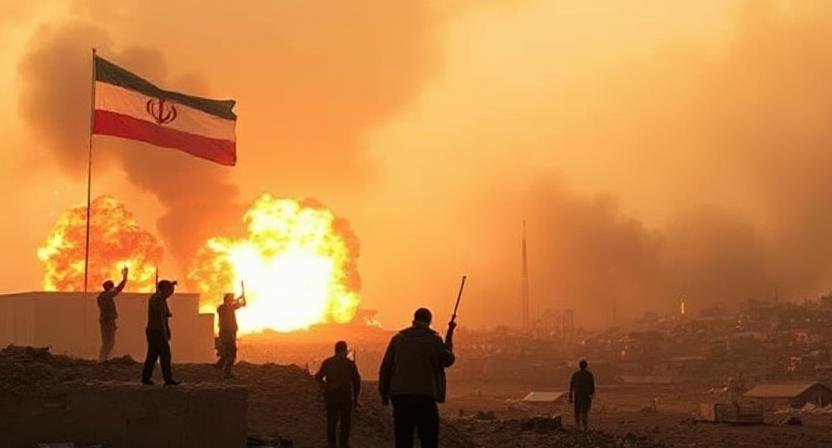
- Widespread Civilian Casualties: Over 150 people killed in Israel and Iran as missile strikes destroy homes, hospitals, and key infrastructure.
- Gas Fields Bombed, Oil Soars: Israel hits Iran’s vital South Pars gas field; oil prices spike over 9%, Gulf stock markets tumble.
- Airspace Shuts Down: Israel suspends all El Al flights; regional airspace closures disrupt global travel and reroute commercial airlines.
- Nuclear Talks Collapse: Sixth round of negotiations canceled; Iran accuses U.S. of backing Israel, diplomacy rapidly deteriorating.
The Middle East descended further into turmoil this weekend as Israel and Iran exchanged the most ferocious strikes seen in the region in over a decade. With scores of casualties on both sides, grounded air travel, bombed energy infrastructure, and tanking regional stock markets, the consequences of the escalating conflict are reverberating far beyond the borders of the warring nations.
The skies over Tel Aviv, Haifa, and Tehran lit up through the weekend as missile barrages and counterstrikes transformed dense urban areas into warzones. U.S. President Donald Trump, while defending Israel’s “right to self-defense,” insisted the war could be “ended easily,” offering vague hints at brokering peace—but simultaneously warned Tehran of devastating retaliation if American interests were targeted.
“If we are attacked in any way, shape, or form by Iran, the full strength and might of the U.S. Armed Forces will come down on you at levels never seen before,” Trump said on Truth Social.
How the Israel-Iran War Could End: Inside the Chaos, Calculations, and Contingencies
Yet, there is little sign of de-escalation. Instead, the war is widening—with nuclear negotiations suspended, oil and gas supplies disrupted, and regional economies rattled.
Night of Fire: Urban Warzones in Israel and Iran
On Saturday night, Iran launched an unprecedented missile and drone attack deep into Israel’s heartland, triggering sirens from Jerusalem to Haifa. The skies over Tel Aviv glowed with the trails of interceptor rockets as the Iron Dome system scrambled to neutralize incoming threats. But not all were stopped.
A missile slammed into the seaside town of Bat Yam, killing six, including children. In the Arab town of Tamra, four women—three from the same family—were pulled from the rubble. Israel’s emergency services reported 13 dead across the country and over 350 injured since Iran’s attacks began Friday night.
MORE READ: Israel’s El Al cancels flights to and from many cities until June 23
Israel responded with unrelenting airstrikes targeting what it called “dual-use” infrastructure in Iran—sites supporting both civilian and military operations. Iranian media reported over 138 deaths, half of them children, after an Israeli missile brought down a 14-story residential building in Tehran.
Gas Fields and Refineries Under Fire
The war’s economic ramifications became clear when Israel bombed Phase 14 of Iran’s massive South Pars gas field, shared with Qatar and responsible for over half of Iran’s domestic gas output. The resulting fire temporarily shut down production of 12 million cubic meters of gas. Though extinguished quickly, the symbolism was stark—Iran’s energy lifeline is now a legitimate target.
In retaliation, Iran targeted the Shahran oil depot in Tehran and a refinery near the capital, causing fires and minor damage. Iranian officials blamed Israel for deliberately escalating the war beyond military sites to damage the country’s economic backbone.
Meanwhile, Israel’s own oil refineries are operating under heavy security, with authorities warning of potential sabotage or missile attacks by Iran or its regional allies.
Airlines Grounded, Skies Closed
Israel’s national airline, El Al, announced it was suspending all flights to major cities across Europe, as well as Tokyo and Moscow, until at least June 23. Israel’s airspace remains shut, and emergency instructions have gone out to avoid travel through Egypt and Jordan, where Level 4 travel warnings are in place.
READ MORE: U.S. Allies in Asia Brace for Strategic Volatility Under Trump’s Second Term
“For Israelis currently abroad and waiting to return to the country, we recommend waiting for updates,” Israel’s National Security Council said. El Al shares plunged by 3.5% as investors braced for prolonged disruption.
Airlines across the Gulf also rerouted flights to avoid contested airspace, with Kuwait’s Jazeera Airways falling 10% on Sunday. Dubai’s airport—among the world’s busiest—reported a surge in delays as air traffic controllers restructured routes to avoid Iranian and Israeli airspace.
Mood on the Ground: Trauma and Tension
In both Israel and Iran, fear has replaced normalcy. In Tel Aviv, families slept in bomb shelters as the thunder of missile intercepts shook windows. Schools are shut, public transportation is disrupted, and civilians are stocking up on essentials.
“We haven’t left the basement since Friday,” said Yael Cohen, a Tel Aviv mother of three. “We feel forgotten. This isn’t a war zone—it’s our neighborhood.”
In Tehran, hospitals are overwhelmed. Makeshift shelters have been set up in metro stations. Many are questioning why their capital is being dragged into war yet again.
“Why is my child paying the price for politics?” asked Zahra Motamedi, standing outside the ruins of her flattened apartment block.
Proxy War with Fewer Proxies
While Iran has historically relied on proxies such as Hamas and Hezbollah, its retaliatory options are shrinking. After months of intense fighting in Gaza and south Lebanon, Tehran’s regional proxies are severely weakened.
Even so, Iran’s allies are still active. The Houthi movement in Yemen claimed responsibility for launching missiles toward Tel Aviv on Saturday night. Israel says it has already targeted the Houthis’ Chief of Staff in response.
Nonetheless, the lack of coordinated proxy attacks across multiple fronts suggests that Tehran may be fighting more alone than ever before.
Nuclear Talks Collapsed—Possibly for Good
Just as negotiators were due to meet in Oman on Sunday for a sixth round of nuclear talks, the session was canceled. Iranian Foreign Minister Abbas Araqchi said the Israeli attacks were designed to sabotage diplomacy and accused Washington of complicity.
“Israel’s attack would never have happened without the U.S. green light,” he declared.
The International Atomic Energy Agency (IAEA) on Thursday declared Iran in violation of its nuclear obligations under the Non-Proliferation Treaty (NPT). Israel, which never signed the treaty and is believed to possess nuclear arms, has long viewed Iran’s atomic ambitions as an existential threat.
Trump, who unilaterally withdrew the U.S. from the original 2015 Iran deal in his first term, said a new agreement is “easy to achieve” but gave no specifics.
Germany, France, and the U.K. have now offered to resume immediate talks with Tehran. German Foreign Minister Johann Wadephul, currently in Oman, said, “We’re offering Iran immediate negotiations about the nuclear program. I hope the offer is accepted.”
Markets Tremble, Oil Soars
The war has already jolted regional financial systems. On Friday, oil surged over 9% amid fears of disruption to global energy supplies. Israel’s initial restraint toward Iran’s oil infrastructure helped limit the impact, but Sunday’s strike on South Pars changed the outlook.
Qatar’s stock exchange fell 2.9% with its gas companies leading the drop. Saudi Arabia’s main index plunged 3.6% before recovering slightly, and Dubai’s and Abu Dhabi’s bourses were down sharply before markets closed on Friday.
Kuwait’s markets dropped over 4%, and the Tel Aviv 125 index fell 1.5% at open. Analysts expect deeper losses on Monday when UAE markets reopen and investors process the South Pars attack.
The Road Ahead: Will the Fire Spread?
As both countries count their dead and rally their populations, few expect a quick resolution. Israel’s Prime Minister Benjamin Netanyahu declared the operation may take “weeks,” and urged Iranian citizens to rise against their government.
Iran, for its part, maintains it does not seek regional war—unless forced.
Foreign Minister Araqchi warned, “Dragging the conflict to the Persian Gulf is a strategic mistake.” But as strikes hit deeper into each other’s territory, and third parties like the Houthis step in, the odds of a wider war increase.
With nuclear diplomacy in tatters, oil markets in shock, and air traffic grounded, the Middle East’s fragile balance has been upended.
Diplomacy or Detonation?
The coming days will test whether regional and global powers can de-escalate what is rapidly becoming a multi-front conflict. Oman, Qatar, and even European powers are calling for restraint. But neither side seems ready to step back.
Trump’s dual message—promising both peace and total war—adds a new layer of unpredictability. As do Israel’s veiled threats of more nuclear site bombings, and Iran’s threat of dragging the war into the Strait of Hormuz, through which a fifth of global oil passes.
The question looming over every regional capital, trading floor, and diplomatic corridor is the same: Is this the beginning of a larger war, or the chaotic birth of a last-chance peace?