



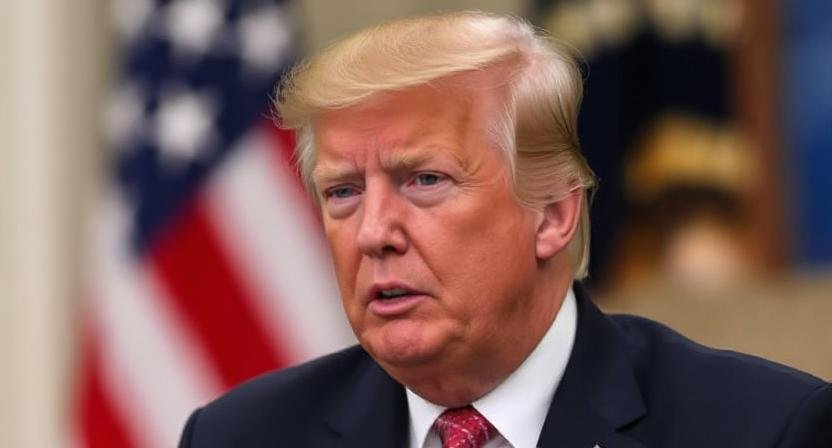
- Trump’s Timeline Set: President Trump is expected to announce his decision on striking Iran within two weeks, according to senior White House officials.
- U.S. Forces Mobilize: A second carrier strike group and additional Navy destroyers are moving into position as the Pentagon prepares for possible escalation.
- Israel Intensifies Strikes: Over 100 Iranian targets have been hit, including nuclear sites at Arak and Natanz; Iran retaliated by hitting an Israeli hospital.
- Europe Pushes Peace: European foreign ministers will meet Iranian officials in Geneva to urge de-escalation and a rollback of nuclear activity.
WASHINGTON — President Donald Trump is expected to announce “within two weeks” whether the United States will join Israel’s military campaign against Iran, senior White House officials confirmed Wednesday in an exclusive briefing to The Islamabad Telegraph. The decision, long anticipated and fraught with global consequences, could reshape the trajectory of a war already pushing the Middle East to the brink.
Trump, known for invoking a two-week timeline in moments of international crisis, has reportedly approved contingency plans but is holding off on executing them. According to officials familiar with Oval Office deliberations, the president is watching to see if Iran will back off its nuclear ambitions before triggering American intervention.
“He’s made it clear to us: we’re prepared to strike if needed, but we’ll give diplomacy—and Iran’s behavior—a short window,” said one White House aide, speaking on the condition of anonymity due to the sensitivity of the discussions.
As the war between Israel and Iran enters its second week, the death toll has soared: at least 639 Iranians have been killed in airstrikes, according to human rights monitors, while 24 Israelis have died from Iranian missile attacks. One of those missiles recently struck Soroka Medical Center in Beersheba, Israel—the first direct hit on a hospital in this conflict. Although casualties were minimal, the symbolism was heavy.
War and the Waterway: How Iran-Israel Conflict Threatens Global Shipping and Tests Western Diplomacy
In retaliation, Israel has carried out over 100 strikes inside Iran, including precision attacks on the Arak heavy-water reactor and nuclear sites in Natanz. Israeli Prime Minister Benjamin Netanyahu declared that Israel was advancing “step by step toward eliminating” Iran’s nuclear threat.
U.S. Military Mobilization
As diplomatic uncertainty grows, the Pentagon is taking no chances. A second U.S. carrier strike group is en route to the Arabian Sea, and a third Navy destroyer has entered the eastern Mediterranean. These moves, described by defense officials as “precautionary and defensive,” also signal that Washington is ready to escalate if ordered.
READ MORE: Trump’s Iran Decision to Come Within Two Weeks
Multiple sources confirmed that U.S. forces are repositioning in case Iran retaliates through asymmetric warfare—particularly by mining the Strait of Hormuz, the narrow 90-mile chokepoint through which 25% of the world’s oil flows.
“Iran has the mines, the drones, the will—and nothing to lose,” warned Admiral Kevin Donegan, former commander of U.S. Naval Forces Central Command. “And if they touch Hormuz, the global economy will feel it overnight.”
U.S. intelligence and military officials told Reuters and The New York Times that Iran’s naval capabilities remain mostly intact, despite the Israeli strikes. Autonomous underwater drones and mine-clearing operations are being quietly tested from U.S. bases in Bahrain, sources confirmed.
MUST READ: War and the Waterway: How Iran-Israel Conflict Threatens Global Shipping and Tests Western Diplomacy
Europe Steps In—But Late
Amid these rising tensions, European foreign ministers from France, Germany, and the UK will meet with Iranian officials in Geneva on Friday. Their goal: to persuade Tehran to return to the table and scale back its nuclear program. But analysts say Europe has limited leverage, having been sidelined for much of the conflict.
“The EU is arriving late to a very dangerous game,” a French diplomat told AFP. “But if Hormuz is mined, European economies will bleed. So, we must try.”
The Geneva talks will reportedly offer Iran a rollback of certain sanctions in exchange for verifiable caps on uranium enrichment and ballistic missile testing. Still, Iran’s Supreme Leader Ayatollah Ali Khamenei has vowed “no surrender,” and promised “irreparable consequences” if the U.S. intervenes militarily.
What’s Next?
While Israel continues to pressure the White House for advanced U.S. bunker-busting munitions to destroy fortified sites at Fordow and Natanz, Trump remains characteristically opaque.
“I like to decide at the last minute,” Trump said during an event in the Oval Office. “I have some good ideas.”
Behind the scenes, aides say Trump’s calculus is shifting between avoiding a broader war during an election season and projecting American strength in the face of Iranian defiance. Aides insist that the president understands the high stakes—and the risk to 40,000 U.S. troops stationed across the Middle East.
“Think Suleimani—but multiplied,” said Brian Katulis of the Middle East Institute, referring to the 2020 U.S. drone strike that killed the Iranian general and sparked retaliatory missile attacks on American bases.
The Clock is Ticking
With Iranian missiles raining down and Israeli jets pounding deep into Iranian territory, the world is inching toward a full-blown regional war. Diplomacy has little time left.
“There are a lot of things that could go wrong,” warned Vali Nasr, professor at Johns Hopkins University. “All it takes is one miscalculation.”
As oil prices creep up and military assets reposition, Trump’s two-week clock begins to tick louder. His decision—strike or stay back—could define not only this war, but the fragile future of the Middle East.