



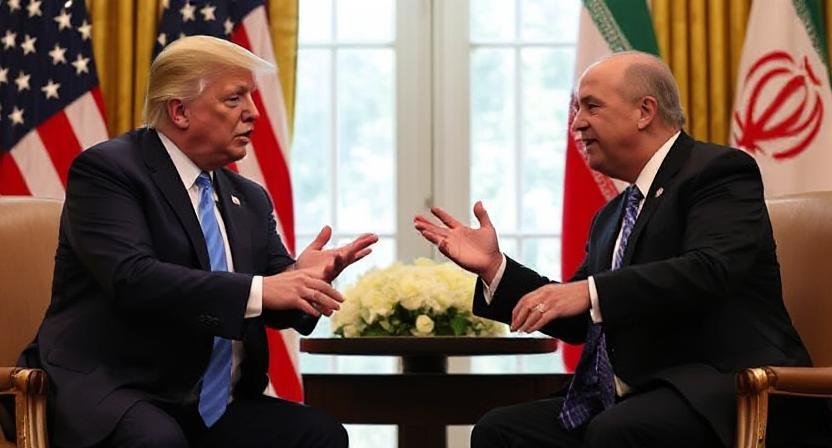
- Trump Confirms Talks: President Trump announced the U.S. and Iran will hold nuclear talks next month, marking a return to direct diplomacy after years of tension.
- Cease-Fire Holding, Barely: The Israel-Iran cease-fire enters its second day amid mutual accusations of violations and intense regional scrutiny.
- Strikes Still Debated: U.S. and Israeli officials claim nuclear facilities were critically damaged, but intelligence suggests only short-term setbacks.
- Congress Pushes Back: Lawmakers accuse Trump of bypassing the War Powers Act by not briefing Congress on the military strike in time.
In a stunning diplomatic pivot following a deadly 12-day war, President Donald Trump confirmed Wednesday that the United States and Iran will hold nuclear talks next month — the first formal engagement between the two bitter rivals since the most destructive U.S.-Iran-Israel confrontation in recent history.
Speaking at a NATO summit in Brussels, President Trump told reporters, “We’re meeting with the Iranians next week,” but tempered expectations, insisting, “I don’t care if I have an agreement or not… The only thing we’d be asking for is what we were asking for before — we want no nuclear.”
Who Really Won? Iran’s Resilience and Israel’s Miscalculation Exposed in Ceasefire Aftermath
The announcement came just two days into a fragile ceasefire between Israel and Iran, brokered with the help of U.S. allies in the Gulf. The talks, while still lacking a defined format or agenda, mark a significant shift in Washington’s approach after U.S. airstrikes on Iranian nuclear sites earlier this month brought the region to the brink of a wider war.
Secretary of State Marco Rubio, standing beside the president, emphasized that Washington seeks direct talks with Tehran. “We want to make it clear: America will engage face-to-face, but the objective remains firm — a non-nuclear Iran,” Rubio said.
Doubts Over the Effectiveness of U.S. Strikes
The Trump administration is eager to frame the war as a strategic victory. Despite skepticism from American intelligence agencies, Israeli officials released a rare statement from their Atomic Energy Commission claiming that U.S. precision strikes had “destroyed the site’s critical infrastructure” at the fortified Fordo enrichment facility and rendered it “inoperable.”
READ MORE: U.S. initial damage report: Iran nuclear program set back by months, not obliterated
However, a preliminary U.S. intelligence report obtained by congressional sources paints a different picture — suggesting that Iran’s nuclear program has been set back by only a few months, not years.
Trump dismissed the report, calling it “deep state noise,” and doubled down on the impact of the attacks. Rubio argued that Iran’s technical losses were more severe than initial assessments indicate, hinting that the Fordo strike had crippled uranium centrifuge networks and power systems.
Iran Signals Willingness to Reengage
In Tehran, President Masoud Pezeshkian struck a defiant but pragmatic tone. In a televised address Tuesday, he declared that “Iran has survived aggression and emerged stronger,” but also confirmed in a diplomatic call with the UAE leadership that Tehran was “ready to resume international nuclear talks.”
Pezeshkian’s statement suggests Iran may be open to a new framework for negotiations — possibly outside of the defunct Joint Comprehensive Plan of Action (JCPOA), which collapsed under Trump’s first-term withdrawal in 2018.
ALSO READ: How the U.S, Iran Clash Is Reshaping the Middle East: Key Impacts on Energy, Markets, and Regional Stability
On the streets of Tehran, thousands turned out for a government-sponsored victory rally, waving Iranian flags and chanting anti-Israel slogans — a stark contrast to the missile strikes and fear that gripped the capital just days earlier.
Regional Reset Begins as Ceasefire Holds — Barely
In Israel, emergency restrictions imposed during the conflict were lifted Wednesday. Schools and workplaces reopened, and Ben Gurion International Airport near Tel Aviv resumed operations. The Israeli military said its attention would now refocus on Hamas and Gaza, signaling an operational pivot away from direct confrontation with Iran.
Still, the truce remained shaky. The Israeli Defense Forces claimed that Iranian missiles were fired after the ceasefire went into effect, a claim Tehran firmly denied. President Trump, visibly irritated during the press conference, scolded both countries, warning them to “cut the crap” or face American consequences.
Political Fallout in Washington
Meanwhile, backlash continued on Capitol Hill. The Trump administration postponed classified briefings for lawmakers on the Iran strikes, provoking outrage from congressional Democrats who accused the White House of violating the War Powers Resolution by not informing Congress within 48 hours of military action.
“There’s no transparency, no accountability — and now, we’re heading into negotiations without knowing the real cost of this war,” said Rep. Abigail Martin, a Democrat on the House Foreign Affairs Committee.
Yet for now, the world watches with cautious optimism. After nearly two weeks of bloodshed and brinkmanship, Washington and Tehran are heading back to the table — even if neither side believes much will come of it.