



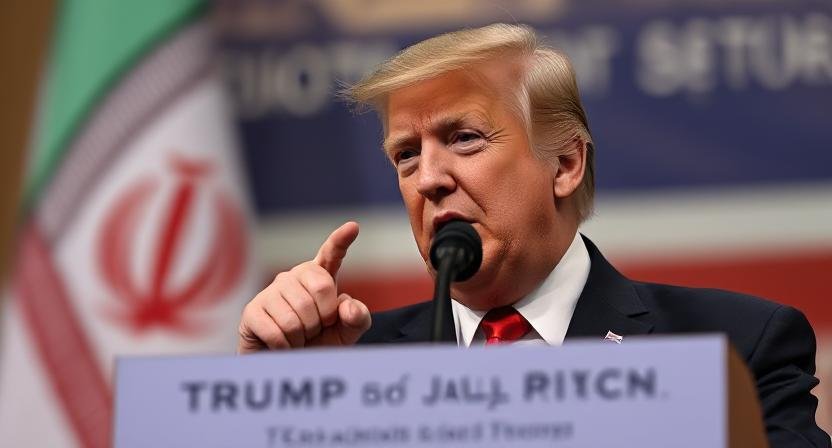
- Trump Threatens New Strikes: President Trump warned he would bomb Iran again if uranium enrichment resumes, intensifying U.S.-Iran tensions post-nuclear strike.
- Khamenei Defiant: Iran’s Supreme Leader claimed victory and vowed never to surrender, prompting Trump to cancel plans for sanctions relief.
- Senate Blocks War Powers Resolution: The U.S. Senate narrowly rejected a bid to restrict Trump’s authority to wage war against Iran without congressional approval.
- IAEA Inspections Suspended: Iran’s parliament voted to block nuclear site inspections, complicating international verification efforts after U.S.-led bombing raids.
In a combative series of statements that upended hopes for diplomatic de-escalation, U.S. President Donald Trump on Friday discarded efforts to ease sanctions on Iran and threatened more military strikes, sharpening an already volatile standoff with the Islamic Republic. The president’s remarks came in response to Iran’s Supreme Leader Ayatollah Ali Khamenei’s fiery declaration that Iran had “slapped America in the face” by striking a U.S. base in Qatar, following last week’s U.S. bombing raids on Iranian nuclear facilities.
The developments mark a dramatic shift from backdoor diplomacy to open confrontation, with both sides now entrenched in a narrative of defiance, nationalism, and survival. “I SAVED HIM FROM A VERY UGLY AND IGNOMINIOUS DEATH,” Trump wrote on social media, referring to Ayatollah Khamenei, and claiming that he had personally vetoed an Israeli plan to assassinate the Iranian leader.
“His country was decimated, his three evil Nuclear Sites were OBLITERATED,” Trump added, warning that he had exact knowledge of Khamenei’s whereabouts but restrained both U.S. and Israeli forces from targeting him.
Trump’s Tariff Whiplash Shakes U.S.-China Trade and Global Supply Chains
This unusual public admission of a near-assassination decision came just hours after Iranian Foreign Minister Abbas Araqchi cautioned Washington to change its “disrespectful tone” toward Iran’s Supreme Leader if it wanted to see diplomatic progress. “If President Trump is genuine about wanting a deal,” Araqchi said, “he should put aside the unacceptable tone towards Grand Ayatollah Khamenei and stop hurting his millions of heartfelt followers.”
More Read: America Bombs Iran’s Nuclear Sites: What Triggered Trump and What Comes Next?
A Peace Process in Freefall
The sharp escalation underscores the fragility of the post-conflict atmosphere that followed a 12-day military exchange between Israel and Iran, culminating in coordinated U.S.-Israeli strikes on three key Iranian nuclear sites on June 13.
While the Biden administration had taken a more measured approach to Iran during his tenure, Trump’s second term has unleashed a whirlwind of aggressive policy reversals. Having once hinted at easing sanctions to facilitate post-strike recovery, Trump now says he has abandoned all such plans after hearing Khamenei’s defiant rhetoric.
“I get hit with a statement of anger, hatred, and disgust, and immediately dropped all work on sanction relief, and more,” Trump said at a White House press conference. Asked whether he would consider bombing Iran again, Trump did not hesitate: “Sure, without question, absolutely.”
Also Read: US Senate rejects bid to curb Trump’s Iran war powersUS Senate rejects bid to curb Trump’s Iran war powers
This blunt affirmation throws the nuclear diplomacy back into uncertainty. The IAEA has not been allowed to inspect the bombed sites since June 13, and Iran’s parliament voted this week to suspend cooperation with international inspectors. IAEA Director Rafael Grossi said his top priority was resuming inspections, but Tehran seems unwilling to play along.
Trump And Political Fallout on Capitol Hill
Meanwhile, political battle lines have hardened in Washington. A Democrat-led war powers resolution aimed at curbing Trump’s ability to wage further war against Iran was narrowly defeated in the Senate on Friday, with a 53-47 vote. The resolution, championed by Senator Tim Kaine, sought to reaffirm Congress’s constitutional authority to authorize acts of war. Kaine argued that regardless of one’s position on war with Iran, the Constitution demands that the president seek Congressional approval.
“If you think the president should have to come to Congress, whether you are for or against a war in Iran, you’ll support Senate Joint Resolution 59,” Kaine said in a floor speech. But opposition Republicans, backed by a few defecting Democrats, maintained that the June 13 strikes were limited, legal, and necessary.
“We must not shackle our president in the middle of a crisis when lives are on the line,” said Senator Bill Hagerty, a Trump loyalist and former ambassador to Japan.
The Trump administration has held classified briefings for lawmakers, defending its assertion that the strikes had crippled Iran’s nuclear ambitions. But some Democratic senators walked away unconvinced. One senior lawmaker, speaking anonymously, said, “There’s no real evidence yet that Iran’s uranium stockpiles have been neutralized. We need IAEA verification, not political bombast.”
Tehran’s Gamble
Iran, for its part, is doubling down on a narrative of defiance. Khamenei’s speech made it clear that Tehran sees its survival and honor tied to resistance, not negotiation. The symbolic strike on a U.S. base in Qatar — which caused limited damage — was meant to convey strategic deterrence, not military parity.
The Iranian leadership knows that Trump’s unpredictability is both a threat and an opportunity. While the bombing of nuclear facilities was a significant blow, Khamenei may believe that by escalating rhetorically, he can rally domestic support and press Trump into a diplomatic misstep.
But Tehran’s rejection of nuclear inspections, combined with its refusal to moderate language toward the U.S., risks isolating it further, especially if the U.N. Security Council takes up the matter in the coming weeks.
What Comes Next?
Trump’s tone and threats indicate that Washington now views deterrence through dominance — and symbolic mercy. By publicly announcing he “spared” Khamenei, Trump has positioned himself as both executioner and savior, laying the groundwork for further ultimatums.
Meanwhile, Iran’s leadership appears to be preparing for a long resistance. With nuclear research likely continuing behind closed doors, and inspections now suspended, the possibility of another military confrontation looms large.
Diplomacy, for now, is on life support. Any future agreement will require not just technical verification but a complete recalibration of tone and trust — something neither Trump nor Khamenei seems willing to offer.