



- Experts say there is no military solution to Iran’s nuclear program.
- Iran is strengthening its air defenses with help from Russia.
- Trump wants a diplomatic deal, but insists on zero enrichment.
- Tehran demands guarantees of no further bombing before talks resume.
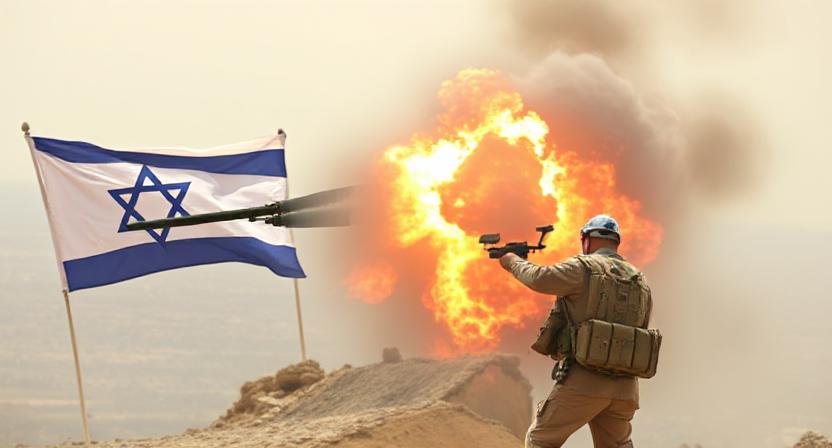
WASHINGTON— The risk of a major military escalation in the Middle East is mounting once again, as Iran signals a potential retaliation against Israel following last month’s coordinated Israeli and U.S. strikes on its nuclear facilities. But despite the rising tensions, global experts—ranging from former diplomats to nuclear analysts—insist there is no military solution to the Iran problem. Instead, they advocate for a renewed diplomatic surge, cautioning that continued aggression could trigger uncontrollable consequences across the region.
Amid closed-door talks between President Donald Trump and Israeli Prime Minister Benjamin Netanyahu at the White House this week, the two leaders remained split in tone—Trump advocating a diplomatic settlement, Netanyahu reserving the right to strike again if Iran’s nuclear ambitions revive.
Iran’s Nuclear Program Reels from U.S. Strikes, But Key Questions Remain
“We’ve bought time,” one senior Israeli official told The Islamabad Telegraph, referring to Israel’s assessment that Iran’s nuclear capacity had been delayed by up to two years due to the bombings. “But Tehran can adapt. We may need to act again.”
A Regional Powder Keg
But experts say time bought through bombs is not time wisely used.
“There is no military solution to the Iranian nuclear issue,” said Dr. Vali Nasr, former Senior Advisor at the U.S. State Department. “What we’re seeing is a dangerous spiral where every strike hardens positions and undermines moderates inside Iran.”
READ MORE: Trump’s Invitation to Xi: A High-Stakes Gamble in U.S.-China Relations
Ali Vaez, Iran Project Director at the Crisis Group, echoed this sentiment, noting that the internal calculus in Tehran has shifted. “The strikes strengthened the hand of Iranian hardliners. Those who once believed in diplomacy now feel vindicated in their skepticism.”
Indeed, the political equation in Iran is fast evolving. President Masoud Pezeshkian, a relative moderate, has publicly voiced openness to resuming talks, provided Iran receives guarantees against future attacks. “We will never yield our sovereign right to enrich uranium,” Pezeshkian said in a Tehran broadcast, “but we remain committed to peace—if peace is mutual.”
That mutuality appears elusive. The Trump-Netanyahu understanding—tacit or explicit—still rests on the presumption that Iran must completely halt uranium enrichment, a condition Tehran deems unacceptable post-bombings.
Russia Steps In—Military Boost for Iran
Meanwhile, Iran is quietly recalibrating its military capabilities, fast-tracking the procurement of advanced defense systems and fifth-generation fighter jets from Russia, sources in Moscow confirmed.
ALSO READ: Trump Signals Support for New Israel Attack if Iran Moves Toward Bomb
“Russia sees Iran as a strategic counterweight to U.S. influence in the region,” said Dr. Andrei Baklitsky, a nuclear policy analyst at the United Nations Institute for Disarmament Research. “The sale of advanced air defense systems and Su-35 jets to Iran is not just commerce—it’s strategic signaling.”
Satellite images of Isfahan and other sites suggest that while Natanz and Fordow suffered severe damage, Isfahan’s underground facilities remain partially intact. According to Israeli intelligence, some enriched uranium could still be recoverable from Isfahan, setting the stage for renewed suspicions and possible pre-emptive strikes.
But even seasoned military analysts warn of diminishing returns.
“You can only bomb a country’s nuclear facilities so many times,” said Dr. Jeffrey Lewis, of the Middlebury Institute of International Studies. “Eventually they adapt. They bury deeper, disperse more, and go clandestine. If Iran really wants a bomb, military strikes only delay—not prevent—it.”
A Window for Diplomacy
Amid the buildup, European nations are pushing Washington to reopen a political channel with Tehran. Britain, France, and Germany have warned Iran that failure to cooperate with the IAEA could trigger the reinstatement of pre-2015 nuclear deal sanctions. But they also urge Washington not to push Tehran too far.
Dan Shapiro, former U.S. Ambassador to Israel, warned that diplomacy is already on shaky ground. “It was tough enough to achieve an agreement before the strikes. Now it will be tougher still,” he told The Islamabad Telegraph. “Trump can’t back down on zero enrichment, and Iran can’t agree to that after being bombed.”
Gabriel Noronha, a former Iran policy advisor at the State Department, admitted that Trump’s interest in solving the Iran issue is limited. “My sense is that Trump just wants the Iran problem to go away. He’s flexible on everything except enrichment. But the problem is—so is Iran.”
No official date has been set for renewed nuclear talks. Tehran’s response remains opaque, but indications are that the diplomatic path is not yet closed—especially if international powers lean in.
The Real Danger
Experts warn that if Israel resumes unilateral strikes—especially without U.S. approval—Tehran’s retaliation could be severe. Iran’s recent missile attacks on Israeli targets demonstrate a clear regional reach, and with new Russian arms in play, the calculus could change quickly.
“Tehran has the tools, and now it has the motive,” said Col. Lawrence Wilkerson (Ret.), former Chief of Staff to Secretary of State Colin Powell. “Another strike, and we might see an Iranian counter-response unlike anything we’ve seen before—perhaps not just in Israel, but across U.S. military assets in the region.”
In Washington, that risk is not lost on senior Pentagon officials, who favor continued deterrence but privately urge a political settlement. The consensus: diplomacy may be ugly, but it’s the only path that doesn’t end in fire.