



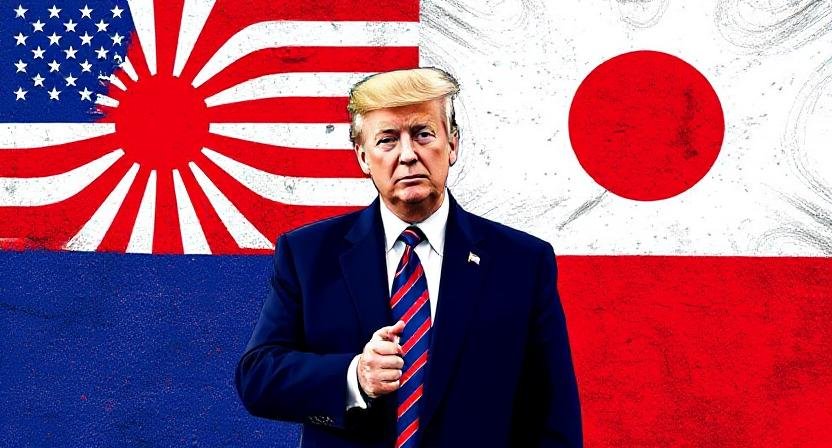
- Japan’s $550B Bet on Trump: The Japanese government has committed a massive investment package to U.S. industries, giving Trump unprecedented economic leverage ahead of elections.
- De Facto Sovereign Fund: Trump will reportedly control allocation of funds, channeling capital into strategic sectors like semiconductors, shipyards, and critical minerals.
- Global Shockwaves: The deal stuns economists, with concerns over transparency, political favoritism, and disruption to U.S.-EU-China trade norms.
- Academic Backlash: Top scholars label the deal “coercive” and “socialist,” warning it sets a dangerous precedent in international economic relations.
In a surprise that has stunned Wall Street, diplomatic corridors, and global investment circles, former U.S. President Donald Trump has landed a staggering $550 billion investment commitment from the Japanese government — a move being touted as a de facto “sovereign wealth fund” that Trump himself will control if re-elected.
Unveiled as part of a wide-ranging trade deal with Japan this week, the agreement grants Trump the final say over where the funds are invested across a wide swath of American strategic industries — including semiconductors, energy, shipbuilding, and critical minerals.
Officials from the Trump campaign and Japanese delegation confirmed that the money will be administered by two major Japanese public institutions — the Japan Bank for International Cooperation and Nippon Export and Investment Insurance — but that ultimate control of investment allocation will remain with the U.S. President and his Commerce Department.
“This is literally the Japanese government giving Trump $550 billion and saying, ‘Go fix whatever you need to fix,’” Commerce Secretary Howard Lutnick said in a national TV appearance. He framed the deal as “the most ambitious postwar industrial investment effort in U.S. history.”
“Sovereign Wealth Fund Without Spending a Dime”
In essence, the deal grants Trump a sovereign wealth fund — something he has long coveted but was unable to create due to ballooning U.S. budget deficits. Now, with Tokyo footing the bill, Trump may gain the ability to direct vast sums into projects that serve both geopolitical and electoral goals.
READ MORE: Trump’s Quest for His Own Sovereign Fund Gets $550 Billion Boost From Japan
“The strategic sectors targeted here are not a coincidence,” said Dr. Jacob Frazier, a Brookings economist. “This could reshape American industrial policy for a generation. But the concern is — there are no real safeguards.”
Indeed, many critics — including allies — are warning of opacity, potential favoritism, and political manipulation. Former ambassador to Japan Sen. Bill Hagerty (R-TN) acknowledged the extraordinary nature of the deal: “This is separate from the SoftBank AI pledges. This is a Japanese government commitment — pure and simple. It’s not market capital — it’s political capital.”
Japan’s Political Gamble
Sources in Tokyo suggest Prime Minister Shigeru Ishiba faced internal pushback from Japan’s budget hawks, who worry about long-term returns and constitutional challenges. The $550 billion sum is more than double Japan’s total foreign direct investment in the U.S. last year.
“This was a high-risk, high-stakes gamble for Japan,” said Kaori Nakamura, a political economist at Tokyo University. “They’ve essentially handed Trump a golden sword in exchange for trade stability and defense assurances.”
ALSO READ: U.S. and Israel Pull Back from Hamas Talks as Gaza Starves; Trump Eyes ‘New Vision’ for Palestine
Analysts believe the deal may also be an attempt by Japan to pre-empt any future Trump tariffs or to win favor in the event of a second Trump term — particularly with regard to the contested U.S. Steel–Nippon Steel merger and future technology cooperation.
Democrats, Scholars Alarmed
Harvard professor Christina Davis called the agreement “coercive, socialist, and unprecedented,” warning it creates a dangerous precedent by granting a U.S. president unchecked power over foreign-backed capital. “Past deals had private-sector oversight or international co-management. This doesn’t.”
Democrats are already threatening hearings, and policy think tanks have issued red alerts. “If this goes through, it opens the floodgates for transactional geopolitics funded by foreign treasuries,” said Henry Wallace of the Center for Strategic International Finance.
Meanwhile, officials confirmed that the Stargate AI megaproject — a previously announced Trump-backed initiative with SoftBank and OpenAI — is separate from the Japan sovereign fund. That project has already been scaled down.
The Road Ahead
The full structure of the fund is still unclear. Trump’s team insists the money will arrive in tranches, “as needed,” and will be channeled through the U.S. Investment Accelerator — a Commerce Department unit led by former Morgan Stanley banker Michael Grimes.
Whether Japan will have any veto power or simply act as a silent financier remains the billion-dollar question.
Still, Trump seemed unfazed by legal or procedural concerns. “We just got a $550 billion signing bonus,” he told supporters this week. “That’s what leadership looks like.”
With global markets already reacting to the shockwaves, and speculation swirling in Tokyo about a possible resignation by PM Ishiba, the U.S.-Japan investment alliance appears to have entered uncharted territory.