



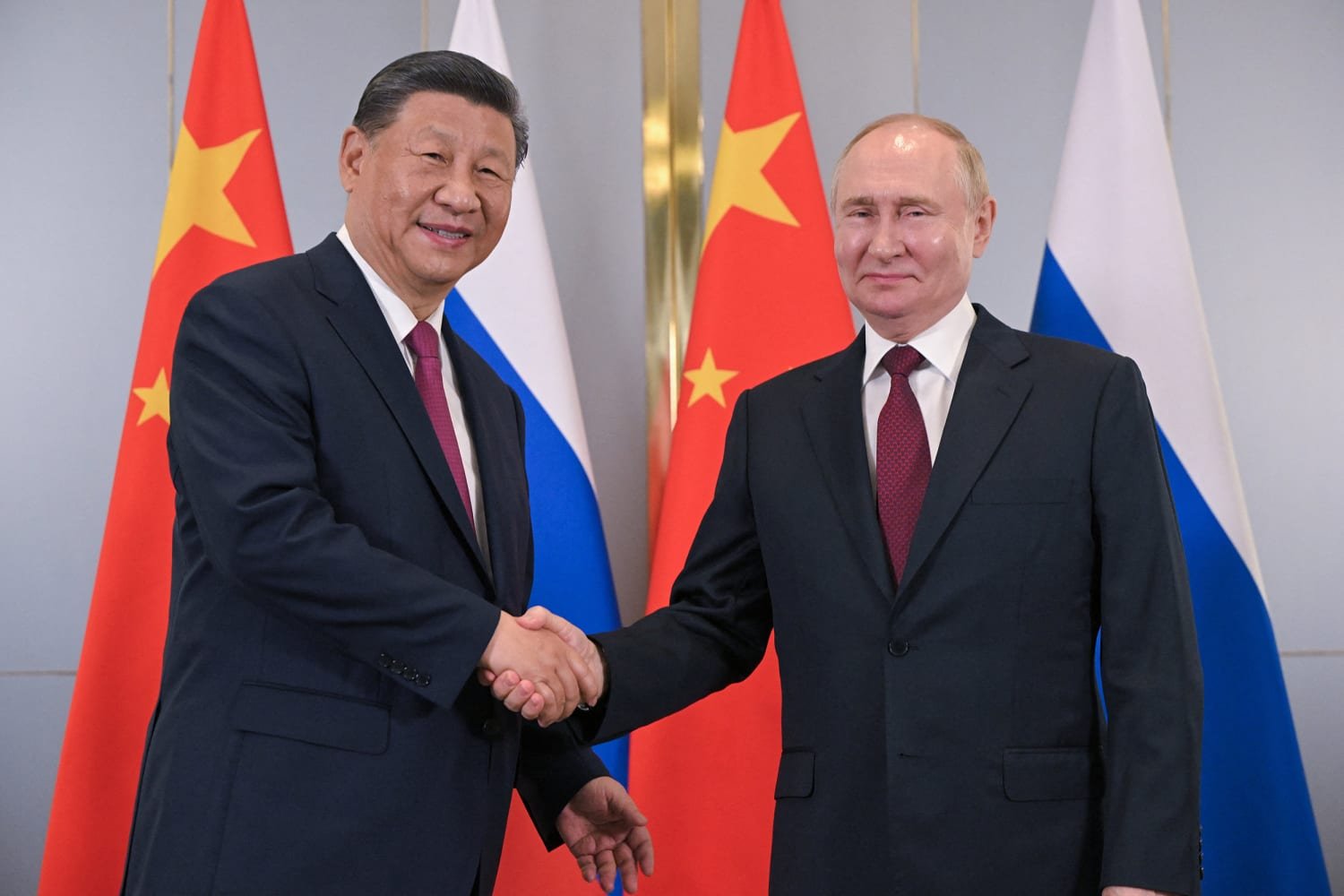
- Putin-Xi driven Russia–China trade hit a record $245 billion in 2024 but fell 8.1% in 2025, prompting urgent talks.
- Key projects like the Power of Siberia-2 pipeline and wheat export agreements could add $5–7 billion annually.
- Beijing remains Moscow’s largest trading partner, supplying critical technology and industrial components.
- Leaders aim for a $300 billion bilateral trade goal by 2030 through energy, agriculture, and tech cooperation.
The upcoming summit between Russian President Vladimir Putin and Chinese President Xi Jinping in Tianjin is being framed not as just another diplomatic meeting but as a turning point in the Moscow–Beijing economic axis. Both leaders are entering the talks with a clear agenda: to transform their partnership into one of the world’s most powerful economic alliances—despite a recent slowdown in bilateral trade.
The Numbers Behind the Concern
According to China’s customs data, bilateral trade between Russia and China reached a record $245 billion in 2024, a 26% surge from the previous year as Western sanctions on Moscow over the Ukraine conflict deepened its economic reliance on Beijing. However, between January and July 2025, trade turnover fell 8.1% year-on-year to around $130 billion, with steep declines in energy exports and Chinese vehicle shipments.
Oil exports from Russia to China, which formed nearly 40% of bilateral trade in 2024, are down nearly 20% this year, while imports of Chinese cars and industrial machinery to Russia fell by 46% in the first seven months of 2025. Moscow sees this dip as a strategic setback, especially since China accounted for over 30% of Russian foreign trade after Europe largely cut ties following the Ukraine invasion.
A Partnership Under Pressure—but with Potential
Sources close to the Russian government told Reuters that agriculture, energy, and defense technologies are expected to dominate the Tianjin agenda. The long-delayed Power of Siberia-2 pipeline project—designed to carry 50 billion cubic meters of Russian natural gas to China annually—is back on the table. If finalized, it could raise energy trade volumes by 25–30% within the next five years, analysts estimate.
READ MORE:Russia eyes China trade revival as Putin prepares for Xi summit, sources say
Agriculture is another focus. Russia, already the world’s top wheat exporter, is seeking access to China’s massive grain market. Talks on allowing large-scale exports of Russian winter wheat have been underway for two years, with officials suggesting a potential $5–7 billion annual trade boost once regulatory hurdles are cleared.
Moreover, defense industry insiders in Moscow admit that Chinese microelectronics and industrial machinery have kept Russia’s military production lines running despite Western sanctions. A Kremlin source told Reuters bluntly:
“Without Chinese technology, we would have stopped building missiles and drones long ago. Beijing became our industrial lifeline.”
The Strategic Dimension: More Than Just Trade
For both Putin and Xi, economic cooperation carries geopolitical weight. China views Russia as a critical energy supplier and a partner in challenging what Xi calls the U.S.-led “Western hegemony.” Russia, for its part, needs Beijing’s markets, capital, and technology to survive sanctions and maintain military production capacity.
ALSO READ: Trump, China Seek Common Ground as Trade Talks Resume in Washington
Yet this partnership is far from equal. China’s economy is nearly nine times larger than Russia’s, and Beijing dictates terms in many trade negotiations. A Russian official admitted anonymously:
“China acts in its own interests. Sometimes it delays payments, sometimes it floods our markets with cheap goods. We have no illusions about an ‘alliance of equals.’”
Even so, both sides see value in presenting a united economic front. At the Tianjin summit, officials are expected to announce a five-year trade roadmap aiming to push bilateral trade volumes toward $300 billion by 2030, leveraging energy, agriculture, and technology sectors.
The Road Ahead
Analysts believe the coming months will test whether Putin and Xi can translate summit diplomacy into tangible economic gains. Russia is under pressure to diversify exports beyond energy and metals, while China wants stable, long-term supply contracts at discounted prices.
If agreements on the Power of Siberia-2 pipeline, agricultural exports, and technology co-production are finalized, experts estimate bilateral trade could rebound by 15–20% in 2026, reversing this year’s decline.
For now, all eyes are on Tianjin, where Putin and Xi hope to show that the Moscow–Beijing partnership is not just surviving Western pressure but emerging stronger—and potentially unstoppable.