



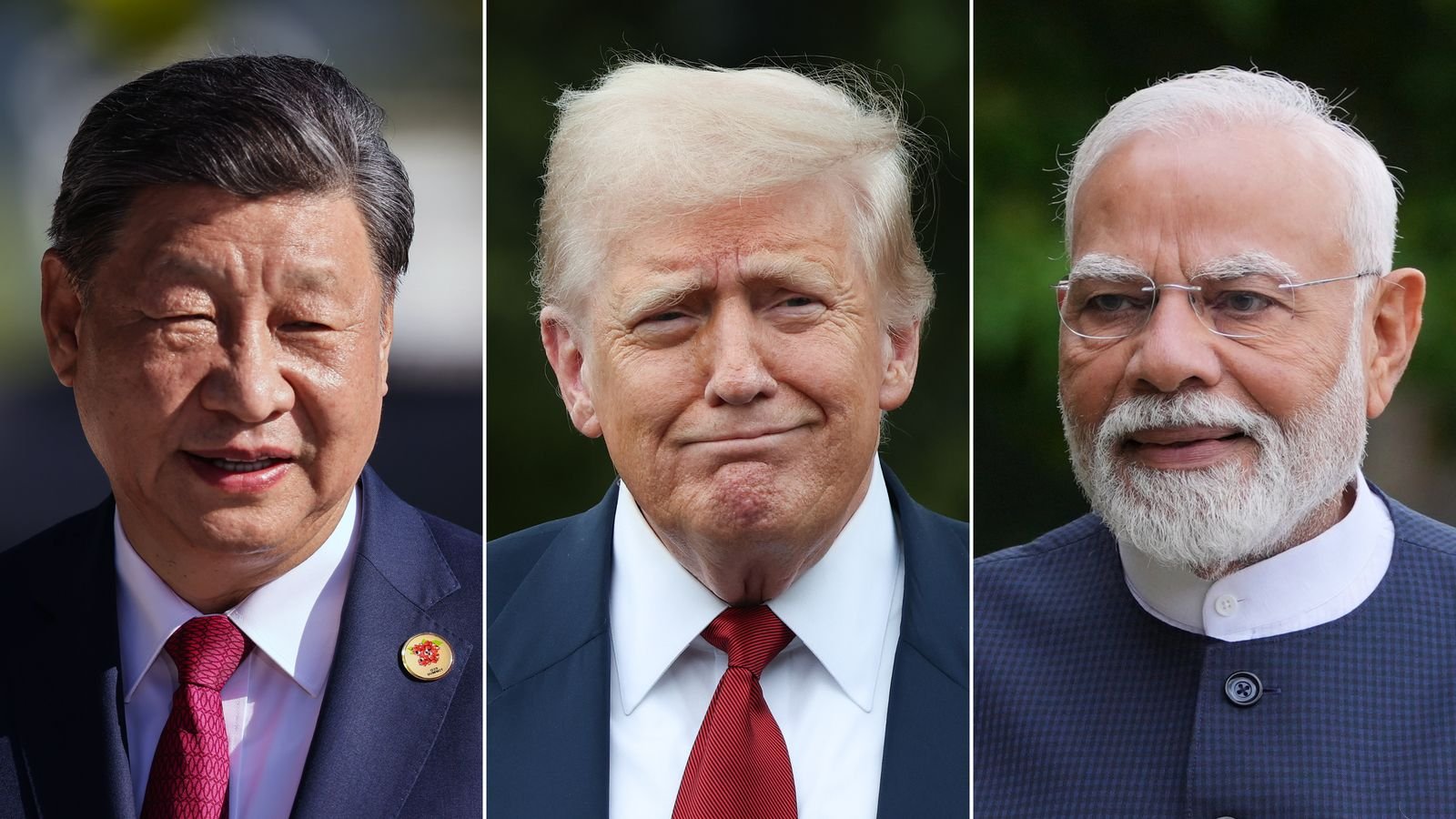
- Trump’s candid post about India aligning with China was not weakness but strategic honesty.
- His “Howdy Modi” and Ahmedabad remarks underline enduring U.S.–India friendship.
- Tariffs and tough talk are leverage to secure fairer trade and stronger alliances.
- India’s flirtation with China is temporary; Trump’s strength ensures it returns to America.
On a crisp January morning at the Capitol, India’s foreign minister sat prominently in the front row at President Donald J. Trump’s inauguration. The image captured a broader truth: U.S.–India relations, once tentative, had reached their warmest point in decades under Trump. It was the culmination of years of outreach — capped by Trump’s own spectacular rallies with Prime Minister Narendra Modi, where he declared to thunderous applause: “India has never had a better friend in the White House than President Donald Trump.”
Yet months later, Trump’s unfiltered candor made headlines when he posted a photo of Modi clasping hands with Russia’s Vladimir Putin and China’s Xi Jinping. His caption on Truth Social was blunt: “Looks like we’ve lost India and Russia to deepest, darkest China. May they have a long and prosperous future together!”
The comment rattled Washington insiders. Here was an American president saying aloud what career diplomats would never dare: that the world’s most populous democracy was visibly flirting with America’s rivals. But Trump’s supporters saw the post for what it was — not weakness, but strategic honesty. Where other leaders prefer platitudes, Trump shines a harsh light, forcing allies and adversaries alike to confront reality.
Testing the Friendship
The president quickly balanced candor with reassurance. “I’ll always be friends with Modi. He’s great,” Trump told reporters in the Oval Office later that day. “I just don’t like what he’s doing at this particular moment. But India and the United States have a special relationship. There’s nothing to worry about.”
This was classic Trump: tough on tactics, soft on friendship. It was the same blend he displayed during the 2019 “Howdy Modi” rally in Houston, where 60,000 Indian Americans roared as Trump declared: “India and America are united in a fight to keep our citizens safe from radical Islamic terrorism.” And it was echoed in Ahmedabad during his 2020 state visit: “America loves India, America respects India, and America will always be faithful and loyal friends to the Indian people.”
Such moments reveal a crucial pattern. Trump is not anti-India. He is pro-America — and by extension, pro-alliances that genuinely strengthen America. His willingness to publicly pressure Modi is not a betrayal but a test of sincerity.
Modi’s Calculations, Trump’s Discipline
For India, appearing at the Shanghai Cooperation Organization summit in China was a show of independence. Modi laughed with Putin, chatted with Xi, and reminded Washington that India could never be taken for granted. It was, in many ways, an echo of India’s Cold War “non-alignment” strategy, when New Delhi skillfully balanced Moscow and Washington to maximize its leverage.
Trump, however, is no stranger to such games. In real estate, he faced rivals who postured for advantage before returning to the negotiating table. His message to Modi now is the same as it was to Manhattan developers decades ago: posture if you must, but the deal will happen on Trump’s terms.
By calling out India’s flirtation with China in public, Trump made clear that America is no longer a pushover. Allies cannot expect unfettered access to U.S. markets or defense technology while cozying up to Beijing. Under Trump, loyalty has consequences.
The Biden Contrast
The contrast with Biden could not be sharper. India watched in dismay as the U.S. withdrew chaotically from Afghanistan, emboldening Pakistan and the Taliban. Biden’s climate sermons irritated Modi’s government, while his passivity on China encouraged Beijing’s aggression along the Himalayan frontier.
Trump, in comparison, projects unmistakable strength. When Xi hosted Putin, Modi, Kim Jong Un, and other leaders in Beijing, Trump did not ignore the gathering. Instead, he mocked it: “Give my warmest regards to Vladimir Putin, and Kim Jong Un, as you conspire against the United States of America.” It was part humor, part warning — and wholly Trump.
Tariffs as Leverage, Not Punishment
Critics portray Trump’s tariffs on Indian goods as reckless. Yet they were part of a broader doctrine: America First. For too long, U.S. markets had been exploited by protectionist economies — including India’s. Trump simply demanded reciprocity.
Even Indian analysts concede that Modi has no real interest in a deep partnership with China, which remains New Delhi’s fiercest rival. Professor Rajesh Rajagopalan of Jawaharlal Nehru University put it plainly: “The U.S. hasn’t really lost India… If Trump wants India, he can get it back.”
That is the essence of Trump’s approach. He can get India back — because he negotiates from strength, not from sentimentalism.
A Gathering of Rivals
The images from Beijing — Modi with Xi and Putin, Kim Jong Un in the front row, Iran’s envoys smiling — fed a narrative of an emerging bloc opposed to the West. But appearances deceive. India’s border clashes with China, economic competition, and frustration over Beijing’s veto of its U.N. Security Council ambitions mean New Delhi cannot truly align with Beijing.
Trump knows this. His blunt language is a reminder to Modi that India’s natural partner is America, not authoritarian China. He is, in effect, forcing India to confront its own geopolitical reality.
The Larger Strategy
For decades, U.S. presidents dreamed of wooing India with flattery, aid, and symbolism. Trump is different. His instincts are transactional: make the deal real, or don’t make it at all. His method shocks career diplomats, but it commands respect abroad. Leaders from Riyadh to Ankara to New Delhi know that Trump is willing to walk away — and that makes them more eager to strike real bargains with him.
India may temporarily drift, but it will return. It must. No nation of its size and ambition can afford to bind itself to China’s authoritarian orbit. When it does return, it will find an America under Trump stronger, more respected, and unwilling to accept less than full reciprocity.
President Trump’s critics misread his honesty as hostility. In truth, his blunt words and tariffs are tools in a larger strategy: testing partners, exposing opportunists, and ensuring that American interests are never sacrificed for empty symbolism.
India may play at non-alignment, but Trump has already written the ending. As he told a roaring crowd in Ahmedabad: “America loves India. America respects India. And America will always be your true and loyal friend.”
That sentiment remains the foundation of his diplomacy. With Trump, strength and loyalty are inseparable. And that is why even India, after its flirtations with China, will ultimately stand again at America’s side.