



-
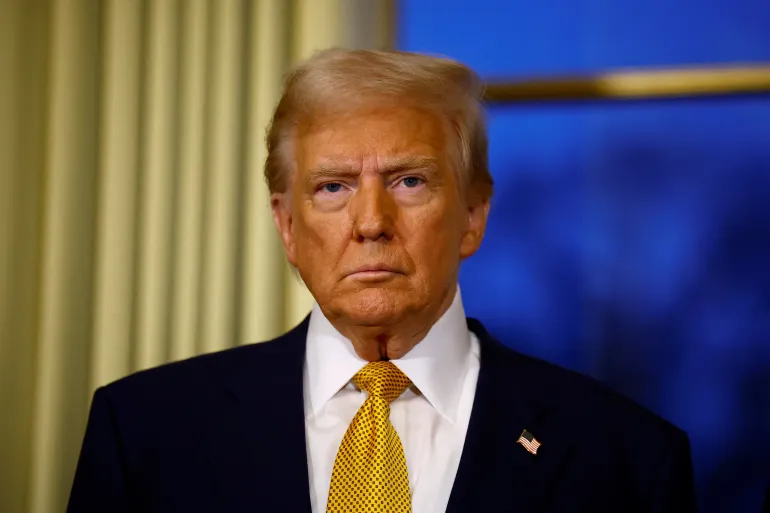
Trump says the U.S. is in “very deep negotiations” with Hamas for hostage release.
-
The president warns of “tough and nasty” consequences if Hamas stalls.
-
Netanyahu faces pressure at home as Israeli families demand a deal.
-
Trump positions himself as the only leader willing to broker peace in Gaza.
For decades, U.S. presidents have claimed they wanted to broker peace between Israel and the Palestinians, but the elusive deal has always slipped away. Now, with the Middle East on the brink after nearly a year of devastating war in Gaza, President Donald J. Trump is betting that his unique style of negotiation — bold, transactional, and unafraid of breaking taboos — can succeed where others have failed.
On Friday, Trump revealed that his administration is in “very deep negotiations” with Hamas, the Palestinian militant group holding Israeli hostages. His message was blunt: release them all now, or face a “tough” and “nasty” response. It was classic Trump — mixing pressure with a promise of rewards, warning of consequences while dangling the prospect of “much better things” for Hamas if they cooperate.
The comments, delivered with the flourish of a seasoned dealmaker, signal something larger than just hostage diplomacy. They represent Trump’s determination to frame himself as the only American leader willing to take real risks for Middle East peace. In campaign after campaign, Trump has branded himself as Mr. Deal — and in the Middle East, where war, ideology, and religion collide, the ultimate deal has always been peace.
Trump’s Peace Ambition
Trump has long argued that the war in Gaza — which has killed more than 64,000 Palestinians and left Israel shaken by the October 2023 Hamas assault that killed 1,200 — cannot be resolved by force alone. His critics mocked his campaign promise of a “quick end” to the war, but now, nine months into his presidency, Trump appears determined to deliver.
At the heart of his strategy is a dual-track approach: securing the release of the roughly 50 hostages still in Gaza, while pushing for a larger framework that could evolve into a long-term ceasefire and, eventually, political talks between Israel and the Palestinians.
Hamas, for its part, has shown flashes of interest, demanding an end to Israel’s offensive and a withdrawal from Gaza. Israel’s Prime Minister Benjamin Netanyahu has taken the opposite view — that Hamas must be dismantled militarily before any peace can last. Bridging that gulf will require deft diplomacy, relentless pressure, and the kind of risk-taking that past presidents, tied down by bureaucracy and political caution, were unwilling to attempt.
This is where Trump’s unconventional style could matter. Unlike traditional diplomats, Trump speaks directly to adversaries in their own language of leverage and survival. His critics see recklessness; his supporters see clarity.
Negotiating With Hamas
For many, the idea of direct U.S. negotiations with Hamas is unthinkable. The group is officially designated as a terrorist organization, its ideology rooted in resistance to Israel’s existence. But Trump has never allowed formalities to stand in the way of talks.
“We said let them all out, right now let them all out,” Trump told reporters, in remarks clearly designed to cut through the fog of cautious diplomacy. Unlike previous administrations that would have hidden such contacts, Trump wants the world to know he is personally in the arena.
The message to Hamas is simple: holding hostages is a dead end. Release them, and doors may open — not to recognition or friendship, but to a better future for Palestinians and perhaps a respite from Israel’s overwhelming military campaign. Keep them, and Hamas risks being annihilated not only by Israel but also by the shifting regional alliances that Trump has spent years cultivating.
Israel’s Dilemma
Israel, meanwhile, faces an internal crisis. Families of hostages are pressing for negotiations, while hardline ministers demand total war. Netanyahu, weakened by political infighting and corruption scandals, is caught between a desperate public and far-right allies who threaten to collapse his government if he agrees to a partial deal.
Trump’s leverage lies here. His administration has already hinted at conditioning U.S. support on progress toward ending the war. Israeli generals, wary of being bogged down in Gaza’s ruins, are more open to political solutions than the politicians. By pressing both sides — Hamas to release hostages, Israel to show flexibility — Trump could engineer the opening moves of a wider settlement.
Beyond Gaza: The Big Picture
The stakes go far beyond Gaza. The war has radicalized millions across the Arab and Muslim world, strained Israel’s alliances, and pushed regional powers like Egypt, Qatar, and Turkey into frantic diplomacy. Meanwhile, Europe is divided, with France and Spain moving closer to recognizing a Palestinian state while Washington insists on sequencing hostages first.
Trump’s gamble is that by seizing the initiative, he can shift the conversation from endless blame to pragmatic compromise. His long-term vision is ambitious: hostages released, Gaza rebuilt under an international authority, Hamas sidelined, and Israel gradually nudged toward a two-state arrangement. It would be the most significant diplomatic breakthrough in the Middle East since the 1979 Camp David Accords.
Skeptics abound, of course. Peace between Israelis and Palestinians has been declared “impossible” more times than anyone can count. But Trump thrives on the impossible. His supporters say this is precisely the kind of challenge he was made for.
“Mr. Deal” Faces His Defining Test
The Middle East has always been the graveyard of U.S. diplomatic ambitions. Presidents from Carter to Obama, Clinton to Biden, all tried and failed to deliver peace. Trump now faces the same test — but with a difference. He is not constrained by the traditional rules of engagement, nor is he afraid of political backlash for talking to adversaries.
The road ahead will be treacherous. Hamas and Israel remain deeply entrenched, and trust is nonexistent. But if the first step to peace is simply forcing both sides to engage, then Trump has already achieved something.
Will he clinch the ultimate deal? That remains uncertain. What is clear is that Trump, more than any U.S. leader in recent memory, is willing to spend his political capital on the pursuit of Middle East stability. In an era of cynicism and fatigue, that alone marks a dramatic shift.
As the region watches and waits, one question looms: Can Mr. Deal turn his bravado into history?