



- ASEAN’s annual summit exposes the bloc’s internal fractures and waning regional influence.
- U.S.–China rivalry over critical minerals threatens to divide Southeast Asia even further.
- New export restrictions from Beijing weaponize mineral supply chains and global trade.
- The West eyes alliances and infrastructure projects to counter China’s mineral dominance.
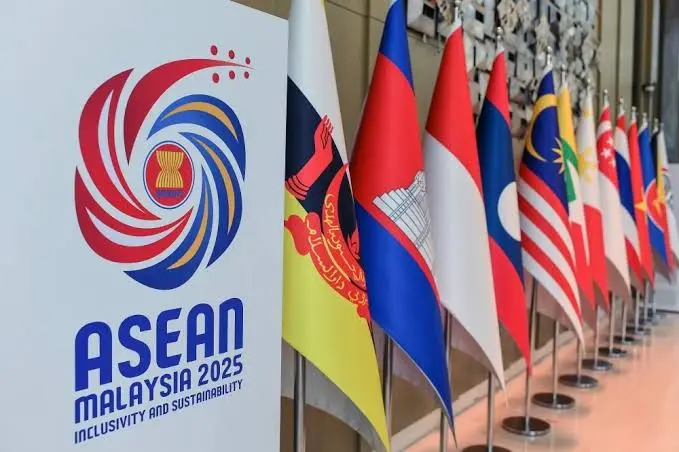
When the leaders of the Association of Southeast Asian Nations (ASEAN) gather in Malaysia next week, the meeting will be framed as a display of regional solidarity. Yet, beneath the flags and formalities lies an uncomfortable truth: ASEAN, once hailed as a model of regional cooperation, now risks irrelevance in an era of intensifying U.S.–China rivalry.
This year’s summit will welcome its eleventh member, Timor Leste, and unveil a new digital framework. It will also serve as the backdrop for the world’s largest trade pact, the Regional Comprehensive Economic Partnership (RCEP), and the East Asia Summit, which President Donald Trump will attend. But there will be no final joint statement—a rare and telling admission that ASEAN’s famed consensus has fractured.
A Region in Turmoil
Across Southeast Asia, conflicts have spilled beyond Myanmar’s civil war. Cambodia and Thailand recently clashed over a disputed border before the United States and China stepped in to enforce a ceasefire. That peace was brokered not by ASEAN but by Malaysian Prime Minister Anwar Ibrahim’s personal diplomacy—an implicit acknowledgment that the bloc has become diplomatically hollow.
ASEAN’s impotence in resolving internal disputes or influencing regional crises has become glaring. Once the anchor of stability in a volatile region, it is now adrift between superpower pressures. For Washington, ASEAN no longer holds the strategic weight of the Indo-Pacific Quad alliance. For Beijing, it is a fragmented bloc that can be swayed through economic incentives and coercive diplomacy.
Caught Between Superpowers
The dilemma for ASEAN members is existential: how to maintain autonomy while navigating the U.S.–China competition that defines global politics. The South China Sea disputes have only deepened these divisions. Countries like Vietnam and the Philippines tilt cautiously toward Washington, while Cambodia, Laos, and Myanmar remain firmly under Beijing’s shadow.
China’s growing assertiveness—militarizing disputed waters and deepening economic entanglement through the Belt and Road Initiative—has made ASEAN’s “non-aligned” posture untenable. Meanwhile, Washington’s tariff threats and selective trade deals have further splintered the bloc. Instead of acting collectively, ASEAN countries have pursued bilateral deals with the U.S., each seeking short-term relief from tariff shocks, often at the cost of long-term unity.
Economic Headwinds and Lost Purpose
ASEAN once positioned itself as the hub of East Asia’s economic integration. That vision now appears outdated. Rising protectionism, coupled with the U.S.–China trade war, has disrupted supply chains that powered ASEAN’s export-led growth. In Malaysia, trade with the United States has slumped by 25 percent since the latest tariffs took effect. Thai exports to the U.S. are projected to contract by over 12 percent this year, according to the UNDP.
These economic tremors have not only eroded public confidence but also exposed the limits of ASEAN’s collective bargaining power. The bloc’s new deal with China—ASEAN-China Free Trade Area Version 3.0—aims to streamline trade but risks drawing members even deeper into Beijing’s economic orbit.
The Mineral Monopoly
Beyond Southeast Asia, the strategic chessboard is shifting toward a new front: control over critical minerals. These are the essential ingredients for the 21st-century economy—vital for everything from electric vehicles to F-35 fighter jets. China dominates up to 90 percent of global processing capacity for these minerals and has already begun weaponizing this control.
Beijing’s new export restrictions extend even to products that contain a fraction of Chinese rare earths or are built with Chinese technology. The policy echoes Washington’s own “foreign direct product rule,” turning supply chains into geopolitical minefields. Under these rules, even a smartphone assembled in Vietnam or a car produced in Thailand could face export complications if they rely on Chinese components.
This mineral standoff has transformed into the economic equivalent of an arms race. The United States, learning from its dependence, is now investing billions in domestic rare earth production. Trump’s administration has gone further than Biden’s—injecting $400 million into MP Materials, setting price floors, and signing offtake agreements to stabilize the fragile market. Treasury Secretary Scott Bessent has even hinted at extending this model to other sectors, signaling a long-term industrial shift designed to reduce Chinese leverage.
A Global Response in the Making
But Washington cannot decouple alone. The mining and refining of critical minerals take decades, and the environmental and financial costs are immense. That’s why the U.S. is quietly building a coalition of partners—Japan, the EU, Australia, and select African states—to develop alternative supply chains. Projects like the Lobito Corridor in Africa, linking Angola to Zambia and the DRC, illustrate how the U.S. is seeking to reshape global trade routes around trusted partners rather than Chinese infrastructure.
Europe and Japan, still reeling from Trump’s earlier tariff wars, remain cautious but aware of the stakes. A global shortage in rare earths could cripple industries from Berlin’s automotive sector to Tokyo’s semiconductor manufacturing. For ASEAN, however, the danger is more immediate: it risks becoming the next front line in this mineral cold war, forced to choose between its largest trading partner and its most powerful security guarantor.
China’s Overreach, America’s Opportunity
China’s coercive approach, once masked by economic charm, is increasingly backfiring. Its “loan-to-own” Belt and Road projects have left many developing nations wary. Now, its mineral export controls reinforce the perception that Beijing is as disruptive to global commerce as Washington’s tariffs once were.
Ironically, this creates an opening for the United States to reassert itself—not as a hegemon, but as a partner in rebuilding global economic trust. To do that, Washington must engage allies, stabilize trade frameworks, and rebuild confidence among regions like ASEAN that have been burned by great power competition.
The stakes are clear: as ASEAN struggles for coherence and China tightens its grip on critical minerals, the balance of global power is quietly being rewritten—not in tanks or treaties, but in trade corridors, supply chains, and the rare earth magnets that hold modern industry together.
If ASEAN cannot rediscover its unity, and if the West fails to coordinate its response, the 21st century may yet belong to those who control not the seas or skies, but the minerals buried deep beneath the earth.