


- Strategic Sanctions: Trump’s move to target Rosneft and Lukoil aims to drain Kremlin revenues while avoiding a global oil shock.
- China’s Energy Shield: Beijing hoards oil reserves to guard against future disruptions and U.S. economic coercion.
- India’s Balancing Act: Modi’s government faces a diplomatic dilemma—protect cheap oil imports or secure a trade deal with Washington.
- Russia’s Evasion Playbook: Moscow is building an Iran-style “shadow fleet” to bypass sanctions and sustain exports.
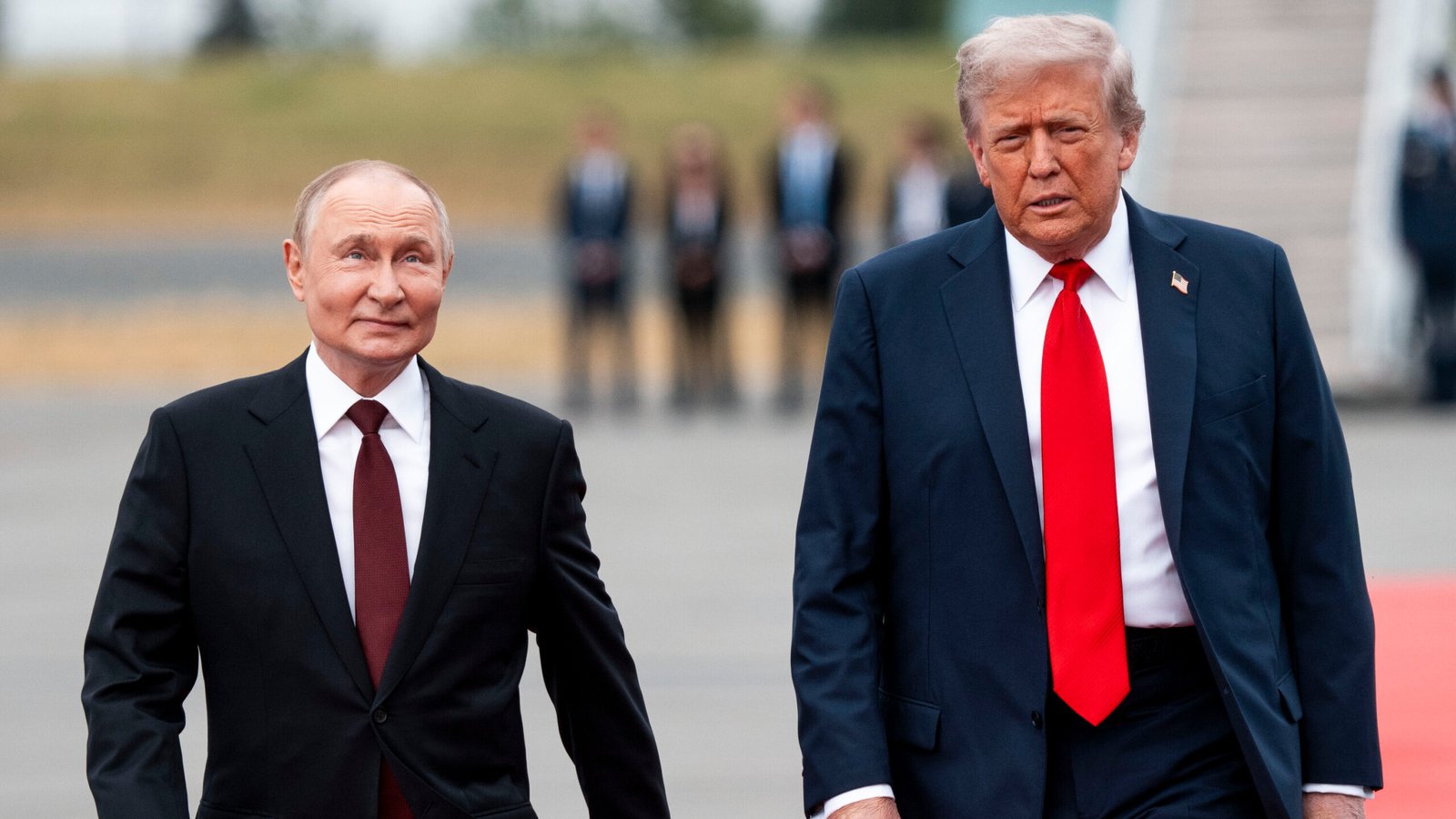
Trump’s decision to sanction Rosneft and Lukoil—pillars of Russia’s export machine—marks a calculated escalation designed to achieve three overlapping goals: to dry up the Kremlin’s war financing, to test Moscow’s endurance, and to reassert U.S. dominance over global energy markets.
Sanctions targeting Russian oil are not new. Since 2022, Washington and Brussels have imposed price caps and embargoes after the Ukraine invasion. But this new wave is qualitatively different. By blacklisting Russia’s main producers and 30 subsidiaries, Trump aims to choke Russia’s access to the dollar-based financial system, severing its connection to the arteries of global trade.
For Trump, the sanctions serve a dual domestic and strategic purpose. At home, they underscore his promise to be “tough on Russia” while keeping energy prices stable. Internationally, they project Washington’s power over an energy network increasingly dominated by Moscow, Riyadh, and Beijing.
A Historical Parallel: The Iran Playbook
If history is any guide, Moscow’s path forward may look eerily similar to Tehran’s oil survival strategy under U.S. sanctions. For decades, Iran developed intricate methods to dodge restrictions—building a “shadow fleet” of tankers, masking shipments through ship-to-ship transfers, and switching off transponders to hide origins.
Today, Russia has quietly begun replicating that same architecture. Analysts note the emergence of new “dark fleet” tankers operating from Turkey, the UAE, and Southeast Asia, and a growing network of offshore intermediaries routing payments through non-dollar currencies.
“Iran has shown that with enough creativity, a sanctioned state can still trade oil,” said Claire Jungman of Vortexa. “Russia will take longer, but it will find similar paths.”
The real difference lies in scale. Russia exports nearly 7 million barrels a day, more than six times Iran’s volume. That makes evasion not just a matter of ingenuity—but one of global logistics and political will.
China: Hoarding for Security, Hesitant on Risk
For China, Trump’s oil offensive poses both an opportunity and a dilemma. Beijing imports about 800,000 barrels per day via Russian pipelines, and Russian crude accounts for nearly a fifth of its total imports—often at steep discounts.
Yet, the risk of secondary sanctions looms large. State-owned Chinese refiners, tightly integrated into the global financial system, are unlikely to risk being blacklisted. “They will pause direct purchases until the dust settles,” said Muyu Xu, a senior analyst at Kpler.
Private “teapot” refineries in Shandong province—already the backbone of Iran’s sanctions-era oil market—may step in to handle some Russian crude. But even they face limits, constrained by annual government import quotas that are nearly exhausted.
Beijing’s response, therefore, has been to hoard. Chinese oil inventories are at record highs, with storage facilities only 60% full, giving it room to build reserves. This stockpiling reflects a long-term strategy: prepare for future disruptions, diversify suppliers, and shield the economy from Trump’s unpredictable foreign policy moves.
India: Walking the Tightrope Between Energy and Diplomacy
Nowhere are the geopolitical stakes higher than in New Delhi. Since the Ukraine war, India has built a new energy architecture around cheap Russian crude, which now accounts for one-third of its oil imports. The discounts have been crucial for its inflation-sensitive economy.
But the calculus is changing. With Trump threatening to extend sanctions to foreign companies dealing with Rosneft and Lukoil, Indian refiners—particularly Reliance Industries, one of Rosneft’s biggest customers—face a hard choice. The company has already announced a “recalibration” of purchases to avoid violating U.S. rules.
Prime Minister Narendra Modi is under pressure from both Washington and domestic industry. The U.S. remains India’s largest trading partner, and Trump has already imposed 50% tariffs on Indian exports, citing its continued Russian oil purchases.
Modi’s response may be pragmatic: reduce dependence on Russian crude gradually while securing more barrels from the Middle East, Latin America, and even the United States. Such a transition would not only ease U.S. tensions but also open the door for a potential U.S.-India trade deal, a political victory Modi desperately needs.
As Indian analyst Harsh Pant put it, “Modi could use Trump’s sanctions as a face-saving device—he can tell his domestic audience that he’s not yielding to U.S. pressure but making a rational adjustment to global realities.”
Russia’s Dilemma: Between Defiance and Desperation
For the Kremlin, the challenge is existential. Russia has few buyers left—Europe is out, and now China and India are cautious. Moscow’s options are limited: it can deepen barter trade with smaller economies, expand yuan and rupee settlements, or offer deeper discounts to entice risk-takers in Asia.
Yet, none of these will replace the stability and liquidity of the global oil market. Each workaround increases costs, delays payments, and erodes profits—exactly the outcome Washington wants.
Still, Russia’s resilience shouldn’t be underestimated. Its oil exports actually hit record highs last month, even as sanctions expanded. The Kremlin has decades of experience managing “gray” markets—from Soviet-era barter deals to modern-day sanctions evasion.
But over time, Trump’s sanctions could slowly strangle Russia’s cash flow, forcing Moscow to rely more heavily on Beijing’s goodwill—and pushing it further into China’s strategic orbit, a position President Vladimir Putin would prefer to avoid.
The Bigger Picture: A Controlled Disruption
Trump’s oil offensive is a study in calibrated coercion. It aims to weaken Russia without triggering a global price shock that could hurt American consumers. So far, it seems to be working: Putin earns less, markets stay stable, and Trump projects strength without deploying a single soldier.
But this strategy carries risks. Overuse of sanctions could accelerate the de-dollarization of global oil trade, drive Moscow and Beijing closer, and encourage emerging economies to build alternative payment systems immune to U.S. influence.
For now, the world’s second Cold War is being fought not with missiles—but with tankers, tariffs, and treasury orders. And once again, Donald Trump has proven that in the 21st century, oil remains the ultimate weapon of geopolitics.