



-
Trump Halts Tomahawk Deliveries to Ukraine, citing risk of escalation.
-
Moscow celebrates; Kyiv and Europe accuse Washington of betrayal.
-
Putin’s nuclear warnings and Trump’s test orders heighten global tension.
-
U.S. now prioritizing Venezuela and Africa over the Ukraine conflict.
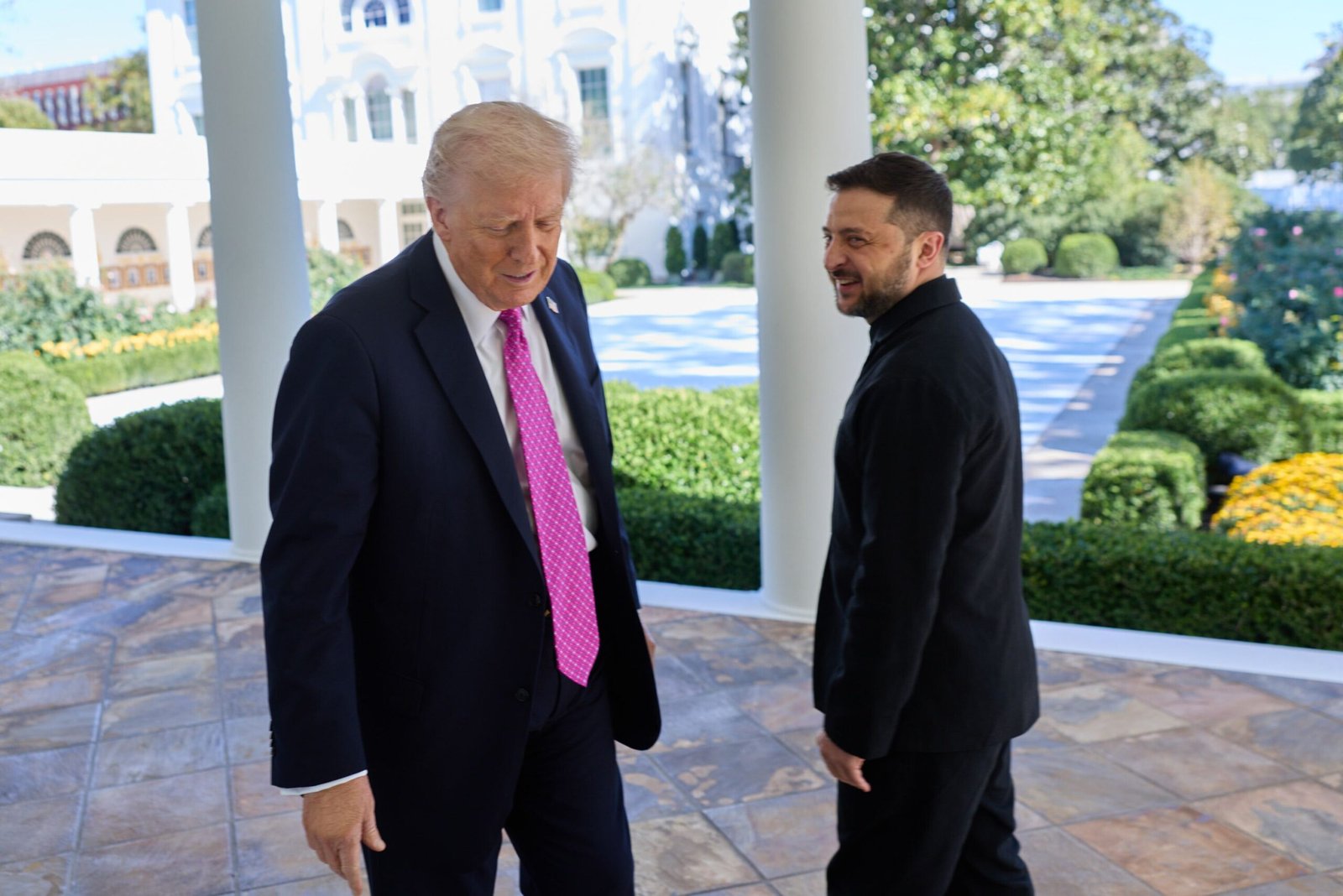
In a decision reverberating from Washington to Warsaw, U.S. President Donald Trump has officially halted deliveries of Tomahawk cruise missiles to Ukraine. The long-range weapon, capable of striking deep into Russian territory, was seen by Kyiv as a potential game-changer. Instead, Trump’s announcement has shocked European allies and injected fresh volatility into the war’s diplomatic calculus.
“No, not really,” Trump told reporters aboard Air Force One when asked about approving the sale. “I could change my mind, but I don’t want to escalate this war.”
The move comes after senior advisors reportedly warned Trump that supplying Tomahawks could provoke direct confrontation with Moscow and undermine prospects for peace talks.
By halting the deliveries, Trump aims to avoid escalation and reframe Washington’s strategy around negotiation — not confrontation.
The decision has been met with dramatically contrasting reactions. In Moscow, jubilation. Russian officials called the pause “a rational step toward global stability.” But in Kyiv, the mood was grim. “This is betrayal,” said a senior Ukrainian diplomat. “Trump Halts Tomahawk Deliveries to Ukraine, and Russia celebrates. It feels like abandonment.”
The Trump Doctrine of “Peace Through Pressure”: Tomahawks, Back Channels, and the Ukrainian Pivot
European leaders expressed disbelief. Poland labeled the move “a strategic blunder,” while France warned it could embolden the Kremlin. Across Brussels, NATO diplomats fear Washington’s restraint signals a long-term shift away from the European front.
Nuclear Shadows and a Shifting Global Focus
The timing of Trump Halts Tomahawk Deliveries to Ukraine could not be more delicate. The decision follows a week of nuclear brinkmanship that has left the world deeply unsettled. Russian President Vladimir Putin recently warned that Moscow would “not hesitate to use nuclear weapons” if its territorial integrity were threatened.
Simultaneously, Trump ordered the Pentagon to test elements of America’s nuclear arsenal — a move analysts say was meant as a deterrent signal, but one that has added tension rather than stability.
Global markets trembled, and energy prices spiked amid fears that the Ukraine war might morph into a direct U.S.-Russia standoff.
Instead, Trump appears to be gambling on a different form of leverage: diplomacy through restraint.
“Trump is reasserting control over escalation,” said Dr. Fiona Halvorsen, a European security expert. “By ensuring Trump Halts Tomahawk Deliveries to Ukraine, he’s signaling to both allies and adversaries that America wants de-escalation — but on its own terms.”
READ MORE: Trump Warns Putin: Fresh Sanctions and Nuclear Deterrence as Ukraine War Reaches Breaking Point
However, that restraint has come at a cost. European capitals view it as America’s gradual disengagement from the continent’s security.
Analysts believe Trump’s attention is now drifting toward other arenas — particularly Africa and Venezuela — where Washington sees greater long-term strategic gains and resource competition with China and Russia.
ALSO READ: Trump says no Tomahawks for Ukraine, for now
“The White House believes Europe’s war is stalemated,” said Samuel Greer of the Atlantic Institute. “Trump wants to invest diplomatic capital where results are still possible. That’s why Trump Halts Tomahawk Deliveries to Ukraine — it’s not just about missiles, it’s about priorities.”
Diplomacy, Disillusionment, and a Dangerous Gamble
The repercussions of Trump Halts Tomahawk Deliveries to Ukraine are unfolding rapidly. In Kyiv, President Volodymyr Zelensky faces growing domestic pressure. Protests erupted in Independence Square, with demonstrators accusing the U.S. of “appeasing Putin.” Many waved NATO flags draped in black, symbolizing what they see as the death of Western solidarity.
Meanwhile, Moscow is portraying Trump’s decision as proof of its nuclear deterrent’s success. Russian state TV declared the move “a triumph of strategic patience.” Kremlin insiders believe the halt validates Putin’s gamble — threatening nuclear escalation to extract political concessions from the West.
But this newfound calm may be deceptive.
By holding back weapons, Trump is betting that restraint will open a backdoor path to negotiation — perhaps through informal channels involving intermediaries like Turkey or even First Lady Melania Trump, who has quietly worked on humanitarian exchanges with Moscow.
Still, skeptics warn that restraint without resolution risks emboldening Russia. “Pausing weapons doesn’t guarantee peace,” said Greer. “It may simply give Moscow more time to consolidate gains.”
For Europe, the message is chilling. The continent’s reliance on U.S. defense commitments — already strained — now faces its most serious test in decades. “This could be the moment Europe realizes it must stand alone,” said a French diplomat. “Trump Halts Tomahawk Deliveries to Ukraine, and with it, perhaps, the illusion of unconditional American backing.”
A Shockwave in the Global Order
Trump Halts Tomahawk Deliveries to Ukraine is more than a policy adjustment — it’s a geopolitical earthquake.
It has shaken NATO unity, delighted the Kremlin, and exposed a widening gap between America’s global ambitions and its willingness to act.
Trump’s bet on restraint may yet yield diplomatic breakthroughs — or it could mark the moment the balance of power shifted decisively away from Washington.
Either way, history will remember this as the day when the Tomahawks went silent — and the world began to listen for what might come next.