



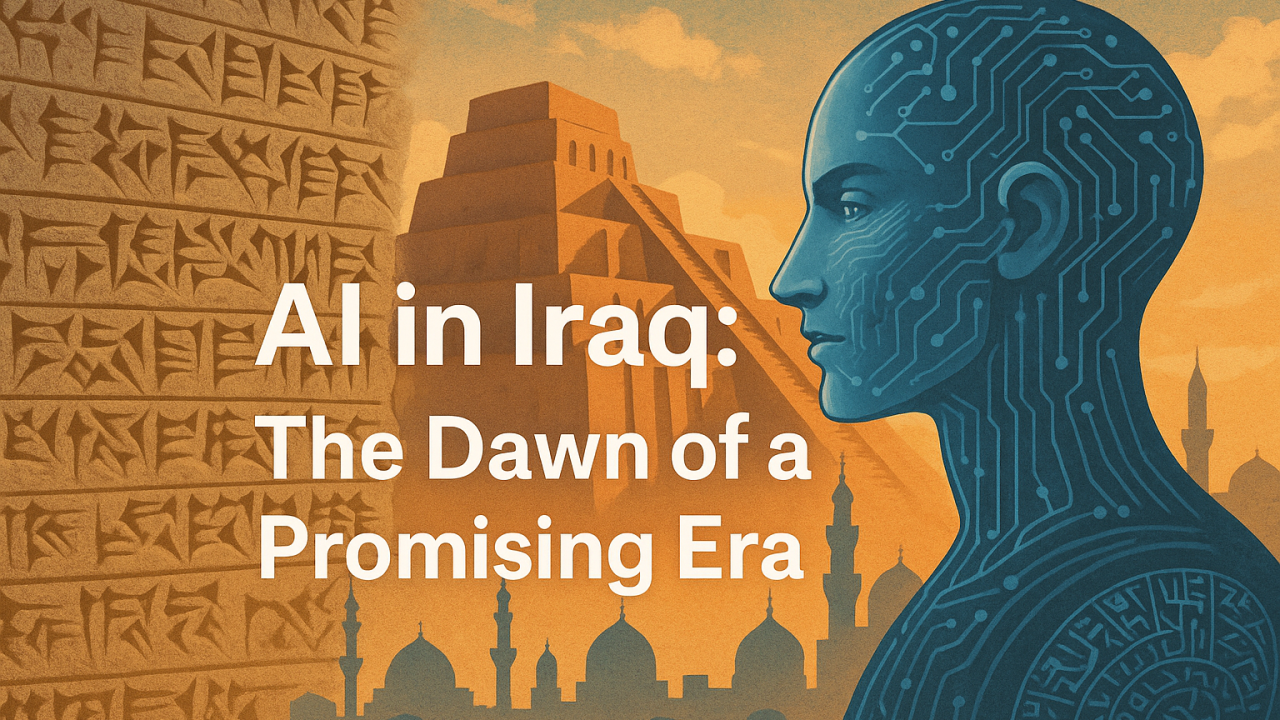
- Iraq AI infrastructure is emerging as the foundation of economic sovereignty in the digital age
- Regional rivals are investing billions in sovereign AI hubs and hyperscale data centers
- Power instability and governance challenges make AI projects more urgent, not less
- A phased national strategy could transform Iraq into a regional technology and innovation hub
The 2026 Davos consensus was unequivocal: artificial intelligence is no longer a sector of the economy—it is the operating system of 21st-century power, governance, and prosperity. For Iraq, a nation navigating a fragile recovery amid regional transformation, this represents not just an opportunity but an existential choice. Iraq must build sovereign AI infrastructure with the same strategic urgency historically applied to oil, or risk cementing its status as a consumer of others’ technological futures.
AI data centers are the refineries of the digital age. They are strategic national assets where computational power transforms data into intelligence, innovation, and economic value. Without them, local AI development is impossible, leaving the country dependent on foreign clouds that export data—and with it, long-term economic potential. Across the region, peers are not merely investing; they are repositioning their nations for technological leadership.
Kazakhstan is developing Alem.ai, a sovereign AI hub with 200 MW of capacity to train specialists and retain digital sovereignty, according to government announcements. The United Arab Emirates has committed more than $7 billion to multi-gigawatt AI campuses, aiming to become a global nexus for AI research and cloud services. Saudi Arabia, under Vision 2030, is creating over 250 MW of AI-ready capacity to diversify beyond oil. Indonesia is leveraging foreign investment to establish itself as a Southeast Asian compute hub.
Iraq, by contrast, has only nascent momentum—from Nokia-backed data centers to Asiacell’s digital platforms—but these remain isolated nodes rather than elements of a national strategy. The gap is widening by the day.
The Challenge Is Real, but Not Insurmountable
Sceptics rightly point to Iraq’s obstacles: electricity instability, political fragmentation, and legacy infrastructure. These challenges are not arguments for delay; they are precisely why AI infrastructure must become a national priority. A modern AI data center can act as a catalyst rather than a burden.
Paired with dedicated gas-to-power or solar infrastructure, such facilities can improve grid stability instead of straining it. Their requirements for elite security, uptime, and compliance can set new benchmarks for governance and public-private partnership. Most importantly, they provide a concrete, non-ideological national project around which political and commercial actors can align.
A Practical, Phased Path to Sovereignty
An immediate, three-phased initiative could place Iraq firmly on the map as a regional AI actor.
Phase 1: The Sovereign AI Pilot (24–36 months).
Iraq should establish a National AI Infrastructure Consortium led by the National Investment Commission and the Ministry of Communications. Its first deliverable would be a secure 20–30 MW Tier III+ AI data center in Baghdad or a stable governorate, built to hyperscale standards. At an estimated cost of $200–400 million, this investment is modest compared to historic oil-sector spending yet offers transformative returns.
This pilot could be anchored by the American University of Iraq–Baghdad (AUIB), leveraging its academic autonomy, international orientation, and research mission. In partnership with its founding corporation, Raban Al Safina Energy Group, which brings experience in energy infrastructure and project execution, the initiative could unite academia, industry, and the state around a credible flagship project. The facility would serve as Iraq’s secure digital territory—hosting government AI workloads, enabling startups, and providing high-performance computing for universities and research institutions.
Phase 2: The Ecosystem.
From the outset, the consortium should launch parallel tracks. A “House of Wisdom AI” scholarship program could train roughly 1,000 Iraqi engineers and data scientists in partnership with global technology firms. Priority should be given to high-impact, non-political applications: AI for energy optimisation in oil and gas fields, smart agriculture in the Mesopotamian basin, and diagnostic medicine in public hospitals. Early successes would build public trust and political support. In parallel, Iraq must enact robust data-sovereignty and cybersecurity laws aligned with global best practices to reassure citizens and investors.
Phase 3: Regional Hub.
With a functioning center and trained workforce, Iraq could position itself as a secure, neutral AI hub for the region—offering cloud services, joint ventures, and research collaboration, attracting diaspora talent home, and creating a new export beyond hydrocarbons.
The Stakes: Consumption or Creation?
The benefits form a blueprint for a modern Iraq: economic diversification, youth empowerment, talent repatriation, and sector-wide innovation. But the deeper issue is agency.
Without sovereign AI capacity, public data would be processed in foreign clouds, Iraqi businesses would rent intelligence from abroad, and the country’s brightest minds would find limited domestic opportunity. Iraq would pay a perpetual rent on the 21st century.
This is Iraq’s next national project. It demands the same coordination and long-term vision that once built the oil industry. The country has the capital, the need, and the historical precedent—from the ancient House of Wisdom to the engineering achievements of the modern era. The question is no longer whether Iraq can afford this investment, but whether it can remain a sovereign, influential nation without it.
The AI train is leaving the station. Iraq cannot remain on the platform. It must build its own engine—and chart its own course.