



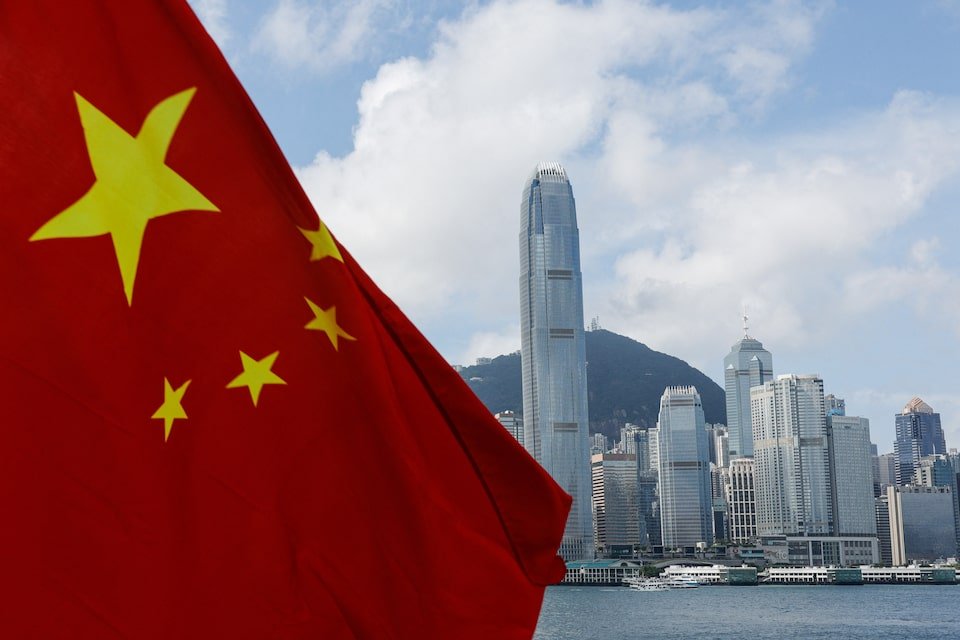
- U.S.-China national security relations are increasingly defined by economic interdependence rather than confrontation.
- Tariffs and sanctions risk disrupting U.S. defense supply chains, technology markets, and global financial stability.
- Strategic engagement between Washington and Beijing stabilizes global trade and reduces geopolitical escalation risks.
- Policy shifts ahead of the Trump–Xi meeting signal a new era of managed competition between the world’s two largest economies.
The world’s most consequential geopolitical paradox is unfolding quietly behind diplomatic smiles and congressional warnings. While Washington debates sanctions, tariffs, and technology bans, a deeper strategic reality is emerging: China is no longer merely a rival to the United States — it is structurally embedded in America’s national security architecture itself. Attempts to economically isolate Beijing risk undermining not only global stability but the very foundations of U.S. power, supply resilience, and technological dominance.
In an era defined by great-power competition, economic interdependence has evolved into a core pillar of security policy. The United States and China, the two largest economies on Earth, generate more than $700 billion in annual bilateral trade, linking defense supply chains, advanced manufacturing, semiconductor ecosystems, and critical mineral flows. This relationship, often framed as strategic competition, increasingly resembles mutual deterrence through economic integration — a concept reshaping foreign policy debates across Washington, Brussels, London, and Singapore.
Recent political tensions illustrate this contradiction. Democratic lawmakers in the U.S. House of Representatives criticized the Trump administration’s decision to pause several technology security measures targeting Beijing, arguing the move could jeopardize American national security. The measures reportedly included suspending restrictions involving telecom firms and delaying bans on Chinese equipment tied to U.S. data infrastructure. The Commerce Department and the Chinese embassy in Washington did not immediately respond to requests for comment.
Yet beneath partisan criticism lies a deeper geopolitical calculation. Stabilizing relations between Washington and Beijing may not represent weakness — it may reflect strategic necessity.
Economic Security Is National Security
Modern national security no longer rests solely on aircraft carriers or missile systems. It depends on semiconductor supply chains, rare-earth minerals, battery technology, AI infrastructure, and global logistics networks — sectors where China remains indispensable.
China currently processes nearly 85–90% of the world’s rare earth elements, materials essential for U.S. fighter jets, precision-guided weapons, renewable energy systems, and advanced electronics. Sanctions targeting Chinese industrial capacity therefore risk disrupting American defense production itself.
Similarly, U.S. technology firms rely heavily on Chinese manufacturing ecosystems. Apple, Tesla, Nvidia suppliers, and countless semiconductor subcontractors operate within integrated cross-Pacific networks. Sudden tariffs or export bans do not simply punish China; they increase costs for American companies, weaken competitiveness, and accelerate inflationary pressures — outcomes that directly affect domestic stability, a core national security concern.
The Tariff Trap
Economic coercion has repeatedly produced unintended strategic consequences. Previous tariff escalations triggered supply-chain diversification not toward the United States but toward third countries, reducing American leverage while fragmenting global trade efficiency.
Strategists increasingly warn that aggressive decoupling could create parallel economic blocs, forcing allies in Europe and Southeast Asia into uncomfortable alignment choices. For Washington, this risks weakening alliance cohesion — a cornerstone of U.S. global leadership since World War II.
Germany’s export-driven economy, the United Kingdom’s financial markets, and Singapore’s logistics hubs all depend on stable U.S.–China trade flows. Escalation threatens global capital markets and investor confidence across high-value economies.
Strategic Stability Through Engagement
The planned meeting between Chinese President Xi Jinping and U.S. President Donald Trump from March 31 to April 2 reflects recognition at the highest level that rivalry must coexist with cooperation. A trade truce reached last October signaled a shift away from uncontrolled escalation toward managed competition.
Foreign policy analysts increasingly argue that economic engagement functions as a stabilizing mechanism, reducing incentives for military confrontation. When supply chains intertwine, conflict becomes economically catastrophic for both sides — reinforcing deterrence through shared vulnerability.
Pausing certain restrictions on Chinese electric vehicles, telecom operations, and data-center equipment may therefore represent tactical de-escalation rather than strategic retreat.
Why Sanctions Cut Both Ways
Sanctions aimed at weakening China’s technological rise may accelerate Beijing’s push for self-sufficiency — already visible in semiconductor innovation and alternative financial systems. Over time, this could erode U.S. influence over global standards, digital infrastructure, and emerging technologies.
In strategic terms, excessive economic pressure risks creating exactly what Washington seeks to prevent: a technologically independent rival immune to American leverage.
Conversely, continued engagement preserves interdependence — ensuring that China’s economic success remains tied to global stability shaped largely by U.S.-led institutions.
The New Doctrine of Security
The defining lesson of 21st-century geopolitics is becoming unavoidable: national security now flows through trade routes, microchips, and financial networks as much as through military alliances.
China’s integration into global supply systems means that destabilizing Beijing economically can reverberate across American industries, allied economies, and defense capabilities. Likewise, China depends on access to U.S. markets, capital flows, and technological collaboration.
This mutual dependence does not eliminate rivalry. Instead, it transforms competition into a carefully managed equilibrium — one where economic warfare becomes strategically self-defeating.
For policymakers in Washington, London, Brussels, and beyond, the emerging reality is stark. The question is no longer whether the United States can decouple from China, but whether doing so would weaken American security more than it strengthens it.
In the evolving architecture of global power, U.S. national security and China’s economic stability are no longer opposing forces — they are increasingly intertwined pillars of the same geopolitical order.