



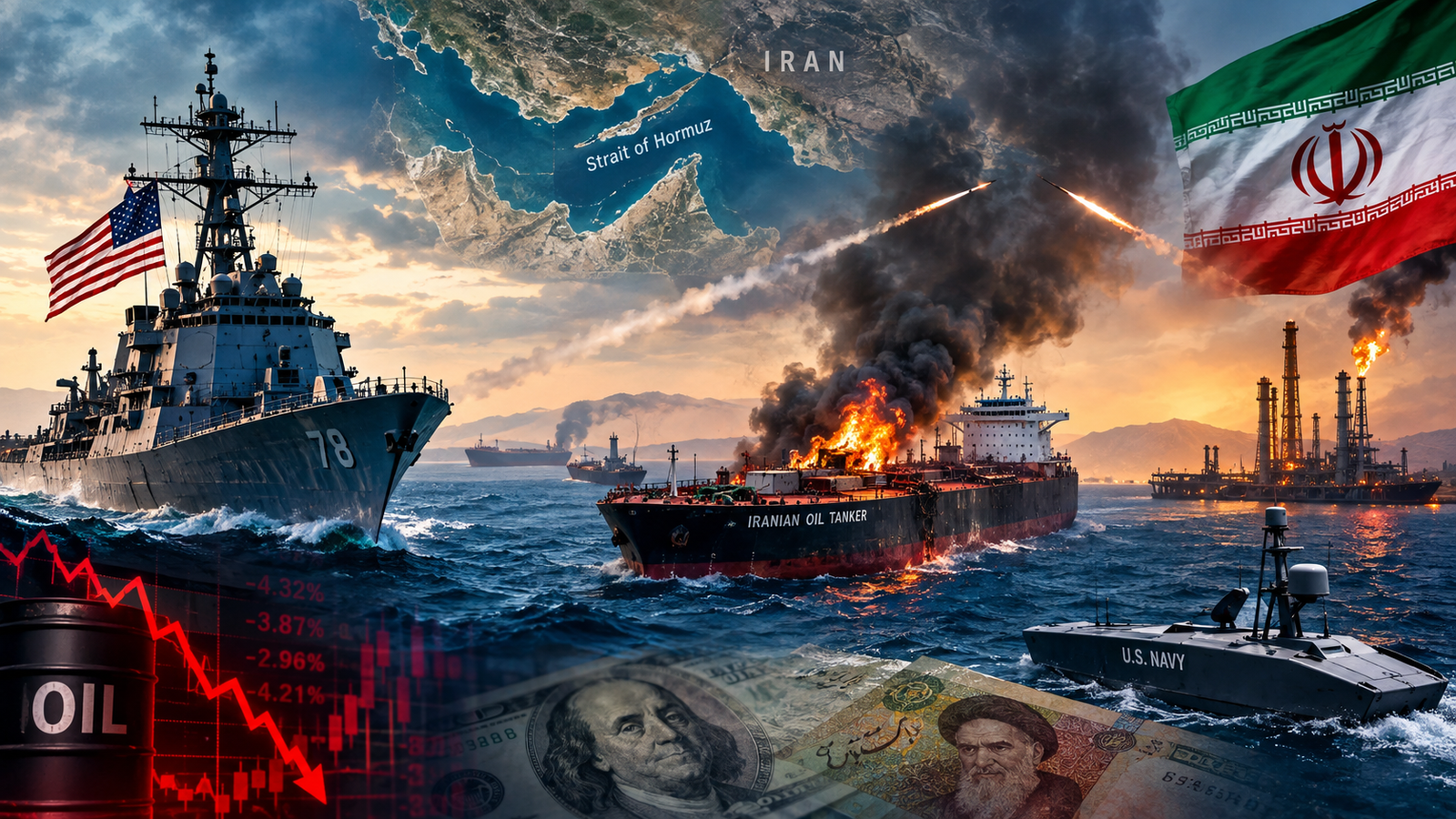
- Oil tanker shortage is driving freight rates sharply higher as vessels become trapped in longer voyages around Hormuz and the Cape of Good Hope.
- Houthi attacks and disruptions around Bab al-Mandab are forcing Saudi and other tanker operators to reroute, increasing costs and delivery times.
- Restrictions and attacks around the Strait of Hormuz are turning shipping capacity into a new constraint on global oil supplies, potentially keeping fuel prices elevated.
The Iran war has created a new and expensive problem for the oil market: the shortage is no longer limited to crude. The ships needed to move that crude are becoming scarce, turning maritime security into a component of the price of energy.
Pressure is building simultaneously around the Strait of Hormuz and Bab al-Mandab, two waterways connecting Gulf producers with Asian, European and other markets. Vessel traffic through Hormuz has collapsed from roughly 125 commodity vessels a day before the conflict to only 12 over a recent weekend, according to Reuters. Many tankers are sailing with transponders switched off, reflecting security risks.
The tanker squeeze intensified after attacks disrupted Saudi Arabia’s East-West Pipeline, a route moving crude from the kingdom’s eastern fields to Yanbu on the Red Sea. Saudi Arabia temporarily shut the pipeline after a drone attack, forcing more oil toward the Gulf and increasing dependence on tankers using Hormuz.
READ MORE: Iran War Is Testing the Pentagon’s Operational Readiness
That has created a logistical trap. Saudi Arabia has enormous crude reserves and production capacity, but barrels are useful only if transported safely and economically. When an alternative pipeline is unavailable, more ships are required to perform the same task, while vessels already committed to the region remain tied up for longer periods.
The impact is visible in tanker rates. The cost of hiring very large crude carriers, or VLCCs, has reached record levels on major routes. Reuters’ report on record tanker rates reported that rates for supertankers carrying Gulf of Oman crude to China reached about $11.50 a barrel this month. The Wall Street Journal’s tanker-shortage report reported that some VLCC voyages through Hormuz have exceeded $1 million a day.
The economics are significant. Freight is normally a small part of the value of a crude cargo. At extraordinary rates, however, transportation becomes a major component of delivered oil costs. Refiners must absorb that expense or pass it through to consumers in gasoline, diesel, jet fuel and products.
READ MORE: A Shortage of Oil Tankers Is Threatening to Keep Gas Prices High
The second maritime choke point is making the problem worse. Yemen’s Houthi forces have expanded their presence around Bab al-Mandab and attacked Saudi energy infrastructure. Reuters reported in July that shipping traffic through Bab al-Mandab fell after Houthi attacks on Saudi oil facilities on the Red Sea coast. In September, S&P Global reported that no VLCCs had transited the strait since September 9, compared with 24 in August and 63 in July.
Saudi-flagged vessels have responded by avoiding the route. Some have taken the longer route around the Cape of Good Hope, adding time, fuel and vessel demand to every cargo. Other Saudi crude is moved through Hormuz or by ship-to-ship transfers near Oman. Those transfers keep oil flowing but consume tanker capacity needed elsewhere.
The result is a shortage of effective tanker capacity rather than simply a shortage of physical ships. A vessel sailing around Africa for an extra two weeks is unavailable for another cargo during that period. A VLCC performing repeated shuttle runs near Hormuz is likewise removed from the pool serving other exporters and importers.
Iran has added another layer of uncertainty. The conflict has produced attacks on shipping around Hormuz, while restrictions on maritime movement and the threat of further attacks have made owners more cautious about deploying vessels into the Gulf. Reuters reported that Iran said it had attacked 10 ships near Hormuz after the United States sank five Iranian oil tankers. Even when ships are not destroyed, the threat can raise insurance, security and freight costs.
This is the new challenge facing the energy market: geography is becoming as important as geology. The world may have enough crude underground and enough production capacity, but that supply cannot reach consumers without functioning maritime corridors and available tankers.
The immediate danger is a feedback loop. Attacks restrict routes; restricted routes lengthen voyages; longer voyages consume tanker capacity; scarce tankers raise freight rates; higher freight raises delivered crude prices; and expensive fuel feeds inflation across economies.
Even if crude prices eventually retreat, transportation costs could remain elevated until shipping routes normalize and vessels return to their trading patterns. That means the economic consequences of the war may outlast individual attacks or temporary production disruptions.
The oil market has entered a phase in which the question is no longer simply how many barrels the world has. Increasingly, it is whether there are enough safe ships, open waterways and functioning export routes to deliver them.