



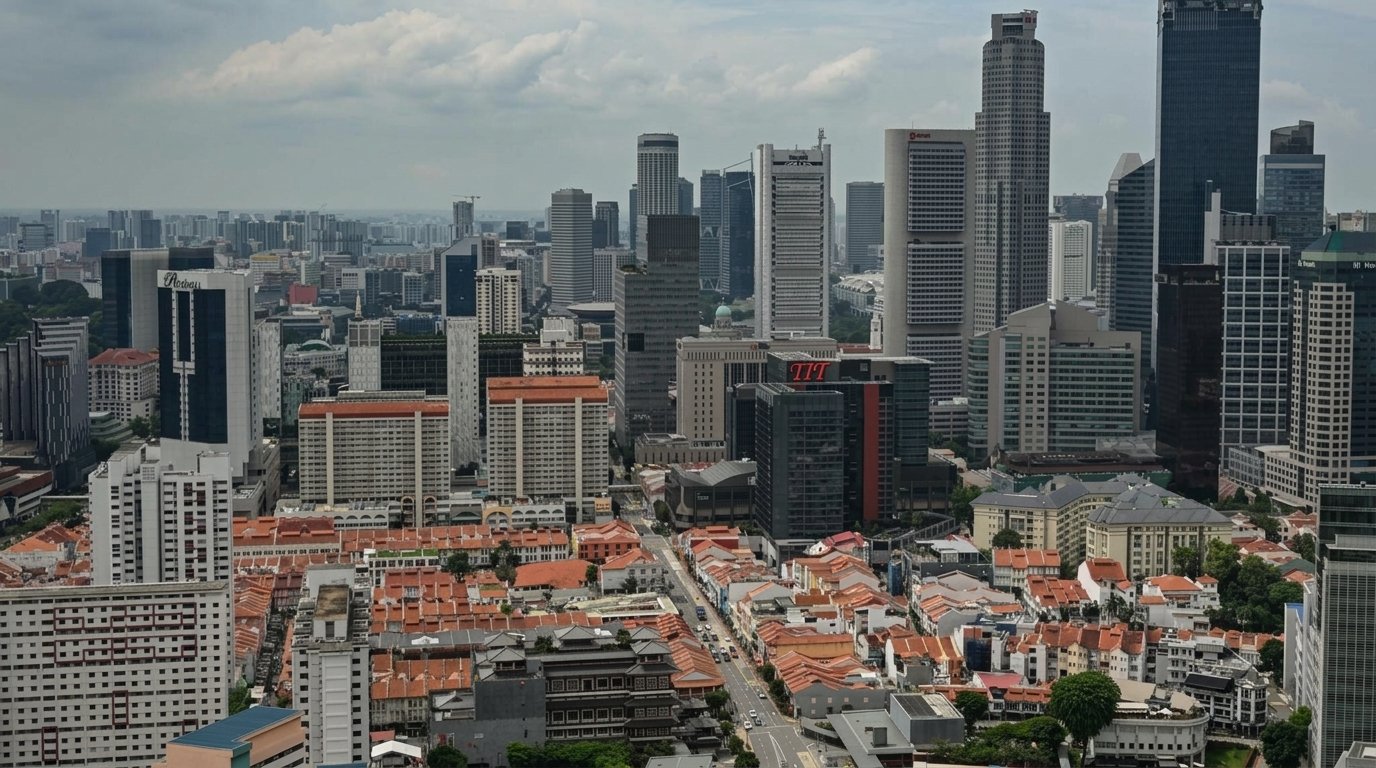
- Singapore economy and stock market are showing resilience despite mixed market breadth and global uncertainty.
- Strong manufacturing, exports and artificial intelligence investment are supporting Singapore’s economic expansion and attracting regional capital.
- Singapore’s security preparedness is increasingly linked to its role as a financial, technology, logistics and investment hub.
Singapore entered the final week of September with its financial markets showing modest resilience, even as investors confronted a more complicated regional and global environment. The Straits Times Index rose 6.87 points, or 0.12%, to 5,717.99 shortly after Monday’s opening, although declining stocks outnumbered gainers 111 to 77. Trading volume reached 83.79 million shares worth S$200.98 million.
The limited movement in the benchmark is revealing. Singapore’s market is not responding simply to daily sentiment; it is reflecting a broader economy that continues to expand while investors weigh geopolitical risks, interest-rate conditions, technology investment and regional security. The STI represents the 30 largest companies listed on the Singapore Exchange by market capitalisation, making its performance an important indicator of investor confidence in the city-state’s corporate economy.
The latest economic numbers provide a stronger foundation than Monday’s subdued market breadth might suggest. Singapore’s economy grew 5.9% year-on-year in the second quarter, following 6.3% growth in the first quarter. The government has subsequently upgraded its full-year 2026 growth forecast to between 4.5% and 5.5%, citing stronger-than-expected performance and accelerating global investment in artificial intelligence.
Manufacturing has become an important part of that story. The sector expanded 12.2% year-on-year in the second quarter, driven particularly by electronics and precision engineering as global demand for semiconductors and semiconductor manufacturing equipment strengthened.
READ MORE: Singapore population hits record 6.21 million, driven by rise in foreign residents
Singapore’s August trade figures reinforce the trend: non-oil domestic exports jumped 46.2%, while total merchandise trade increased 44.5%. Electronics remained a major driver, reflecting the city-state’s position inside the increasingly strategic Asian technology supply chain.
That economic momentum helps explain why Singapore continues to attract capital despite considerable geopolitical uncertainty. Banking remains central to the market, with DBS, UOB and OCBC representing some of the most important counters. At Monday’s opening, DBS was slightly lower at S$77.93, while UOB stood at S$43.17 and OCBC at S$32.15. The mixed performance of real estate investment trusts, including CapitaLand Integrated Commercial Trust, Mapletree PanAsia Commercial Trust and CapitaLand Ascendas REIT, meanwhile, illustrates how investors remain selective rather than broadly risk-on.
READ NEXT: Singapore’s Markets Hold Firm as Growth, Technology and Security Shape Its Next Phase
Corporate developments also point to Singapore’s increasingly regional character. Oiltek’s proposed secondary listing on Bursa Malaysia, while retaining its primary listing on the Singapore Exchange, demonstrates how companies can use Singapore as a capital-market base while expanding their investor reach across Southeast Asia. The proposed Malaysian offering remains subject to regulatory approvals.
The proposed transaction involving NIO and Zhejiang Geely Holding Group adds another dimension. Their agreement to cooperate around battery swapping and charging businesses, including a transaction valuing NIO Power at approximately RMB16 billion after investment, reflects the growing importance of energy infrastructure alongside electric vehicles. The significance extends beyond automobiles: battery swapping, charging networks, smart mobility and energy storage are becoming part of the infrastructure competition shaping Asian economies.
Singapore’s strategic position makes these developments particularly important. It is simultaneously a financial centre, manufacturing hub, logistics gateway and technology node. Its economic model depends heavily on international trade and investment, leaving it exposed to geopolitical disruptions but also giving it an incentive to remain deeply integrated with competing economic blocs.
Security is therefore inseparable from Singapore’s economic strategy. The country’s authorities have maintained heightened vigilance amid conflicts in the Middle East and wider geopolitical tensions. Singapore’s 2026 terrorism assessment says the terrorism threat remains high, although there is currently no specific or credible intelligence indicating an imminent attack. Islamist terrorism remains the principal concern, while authorities are also monitoring far-right extremism and other forms of violent radicalisation.
Prime Minister Lawrence Wong recently warned that terrorism remains a major concern and that Singapore cannot afford complacency. Authorities have also highlighted self-radicalisation and youth radicalisation as significant domestic challenges.
The security posture has economic implications. Singapore’s attractiveness to investors depends not only on returns, infrastructure and connectivity, but also on confidence that its ports, financial institutions, supply chains and digital systems remain secure. The government’s emphasis on intelligence, counterterrorism and resilience is therefore closely connected to the country’s economic competitiveness.
Monday’s STI opening captures this paradox. Singapore is not insulated from global instability, but neither is it standing still. Its markets remain selective, its economy is growing, exports are accelerating, artificial intelligence is stimulating manufacturing investment and companies are increasingly building regional partnerships.
The broader story is that Singapore is evolving from a traditional financial and trading hub into a more diversified technology, energy, manufacturing and strategic-security centre. Its ability to combine economic openness with rigorous security management remains one of the central factors shaping its position in Asia.