



- Red Sea Houthi Crisis is creating a second maritime pressure point alongside the Strait of Hormuz.
- Houthi expansion around Mokha, Perim and the Hanish islands could increase the threat to shipping through Bab el-Mandeb.
- Prolonged disruption could raise freight costs, insurance premiums, energy prices and supply-chain risks across Asia, Europe and Africa.
The Red Sea is rapidly emerging as the second major maritime front in the Iran-U.S. war, and the world has reason to be concerned. The immediate danger is not simply another round of attacks on commercial vessels. It is the possibility that the Houthis could turn the Bab el-Mandeb Strait into a sustained coercive chokepoint, placing energy supplies, global shipping and fragile supply chains under simultaneous pressure from both ends of the Arabian Peninsula.
READ NEXT: Why Trump Threatened to Bomb Oman — and What It Means for Iran, Hormuz and the Houthis
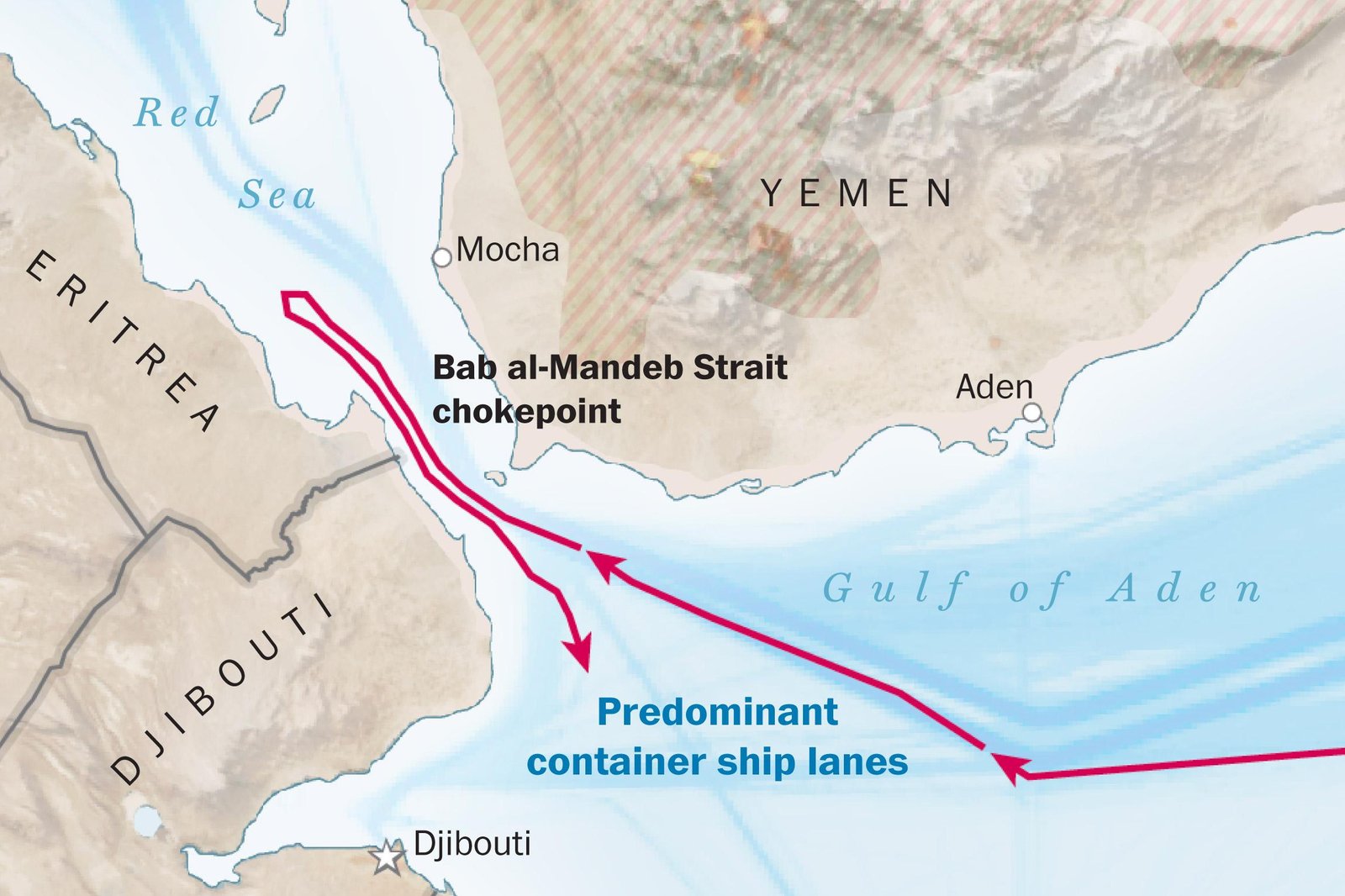
The warning signs are already visible. In September, Houthi forces captured Mokha and advanced onto Perim and the Hanish islands near the Bab el-Mandeb, dramatically improving their geographical position around the maritime gateway. Reuters reported that the advance could threaten one of the world’s most important shipping routes.


The strategic significance is difficult to exaggerate. The Red Sea links the Suez Canal with the Gulf of Aden and Indian Ocean. About 12 to 15 percent of international seaborne commerce passes through the wider corridor, while the U.S. Energy Information Administration estimates that 4.2 million barrels per day of crude oil and petroleum products crossed Bab el-Mandeb in the first half of 2025.
The lesson from the previous Houthi shipping campaign is that the group does not need to physically close the waterway to make it economically dangerous. Fear itself can redirect ships. During the earlier crisis, Suez Canal trade fell sharply and vessels diverted around the Cape of Good Hope, adding at least 10 days to many journeys.
READ MORE: Nuclear Statecraft: The Saudi Deal and U.S.-China Competition
That makes the current situation particularly serious because the Red Sea is being pressured while Hormuz remains severely disrupted. The world is therefore facing a potential dual-chokepoint problem: Hormuz constrains Gulf energy exports, while Bab el-Mandeb threatens the alternative route connecting Middle Eastern supplies with Europe and Asia.


Saudi Arabia is particularly exposed. Riyadh has relied on its East-West pipeline and Red Sea terminals as alternatives when access through Hormuz became constrained. The pipeline was temporarily shut after a September drone attack, although Saudi Arabia restarted the system and resumed Yanbu oil loadings on September 29.


The bigger danger is therefore cumulative rather than instantaneous. Even if the Houthis cannot permanently close Bab el-Mandeb, repeated attacks can raise insurance premiums, increase freight costs, lengthen delivery times and discourage carriers from using the route. Reuters reported that war-risk insurance premiums for Saudi-linked tankers at Yanbu had already risen sharply amid the renewed fighting.
The likely trajectory is a prolonged contest over access rather than a conventional blockade. Shipping companies will selectively return to the Red Sea when security conditions improve, but they can reverse those decisions quickly if attacks intensify. Maersk, Hapag-Lloyd and MSC have already adopted cautious, limited returns to Suez, demonstrating how commercial confidence remains closely tied to security.
For global markets, the real danger is that Hormuz and Bab el-Mandeb become linked theatres. If both remain seriously disrupted, energy costs, freight rates and delivery times could rise together, transmitting the Middle East conflict into Asia, Europe and Africa.
The Red Sea is therefore no longer a peripheral battlefield. It has become a test of whether a relatively small armed movement can impose global economic costs by exploiting geography. The coming weeks will show whether the Houthis use their new territorial position as leverage for negotiation—or turn Bab el-Mandeb into a sustained pressure point in the wider Iran-U.S. confrontation.